
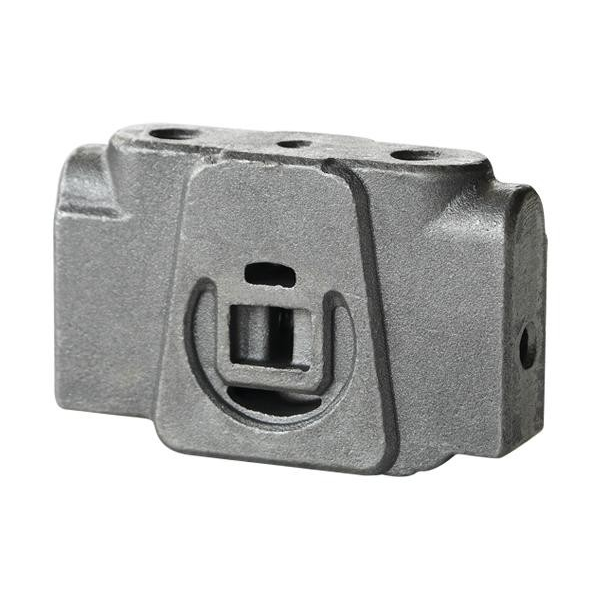
Engineers seeking cost-effective ductile iron solutions with exceptional ductility frequently specify 60-40-18 for applications demanding formability with reliable mechanical strength. This comprehensive guide examines the 60-40-18 ductile iron chemical composition, critical ASTM A536 60-40-18 material properties, and international ASTM A536 Gr 60-40-18 equivalent grades that make it a practical choice for applications requiring maximum elongation with superior machinability. The ASTM A536 standard provides the official specifications for ductile iron castings used in general engineering applications.
Industry professionals value 60-40-18 ductile iron for several compelling technical advantages:
- Minimum 60,000 psi tensile strength delivers substantial load-bearing capacity for general engineering applications
- Exceptional 18% elongation provides superior impact resistance and formability compared to higher-strength ductile iron grades
- Excellent machinability from ferritic microstructure enables faster cutting speeds and extended tool life
- Superior low-temperature toughness maintains ductility in sub-zero environments
- Proven reliability in water system components, automotive suspension parts, agricultural equipment, and hydraulic housings
- Cost-effective alternative to steel offering comparable performance with reduced manufacturing costs
Engineers who understand ASTM A536 60-40-18 material properties, chemical composition requirements, and ASTM A536 Gr 60-40-18 equivalent standards can optimize component design and achieve reliable performance across diverse industrial applications.
Key Takeaways
- 60-40-18 ductile iron delivers minimum 60,000 psi (414 MPa) tensile strength with 18% elongation for maximum ductility
- The ASTM A536 60-40-18 chemical composition includes 3.0-4.0% carbon, 1.8-2.8% silicon, with controlled magnesium for nodular graphite
- International ASTM A536 Gr 60-40-18 equivalent grades include EN-GJS-400-12 (Europe), QT400-18 (China), and FCD400 (Japan)
- ASTM A536 60-40-18 material properties include hardness 140-180 HB with predominantly ferritic microstructure
- The spheroidal graphite structure provides superior impact resistance and low-temperature toughness
- Applications include pipe fittings, valve bodies, automotive suspension components, agricultural equipment, and hydraulic cylinders
- Selecting experienced ductile iron casting foundries ensures consistent A536 60-40-18 quality
What Is 60-40-18 Ductile Iron?
60-40-18 ductile iron is a ferritic ductile iron grade with minimum 60,000 psi tensile strength, 40,000 psi yield strength, and 18% elongation, featuring spheroidal graphite microstructure that delivers maximum ductility with exceptional impact resistance and machinability.
Material Classification
60-40-18 ductile iron follows the American designation system established by ASTM A536, the standard specification for ductile iron castings. The classification numbers “60-40-18” directly represent minimum tensile strength of 60,000 pounds per square inch, yield strength of 40,000 psi, and elongation of 18% measured on standard test bars. This standardized designation eliminates confusion during component specification, with engineers referencing ASTM A536 60-40-18 consistently regardless of supplier location.
The ASTM A536 standard encompasses grades 60-40-18, 65-45-12, 80-55-06, 100-70-03, and 120-90-02, with Grade 60-40-18 positioned as the most ductile option. This classification provides maximum elongation and impact resistance suitable for applications requiring formability and shock absorption without the brittleness associated with higher-strength grades.
Microstructure Characteristics
The performance characteristics of 60-40-18 ductile iron stem from its carefully controlled microstructure. Ductile iron contains carbon in the form of spheroidal (nodular) graphite distributed throughout a ferritic metallic matrix. These graphite nodules create superior mechanical properties distinguishing ductile iron from gray cast iron and providing a cost-effective alternative to steel.
The metallic matrix surrounding graphite nodules consists predominantly of ferritic structure in ASTM A536 60-40-18 material. This matrix composition provides the exceptional 18% elongation with superior machinability. The typical matrix ranges from 90-100% ferrite with minimal pearlite, differentiating Grade 60-40-18 from higher-strength grades containing substantial pearlitic content.
| Microstructure Component | Typical Content | Contribution to 60-40-18 Properties |
|---|---|---|
| Spheroidal Graphite | 10-12% by volume | Superior ductility, impact resistance, machinability |
| Ferrite | 90-100% | Maximum elongation, low-temperature toughness, machinability |
| Pearlite | 0-10% | Minimal content maintains ductility priority |
| Nodule Count | 100-200/mm² | Property uniformity, consistent performance |
The spheroidal graphite acts as a less severe stress concentrator compared to flake graphite in gray iron, explaining the material’s exceptional ductility and impact resistance advantage. The predominantly ferritic matrix delivers reliable tensile strength while maximizing formability through superior elongation characteristics.
ASTM A536 60-40-18 Chemical Composition
The ASTM A536 60-40-18 chemical composition includes 3.0-4.0% carbon, 1.8-2.8% silicon, controlled manganese, with critical magnesium treatment (0.03-0.06% residual) ensuring spheroidal graphite formation for reliable 60,000 psi strength with exceptional 18% elongation.
Understanding ASTM A536 60-40-18 chemical composition provides critical insight into material properties and processing behavior. Each element serves specific purposes achieving the balanced ferritic microstructure required for maximum ductility.
Primary Alloying Elements
Carbon (C): 3.0-4.0%
Carbon content directly determines graphite quantity and distribution in ASTM A536 60-40-18 material. This controlled range enables excellent casting fluidity while providing sufficient graphite volume for superior machinability and ductility. The carbon level influences the ferrite-to-pearlite ratio, with moderate-to-high carbon content supporting predominantly ferritic matrix structure delivering 18% elongation.
The carbon equivalent (CE = %C + %Si/3) typically ranges from 4.0 to 4.5 for optimal ASTM A536 60-40-18 properties. Foundries monitor carbon content precisely during melting to maintain consistent mechanical performance and ductility characteristics. Proper carbon content within the specified range promotes optimal nodular graphite formation.
Silicon (Si): 1.8-2.8%
Silicon acts as a ferrite-promoting element in ductile iron, stabilizing the ferritic matrix structure essential for 60-40-18 grade properties. The silicon range in ASTM A536 60-40-18 composition balances ferritization with casting properties. Higher silicon content within this range promotes complete ferritic matrix, optimizing elongation while ensuring excellent machinability.
Silicon also improves casting fluidity and reduces carbide formation tendencies during solidification. The silicon level directly influences final microstructure, affecting both ASTM A536 60-40-18 material properties and manufacturing characteristics. Controlled silicon content promotes ferritic transformation while maintaining balanced mechanical properties.
Manganese (Mn): 0.10-0.40%
Manganese content is deliberately controlled at lower levels in ASTM A536 60-40-18 composition compared to higher-strength grades. Limited manganese addition prevents excessive pearlite formation that would reduce ductility and elongation. The manganese content balances mechanical requirements with ductility objectives, maintaining predominantly ferritic matrix structure essential for Grade 60-40-18 performance.
Manganese also neutralizes sulfur by forming manganese sulfide inclusions, preventing interference with magnesium treatment. The controlled addition maintains the fully ferritic structure characteristic of ASTM A536 60-40-18 material.
Magnesium (Mg): 0.03-0.06% (residual)
Magnesium treatment represents the critical distinction between ductile iron and gray iron. Adding magnesium to molten iron causes carbon to solidify as spheres rather than flakes. The residual magnesium content of 0.03-0.06% indicates successful nodularization treatment. Proper magnesium levels ensure nodule count exceeding 100 nodules/mm² with nodularity above 80%, critical for achieving specified mechanical properties.
Impurity Control
Phosphorus (P): <0.08%
Phosphorus creates brittleness by forming steadite in ductile iron. The phosphorus limit prevents excessive steadite formation that would reduce impact resistance and elongation. Strict phosphorus control is more critical in ductile iron compared to gray iron, as the high ductility requirements of 60-40-18 grade demand minimal brittleness-inducing elements.
Sulfur (S): <0.03%
Sulfur content requires strict control during ASTM A536 60-40-18 production. Excessive sulfur interferes with magnesium treatment and prevents proper nodularization. The controlled sulfur specification ensures effective nodular graphite formation and reliable material quality with maximum elongation characteristics.
| Element | ASTM A536 60-40-18 Range | Function |
|---|---|---|
| Carbon (C) | 3.0-4.0% | Graphite formation, ductility |
| Silicon (Si) | 1.8-2.8% | Ferrite promotion, matrix control |
| Manganese (Mn) | 0.10-0.40% | Limited for ferritic matrix |
| Magnesium (Mg) | 0.03-0.06% (residual) | Nodular graphite formation |
| Phosphorus (P) | <0.08% | Controlled for ductility |
| Sulfur (S) | <0.03% | Controlled for nodularization |
ASTM A536 60-40-18 Material Properties
ASTM A536 60-40-18 material properties include minimum 60,000 psi (414 MPa) tensile strength, 40,000 psi (276 MPa) yield strength, 18% elongation, and hardness 140-180 HB, delivering exceptional ductility with superior impact resistance and low-temperature toughness.
The mechanical and physical properties defined by ASTM A536 60-40-18 specification determine suitability for applications requiring maximum formability. Comprehensive understanding enables accurate design calculations and appropriate component specification.
Tensile Properties
Tensile Strength (Rm): ≥60,000 psi / 414 MPa (typical 60,000-65,000 psi)
Tensile strength represents the primary strength characteristic of ASTM A536 60-40-18. The minimum value of 60,000 psi provides substantial load-bearing capability for general engineering applications. Typical production material achieves 60,000-65,000 psi when foundries maintain rigorous process control and optimize the ferritic microstructure.
The tensile strength depends primarily on matrix structure, nodule count, and section thickness. The predominantly ferritic matrix (90-100% ferrite) provides reliable strength suitable for moderate-duty applications while prioritizing elongation. Testing procedures follow ASTM A536 standards using separately cast test bars ensuring consistent evaluation conditions.
Yield Strength (Rp0.2): ≥40,000 psi / 276 MPa
Yield strength of 40,000 psi minimum defines the stress level at which permanent deformation begins. The 60-40-18 grade demonstrates a favorable yield-to-tensile ratio of approximately 0.67, indicating substantial plastic deformation capacity before fracture. This characteristic provides excellent energy absorption during impact loading.
Elongation: ≥18% in 2 inches
Elongation represents the defining advantage of ASTM A536 60-40-18 among ductile iron grades. The minimum 18% elongation provides exceptional formability, impact resistance, and damage tolerance. This high ductility prevents brittle fracture under shock loading and allows limited cold forming operations. The elongation capability significantly exceeds gray iron (essentially zero elongation) and higher-strength ductile iron grades (6-12% typical).
Hardness Characteristics
Brinell Hardness: 140-180 HB (typical 150-170 HB)
Hardness measurements provide rapid verification of ASTM A536 60-40-18 material properties. The Brinell hardness range reflects the predominantly ferritic microstructure distinguishing Grade 60-40-18 from higher-strength grades. Values of 150-170 HB indicate optimally controlled material with maximum ductility and machinability.
The moderate hardness range provides adequate wear resistance for general applications while maintaining excellent machinability. The soft ferritic matrix machines 30-40% faster than pearlitic ductile iron grades, reducing manufacturing costs.
| Property | ASTM A536 60-40-18 Value | Test Standard |
|---|---|---|
| Tensile Strength (Rm) | ≥60,000 psi / 414 MPa | ASTM A536 |
| Yield Strength (Rp0.2) | ≥40,000 psi / 276 MPa | ASTM A536 |
| Elongation | ≥18% in 2 inches | ASTM A536 |
| Brinell Hardness (HB) | 140-180 HB | ASTM A536 |
| Impact Strength | Superior to higher grades | ASTM A536 |
Physical Properties
Density: 0.256 lb/in³ / 7.1 g/cm³
The density of ASTM A536 60-40-18 remains consistent across composition variations, enabling accurate weight calculations during design. Grade 60-40-18 density closely approximates steel (0.283 lb/in³), providing approximately 10% weight savings compared to steel for equivalent volumes while maintaining comparable strength.
Modulus of Elasticity: 24-25 million psi / 165-172 GPa
The elastic modulus of ASTM A536 60-40-18 material properties approaches steel values (29-30 million psi) more closely than gray iron. This characteristic affects deflection calculations, with ductile iron components showing approximately 15-20% greater deflection than equivalent steel parts under identical loading. Engineers must account for this modulus when calculating structural deflection.
Thermal Properties
Thermal Conductivity: 26-28 W/(m·K)
ASTM A536 60-40-18 demonstrates good thermal conductivity, approximately 50-60% of steel values. This characteristic makes ductile iron suitable for applications requiring moderate heat dissipation. The spheroidal graphite structure provides reasonable heat transfer while maintaining superior mechanical properties compared to gray iron.
Coefficient of Thermal Expansion: 11 × 10⁻⁶/°F (20 × 10⁻⁶/K)
The thermal expansion coefficient closely matches carbon steel values. This compatibility minimizes thermal stress when assembling ASTM A536 60-40-18 components with steel parts, preventing loosening or binding across temperature ranges encountered in service.
Performance Characteristics
Low-Temperature Toughness
ASTM A536 60-40-18 exhibits superior low-temperature impact resistance compared to higher-strength ductile iron grades. The fully ferritic matrix maintains ductility at temperatures down to -20°F (-29°C) and below, preventing brittle fracture in cold environments. This characteristic makes Grade 60-40-18 particularly suitable for outdoor equipment and components operating in northern climates.
Machinability
ASTM A536 60-40-18 demonstrates excellent machinability, with cutting speeds comparable to or exceeding mild steel. The soft ferritic matrix machines efficiently using standard high-speed steel tooling. Tool life typically extends 2-3 times compared to machining pearlitic ductile iron grades, reducing manufacturing costs through decreased tool replacement frequency.
The material produces manageable chips that evacuate readily from cutting zones. Surface finishes of 63-125 Ra are readily achievable using conventional machining practices without excessive tool wear or work hardening.
ASTM A536 Gr 60-40-18 Equivalent Standards
The ASTM A536 Gr 60-40-18 equivalent includes EN-GJS-400-12 (European), QT400-18 (Chinese), FCD400 (Japanese), and SNG 400/12 (Indian) standards, representing balanced ferritic ductile iron grades across international specifications.
Understanding international equivalent grades enables global sourcing and ensures design compatibility across markets. The ASTM A536 Gr 60-40-18 equivalent system facilitates international procurement and technical communication.
European Standard
EN-GJS-400-12 (EN 1563)
The European designation for ASTM A536 Gr 60-40-18 equivalent is EN-GJS-400-12, where “GJS” indicates spheroidal graphite iron and “400-12” represents minimum tensile strength in megapascals (400 MPa / 58,000 psi) with 12% minimum elongation. This standard harmonized earlier national standards including DIN 1693 (Germany) and BS 2789 (UK).
EN-GJS-400-12 specifications:
- Tensile strength minimum: 400 MPa (58,000 psi)
- Yield strength minimum: 250 MPa (36,000 psi)
- Elongation minimum: 12%
- Brinell hardness: typically 130-170 HB
- Predominantly ferritic matrix
The European specification shows slightly lower minimum tensile strength and elongation compared to ASTM specification, though production material typically meets both standards simultaneously. The 400 MPa designation represents conservative minimum values.
Chinese Standard
QT400-18 (GB/T 1348)
Chinese national standard GB/T 1348 designates equivalent material as QT400-18. The “QT” represents ductile iron (Qiu Tie in Chinese), “400” indicates minimum tensile strength in MPa, and “18” represents minimum elongation percentage. Chinese foundries produce QT400-18 extensively for water system components, automotive parts, and agricultural equipment.
QT400-18 specifications:
- Tensile strength minimum: 400 MPa (58,000 psi)
- Yield strength minimum: 250 MPa (36,000 psi)
- Elongation minimum: 18%
- Brinell hardness: 130-175 HB
- Ferritic matrix structure
The Chinese designation directly matches ASTM A536 60-40-18 elongation requirements, making QT400-18 an excellent equivalent for applications prioritizing maximum ductility.
Japanese Standard
FCD400 (JIS G 5502)
Japanese Industrial Standard JIS G 5502 classifies equivalent material as FCD400. The “FCD” designation represents ferritic ductile cast iron while “400” indicates minimum tensile strength in MPa. Japanese automotive and machinery manufacturers utilize FCD400 for components requiring excellent ductility with reliable strength.
FCD400 specifications:
- Tensile strength minimum: 400 MPa (58,000 psi)
- Yield strength minimum: 250 MPa (36,000 psi)
- Elongation minimum: 12%
- Brinell hardness: typically 140-180 HB
- Ferritic microstructure with nodular graphite
International Equivalent Comparison
| Standard | Designation | Tensile Strength (Min) | Yield Strength (Min) | Elongation (Min) | Hardness (HB) | Primary Region |
|---|---|---|---|---|---|---|
| American (ASTM A536) | 60-40-18 | 414 MPa (60 ksi) | 276 MPa (40 ksi) | 18% | 140-180 | USA, Americas |
| European (EN 1563) | EN-GJS-400-12 | 400 MPa (58 ksi) | 250 MPa (36 ksi) | 12% | 130-170 | Europe |
| Chinese (GB/T 1348) | QT400-18 | 400 MPa (58 ksi) | 250 MPa (36 ksi) | 18% | 130-175 | China, Asia |
| Japanese (JIS G 5502) | FCD400 | 400 MPa (58 ksi) | 250 MPa (36 ksi) | 12% | 140-180 | Japan, Asia |
| Indian (IS 1865) | SNG 400/12 | 400 MPa (58 ksi) | 250 MPa (36 ksi) | 12% | 140-175 | India |
When specifying ASTM A536 Gr 60-40-18 equivalent grades internationally, engineers should verify mechanical property alignment. Most standards specify similar tensile strength levels (400-414 MPa) with comparable hardness ranges, providing equivalent load-bearing characteristics with excellent ductility across all equivalent grades.
Primary Applications of 60-40-18 Ductile Iron
60-40-18 ductile iron applications include water system pipe fittings, valve bodies, automotive suspension components, agricultural equipment, hydraulic cylinders, and pump housings requiring maximum ductility with excellent impact resistance for reliable service in demanding environments.
The unique combination of reliable strength, exceptional elongation, superior machinability, and low-temperature toughness makes ASTM A536 60-40-18 suitable for diverse industrial applications where ductility prevents catastrophic failure.
Water and Wastewater Systems
Pipe Fittings and Valve Components
Municipal water systems utilize ASTM A536 60-40-18 for pipe fittings, valve bodies, hydrant components, and manhole covers requiring impact resistance. The 60,000 psi tensile strength withstands internal pressure and external loads while the exceptional 18% elongation prevents brittle fracture from soil movement, thermal cycling, and mechanical shock.
The superior ductility accommodates installation stresses without cracking. Corrosion resistance through proper coating systems enables decades of reliable service. The material’s dimensional stability maintains seal integrity throughout extended service intervals in buried applications.
Automotive Components
Suspension and Chassis Parts
Automotive manufacturers specify ASTM A536 60-40-18 for suspension components, steering knuckles, control arms, and brackets requiring impact resistance. The exceptional elongation absorbs road shock and impact loading without fracture. The material’s fatigue resistance enables reliable performance throughout vehicle service life under cyclic loading conditions.
The superior machinability reduces manufacturing costs for components requiring extensive machining. Production volumes benefit significantly from the 30-40% faster machining speeds compared to higher-strength ductile iron grades.
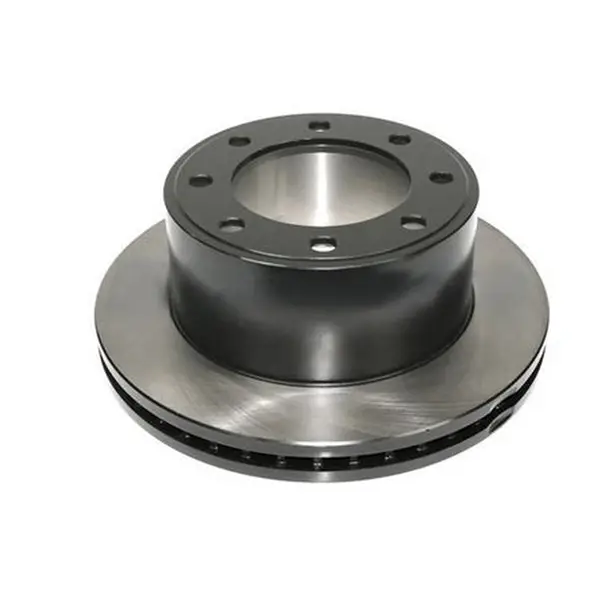
Brake System Components
Brake calipers and mounting brackets employ ASTM A536 60-40-18 for dimensional stability with adequate strength. The material withstands clamping forces while maintaining precise tolerances for proper brake function. The good thermal conductivity enables reasonable heat dissipation during moderate braking applications.
Agricultural Equipment
Tractor and Harvesting Components
Agricultural machinery manufacturers utilize ASTM A536 60-40-18 for tractor housings, plow components, and harvesting equipment parts requiring toughness. The material withstands field impacts, vibration, and abrasion while maintaining structural integrity. The exceptional ductility prevents fracture from shock loading during operation on uneven terrain.
Cost-effective manufacturing from excellent machinability enhances competitiveness for agricultural equipment where production volumes justify casting investment. The material’s reliability reduces field failures and warranty costs.
Hydraulic Systems
Pump Housings and Cylinder Bodies
Hydraulic equipment manufacturers specify ASTM A536 60-40-18 for pump housings and cylinder bodies requiring moderate pressure containment. The 60,000 psi tensile strength enables pressure ratings up to 1,500-2,500 psi with appropriate safety factors. The superior ductility provides damage tolerance and prevents catastrophic brittle fracture.
The material machines efficiently for precise internal passages, ports, and mounting features. Excellent dimensional stability maintains tight tolerances throughout extended service intervals. The adequate corrosion resistance with proper fluid selection enables reliable hydraulic system operation.
Industrial Machinery
Structural Components and Housings
Industrial equipment manufacturers employ ASTM A536 60-40-18 for machine frames, gear housings, and structural brackets in moderate-duty applications. The balanced properties provide adequate strength while the superior ductility prevents brittle failure from shock loads or vibration. The material’s damping capacity reduces noise transmission in machinery installations.
Manufacturing economy from excellent machinability enhances competitiveness for high-volume production. The material’s dimensional stability maintains alignment tolerances throughout equipment service life in industrial environments.
Selecting a Ductile Iron Casting Foundry
Selecting a ductile iron casting foundry for ASTM A536 60-40-18 production requires evaluating metallurgical expertise in ferritic ductile iron control, magnesium treatment capabilities, comprehensive quality systems, and demonstrated capability manufacturing components meeting ASTM A536 specifications.
Component quality depends critically on foundry expertise and process control capabilities. Engineers should assess technical competence when selecting manufacturing partners for ASTM A536 60-40-18 applications.
Technical Capability Requirements
Ductile Iron Expertise
Foundries specializing in ductile iron production demonstrate deep understanding of ASTM A536 60-40-18 chemical composition control, magnesium treatment practices, and ferritic microstructure development. They maintain metallurgical laboratories equipped for chemical analysis, metallographic examination, and mechanical testing. Experienced metallurgists oversee production and address quality concerns specific to ferritic ductile iron grades.
The foundry should provide detailed certifications including chemical composition, tensile test results, elongation measurements, hardness values, and metallographic verification of nodule count and ferritic matrix structure. Technical support during design optimization helps engineers select appropriate specifications.
Quality System Certification
Professional foundries maintain ISO 9001:2015 quality management certification demonstrating systematic process control. Advanced facilities pursue additional certifications including IATF 16949 for automotive applications or specific customer quality requirements. Certification provides independent verification of quality management supporting consistent ASTM A536 60-40-18 material properties.
Production Capability Assessment
Request sample castings demonstrating capability producing components meeting ASTM A536 60-40-18 specification. Examine samples for surface quality, dimensional accuracy, and absence of casting defects such as porosity, inclusions, or surface irregularities.
Review material certificates confirming mechanical properties and chemical composition meet requirements. Metallographic examination verifies appropriate nodule count (100-200/mm²), nodularity exceeding 80%, and predominantly ferritic matrix structure (90-100% ferrite). Hardness testing confirms appropriate values within 140-180 HB range.
For engineers seeking a reliable ductile iron casting foundry with proven expertise in ASTM A536 60-40-18 production, SHENRGONG delivers specialized capabilities in ferritic ductile iron manufacturing with comprehensive metallurgical control, advanced magnesium treatment processes, and quality assurance systems ensuring consistent material properties for diverse industrial applications.
Conclusion
60-40-18 ductile iron represents an excellent engineering material choice for applications requiring maximum ductility, superior impact resistance, and exceptional manufacturing efficiency. The predominantly ferritic microstructure created through precise composition control, effective magnesium treatment, and optimized casting practices provides reliable 60,000 psi tensile strength with exceptional 18% elongation.
Understanding ASTM A536 60-40-18 material properties, chemical composition requirements, and ASTM A536 Gr 60-40-18 equivalent grades enables engineers to optimize component design while controlling manufacturing costs. The material’s superior elongation, low-temperature toughness, and machinability characteristics make it particularly suitable for water system components, automotive suspension parts, agricultural equipment, and hydraulic system applications.
Success depends on partnering with experienced ductile iron casting foundries maintaining rigorous metallurgical control, effective nodularization processes, and comprehensive quality systems for consistent ASTM A536 60-40-18 quality throughout production.
Frequently Asked Questions (FAQ)
What is 60-40-18 ductile iron used for?
60-40-18 ductile iron is used for water pipe fittings, valve bodies, automotive suspension parts, and agricultural equipment requiring 60,000 psi strength with exceptional 18% elongation for impact resistance.
What are ASTM A536 60-40-18 material properties?
Key properties include 60,000 psi tensile strength, 40,000 psi yield strength, 18% elongation, 140-180 HB hardness, and ferritic microstructure providing maximum ductility and machinability.
What is ASTM A536 60-40-18 chemical composition?
Composition includes 3.0-4.0% carbon, 1.8-2.8% silicon, 0.10-0.40% manganese, 0.03-0.06% residual magnesium, with phosphorus <0.08% and sulfur <0.03%.
What are ASTM A536 Gr 60-40-18 equivalent grades?
International equivalents include EN-GJS-400-12 (Europe), QT400-18 (China), FCD400 (Japan), and SNG 400/12 (India).
Why is 60-40-18 more ductile than other ductile iron grades?
The 90-100% ferritic matrix provides exceptional 18% elongation, compared to higher-strength grades with pearlitic structures offering only 6-12% elongation.