
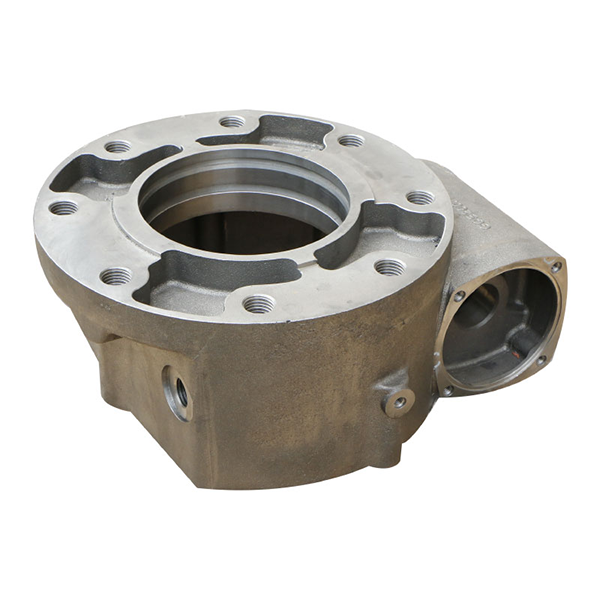
SG500-7 is a ductile cast iron grade featuring minimum tensile strength of 500 MPa and 7% elongation, also known as EN-GJS-500-7, GGG50, or equivalent to ASTM A536 Grade 70-50-05 in international standards. This SG500-7 material combines excellent mechanical properties with superior castability for automotive, hydraulic, and general engineering applications.
Key characteristics of SG500-7 material:
- Minimum tensile strength of 500 MPa (72,500 psi) for medium-load applications
- 7% elongation providing superior ductility versus gray cast iron
- Excellent machinability with spheroidal graphite structure
- Superior fatigue and impact resistance for dynamic loading conditions
- Cost-effective alternative to steel castings for complex geometries
- Good thermal conductivity for heat dissipation requirements
SG500-7 does not mandate exact chemical composition under most standards, but typical SG-500-7 chemical composition follows industry-established ranges for consistent performance:
SG-500-7 Chemical Composition
What is the typical SG-500-7 chemical composition? The standard SG-500-7 chemical composition includes Carbon 3.40-3.85%, Silicon 2.30-3.10%, Manganese 0.10-0.30%, Phosphorous max 0.10%, Sulphur max 0.02%, and residual Magnesium up to 0.07%.
According to EN 1563 European standard and ISO 1083 international specification, the chemical composition is left to the foundry’s discretion, provided final mechanical properties meet requirements. This approach allows manufacturers to optimize their processes based on available raw materials and equipment capabilities.
Carbon (C): 3.40-3.85%
Carbon forms the foundation of graphite nodule formation in SG500-7. The carbon content significantly exceeds steel levels because carbon precipitates as spheroidal graphite during solidification rather than remaining in solid solution. This elevated carbon range ensures sufficient graphite formation while maintaining the iron matrix structure.
Higher carbon levels improve casting fluidity and reduce shrinkage defects. The spheroidal graphite shape eliminates stress concentration points found in flake graphite, enabling the material to achieve both strength and ductility simultaneously. The carbon equivalent (CE) typically ranges from 4.3-4.6%, calculated as CE = %C + (%Si + %P)/3, which directly affects casting characteristics.
Silicon (Si): 2.30-3.10%
Silicon serves as the primary graphitizing element promoting ferrite matrix formation in SG500-7. The silicon content directly influences the carbon equivalent value, which determines casting characteristics and solidification behavior.
Silicon improves fluidity during pouring, enhancing mold filling for complex geometries. It also increases corrosion resistance and high-temperature stability. The controlled silicon range ensures consistent mechanical properties across varying section thicknesses in production castings. Silicon content must be carefully balanced—insufficient amounts result in carbide formation, while excessive silicon can cause brittleness.
Manganese (Mn): 0.10-0.30%
Manganese neutralizes sulfur’s harmful effects by forming manganese sulfide compounds, preventing sulfur interference with nodularization. This sulfur-binding action protects the magnesium treatment from degradation.
Additionally, manganese strengthens the pearlitic matrix when present, increasing tensile strength without severely compromising elongation. The moderate manganese range in SG500-7 balances these benefits against potential brittleness from excessive amounts. Foundries producing SG500-7 typically maintain manganese levels between 0.15-0.25% for optimal results.
Phosphorous (P): Maximum 0.10%
Phosphorous must be strictly limited as it forms iron phosphide (Fe3P), creating brittle regions in castings. While trace amounts may slightly improve castability, excessive phosphorous causes hard spots that reduce machinability and impact resistance.
Quality foundries maintain phosphorous well below 0.10% through careful raw material selection and melting practices, ensuring uniform mechanical properties throughout castings. Typical production levels remain under 0.06% to avoid segregation issues in heavy sections.
Sulphur (S): Maximum 0.02%
Sulphur represents the most critical element to control in ductile iron production. It directly opposes nodularization by consuming magnesium that should convert flake graphite to spheroidal form. Each 0.01% sulfur requires approximately 0.015% magnesium to neutralize.
Modern foundries employ desulfurization treatments using calcium carbide or magnesium before the nodularizing treatment. Maintaining sulfur below 0.02% ensures efficient magnesium utilization and proper nodule formation, directly impacting the final mechanical properties. Premium foundries achieve sulfur levels below 0.015% for critical applications.
Magnesium (Mg): Residual up to 0.07%
Magnesium is the essential nodularizing agent transforming graphite shape from flakes to spheroids. The treatment involves adding magnesium-bearing alloys (typically containing 5-10% Mg) to molten iron through sandwich, tundish, or plunging methods.
Residual magnesium after treatment typically ranges from 0.03-0.06%. Insufficient magnesium (below 0.03%) results in inadequate nodularization, while excessive amounts (above 0.07%) cause carbide formation and processing difficulties. The controlled residual level ensures complete spheroidization without harmful side effects. The violent reaction between magnesium and molten iron requires proper safety protocols during treatment.
Important Note: According to ASTM A536 standard specification, these ranges represent typical industry practice. International standards emphasize mechanical property compliance rather than specific chemistry, allowing foundries to optimize compositions based on their raw materials and processes.
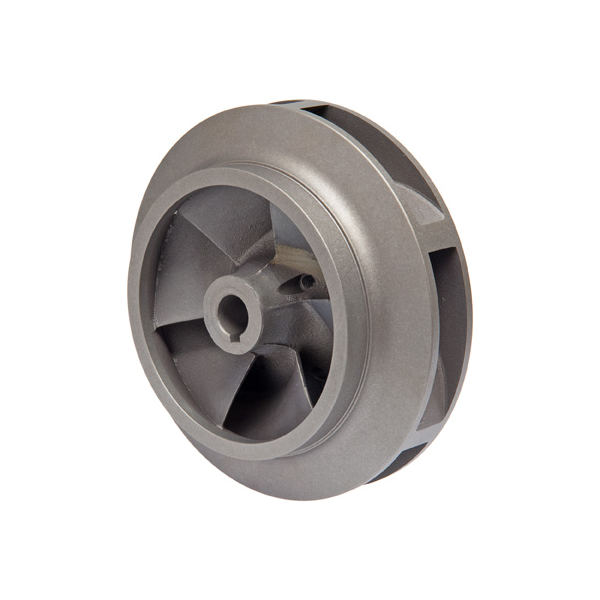
SG-500-7 Material Properties
What are the key SG-500-7 material properties? The primary SG-500-7 material properties include minimum tensile strength of 500 MPa, yield strength of 320 MPa, 7% minimum elongation, and typical hardness of 170-230 HB for general engineering applications.
Tensile Strength: 500-600 MPa
The minimum tensile strength of 500 MPa (72,500 psi) defines SG500-7 as a medium-strength ductile iron grade. This strength level exceeds gray cast iron by 40-50% while maintaining significant ductility advantages.
Typical production castings achieve 520-580 MPa tensile strength depending on section thickness and cooling rate. Thinner sections cool faster, producing finer microstructures with higher strength. Engineers can rely on this strength range for valve bodies, gear housings, and structural components experiencing moderate mechanical loading. The tensile strength results from the combined effect of the ferritic-pearlitic matrix and the spheroidal graphite distribution.
Yield Strength: 320-370 MPa
The minimum 320 MPa (46,400 psi) yield strength indicates when permanent deformation begins under load. SG500-7’s yield-to-tensile ratio of approximately 0.64 provides excellent design flexibility, allowing elastic deformation before plastic yielding.
This yield strength supports applications with dynamic loading where components must return to original dimensions after stress removal. Hydraulic components, automotive suspension parts, and machinery housings benefit from this characteristic. Actual yield values typically range 340-370 MPa in production castings with proper microstructure control.
Elongation: Minimum 7%
The 7% minimum elongation demonstrates meaningful ductility distinguishing ductile iron from brittle gray cast iron. This property allows energy absorption through plastic deformation before fracture, providing safety margins against sudden overload.
Actual elongation often reaches 8-12% in production castings with proper microstructure control. The ductility facilitates secondary operations including bending and forming while improving impact resistance for shock loading conditions. Elongation values measured on standard test pieces with gauge length L0 = 5d (where d is diameter).
Hardness: 170-230 HB (Brinell)
The typical hardness range of 170-230 HB indicates balanced wear resistance and machinability. This moderate hardness allows standard carbide tooling to machine SG500-7 efficiently without excessive tool wear.
Hardness testing uses a 10mm diameter ball with 3000 kg load according to international standards. Hardness consistency throughout castings ensures uniform machining characteristics and predictable wear patterns. Applications requiring moderate wear resistance, such as gears and wear plates, benefit from this hardness specification. The hardness correlates directly with the ferrite-to-pearlite ratio in the matrix structure.
Microstructure
Graphite Structure: Spheroidal graphite nodules distributed uniformly throughout the matrix with nodularity exceeding 80% per ISO 945-1 graphite classification. Nodule count typically ranges from 100-300 nodules per mm² depending on cooling rate and inoculation practice. Premium castings achieve 85-92% nodularity with nodule sizes predominantly in Form VI classification.
Matrix Structure: Primarily ferritic-pearlitic matrix with ferrite percentage between 30-70% depending on cooling conditions. Faster cooling promotes pearlite formation increasing strength, while slower cooling produces more ferrite enhancing ductility. The microstructure should be free from carbides, which would indicate improper treatment or excessive cooling rates.
Additional Mechanical Properties
Modulus of Elasticity: 165-175 GPa (24,000-25,000 ksi), approximately 80% of steel’s modulus, providing slightly greater deflection under equivalent loading. This characteristic benefits applications requiring some flexibility under load.
Impact Resistance: Significantly superior to gray cast iron due to spheroidal graphite eliminating crack propagation paths. Unnotched impact values typically exceed 20 Joules at room temperature. For low-temperature applications, impact properties should be verified through testing.
Fatigue Strength: Approximately 50% higher than equivalent-strength gray iron, enabling cyclic loading applications. The endurance limit reaches roughly 200-230 MPa for completely reversed bending stress conditions, making SG500-7 suitable for components experiencing millions of load cycles.
Physical Properties
Density: 7.0-7.3 g/cm³ (0.253-0.264 lb/in³), comparable to steel providing good weight-to-strength ratios for structural applications. The density varies slightly with ferrite-to-pearlite ratio.
Thermal Conductivity: 29-33 W/m·K at room temperature, adequate for heat dissipation in moderate-temperature applications. Conductivity decreases with increasing pearlite content.
Coefficient of Thermal Expansion: 10.5-12.0 × 10⁻⁶/°C (5.8-6.7 × 10⁻⁶/°F), providing dimensional stability across typical operating temperature ranges from -20°C to 300°C.
Damping Capacity: Superior vibration damping compared to steel, approximately 3-5 times higher, beneficial for noise reduction applications. The spheroidal graphite nodules act as internal dampers absorbing vibrational energy.
SG500-7 Equivalent Standards
SG500-7 equivalent grades provide comparable mechanical properties across different international standards for ductile iron applications. Understanding these equivalents enables global sourcing and specification substitution:
EN-GJS-500-7 (EN 1563): European standard designation with identical 500 MPa tensile strength and 7% elongation requirements. This is the official European norm used throughout EU member states.
GGG50 (DIN 1693): German designation commonly used in European engineering specifications, matching SG500-7 properties. “GGG” stands for “Gusseisen mit Kugelgraphit” (cast iron with spheroidal graphite).
ASTM A536 70-50-05: American equivalent specifying 70 ksi (483 MPa) tensile strength, 50 ksi (345 MPa) yield, and 5% elongation. Note that ASTM A536 Grade 70-50-05 has slightly lower elongation specification (5% vs 7%) but comparable strength levels.
ISO 1083 JS/500-7: International standard equivalent with matching property requirements for 500 MPa tensile strength and 7% elongation.
QT500-7 (GB/T 1348): Chinese standard equivalent with matching property requirements for tensile strength and elongation.
FCD500 (JIS G 5502): Japanese equivalent designation for ductile cast iron with 500 MPa minimum tensile strength.
Important Note on Equivalency: While these grades provide similar mechanical properties, chemical composition ranges, testing requirements, and acceptance criteria may vary between standards. Engineers should verify specific standard requirements when substituting equivalent grades, particularly for pressure-containing applications or safety-critical components.
Manufacturing and Quality Control
Melting and Treatment Process
SG500-7 production requires precise metallurgical control throughout the manufacturing process:
Base Iron Preparation: Melting uses cupola, electric induction, or combination methods to achieve proper carbon equivalent (CE = 4.3-4.6%). Raw material selection controls residual elements affecting nodularization. Typical charge composition includes pig iron, steel scrap, and ductile iron returns in controlled ratios.
Desulfurization: Calcium carbide or similar agents reduce sulfur below 0.02% before magnesium treatment, ensuring efficient nodularization. Desulfurization temperature typically ranges 1450-1480°C for optimal reaction kinetics.
Magnesium Treatment: Nodularizing alloys containing 5-10% magnesium are added through sandwich method, tundish ladle, or plunging techniques. The violent reaction requires safety precautions and proper technique. Treatment temperature ranges 1380-1420°C depending on section thickness requirements.
Inoculation: Ferrosilicon-based inoculants promote graphite nucleation immediately before and during pouring. Multiple inoculation stages (ladle and stream inoculation) optimize nodule count and distribution. Inoculation fade requires pouring within 8-12 minutes of treatment.
Pouring and Solidification: Controlled pouring temperature (1380-1420°C) and cooling rate management ensure proper microstructure development across varying section thicknesses. Mold design influences final properties through directional solidification control.
Quality Assurance Testing
Reputable foundries implement comprehensive testing protocols conforming to international standards:
Tensile Testing: Specimens machined from separately cast test bars verify tensile strength, yield strength, and elongation meet specifications per ISO 6892-1 metallic materials testing. Test bars typically cast in 25mm or 30mm diameter for standard property evaluation.
Metallographic Examination: Microscopic analysis confirms nodule count, nodularity percentage (minimum 80%), and matrix structure compliance. Digital image analysis systems provide objective nodularity measurements replacing manual counting methods.
Chemical Analysis: Optical emission or X-ray fluorescence spectroscopy verifies chemistry throughout production runs. Testing frequency follows statistical process control principles with minimum one analysis per heat.
Hardness Testing: Brinell hardness measurements on actual castings confirm appropriate matrix structure and heat treatment effectiveness. Multiple readings across section variations ensure property uniformity.
Ultrasonic Testing: Non-destructive examination detects internal defects in critical applications requiring 100% inspection. Reference standards establish acceptance criteria for discontinuity evaluation.
Applications of SG500-7
Automotive Components
SG500-7 serves critical automotive applications requiring balanced strength and ductility:
- Steering knuckles and suspension arms utilizing fatigue resistance
- Transmission housings benefiting from dimensional stability
- Brake calipers requiring pressure tightness and corrosion resistance
- Crankshafts and connecting rods in moderate-performance engines
- Differential housings and axle components experiencing dynamic loads
Hydraulic and Pneumatic Systems
Valve bodies, pump housings, and manifold blocks manufactured from SG500-7 provide:
- Excellent pressure containment for systems up to 250 bar (3,625 psi)
- Corrosion resistance in hydraulic fluid environments
- Machinability for complex internal passages and mounting features
- Dimensional stability under thermal cycling conditions
- Leak-tight casting integrity for pressure-containing applications
Industrial Machinery
General engineering applications leverage SG500-7’s versatility:
- Gear housings and gearbox components with wear surfaces
- Machine tool bases utilizing vibration damping characteristics
- Die and mold components requiring moderate hardness with machinability
- Bearing housings and support structures for rotating equipment
- Conveyor components and material handling equipment
Agricultural and Construction Equipment
Heavy-duty components benefit from impact resistance and reliability:
- Tractor and harvester structural parts requiring fatigue resistance
- Excavator linkage components experiencing shock loading
- Wheel hubs and axle housings for off-road vehicles
- Implement frames and attachments subjected to variable loading
- Heavy equipment brackets and mounting components
Design Considerations for SG500-7
Section Thickness Effects
Mechanical properties vary with section thickness due to cooling rate differences:
- Thin sections (< 15mm): Faster cooling produces finer microstructure, higher strength (560-600 MPa), slightly lower elongation (7-9%)
- Medium sections (15-50mm): Typical properties align with specification minimums (500 MPa, 7% elongation)
- Thick sections (> 50mm): Slower cooling may reduce strength (500-540 MPa) while increasing elongation (9-12%)
Design engineers should consider these variations when specifying critical dimensions and property requirements. For heavy sections exceeding 100mm, special agreements between foundry and customer may establish adjusted property targets.
Casting Design Guidelines
Optimal casting design for SG500-7 includes:
- Uniform wall thickness where possible to minimize property variation and reduce shrinkage defects
- Gradual transitions avoiding sharp corners and stress concentrations that could initiate cracks
- Adequate draft angles (1-3°) for pattern removal without casting damage
- Proper feeding design ensuring directional solidification toward risers
- Machining allowances of 3-6mm for precision surfaces depending on casting size
Heat Treatment Options
While SG500-7 typically serves in as-cast condition, heat treatment can modify properties:
Stress Relief (500-650°C for 1-2 hours): Eliminates residual casting stresses, improving dimensional stability without significantly affecting mechanical properties. Slow furnace cooling prevents thermal shock.
Ferritic Annealing (900-950°C): Transforms pearlite to ferrite, maximizing ductility (12-18% elongation) while reducing strength to approximately 400-450 MPa. Requires slow cooling to promote complete ferritization.
Normalizing (880-920°C): Refines microstructure improving property uniformity, particularly beneficial for complex geometries with section thickness variations. Air cooling produces consistent pearlite distribution.
Austempering: Advanced heat treatment producing austempered ductile iron (ADI) with significantly enhanced properties (900-1200 MPa tensile strength), though requiring careful process control and specialized equipment.
Advantages of SG500-7
Compared to Gray Cast Iron
- 2-3 times higher tensile strength enabling lighter component design
- Meaningful elongation (7% vs. near-zero) versus brittle fracture behavior
- Superior impact and fatigue resistance for dynamic applications
- Enhanced reliability and safety factors in structural applications
- Similar cost structure with improved performance characteristics
Compared to Steel Castings
- Better castability producing sound castings with complex geometries and thin walls
- Superior machinability reducing manufacturing time by 20-30% and tooling costs
- Excellent vibration damping for noise reduction applications (3-5x better than steel)
- Lower melting point (1450°C vs. 1600°C) reducing energy costs in production
- Cost-effective manufacturing for medium to high volume production runs
Compared to Higher-Grade Ductile Irons
- More economical pricing while meeting majority of application requirements
- Easier heat treatment requirements when modification needed
- Broader foundry capability with less stringent process control demands
- Sufficient properties for general engineering without over-specification
Selecting a Ductile Iron Casting Foundry
When sourcing SG500-7 components, manufacturers should evaluate foundries based on:
Technical Capability: Experience with ductile iron metallurgy, proper equipment for magnesium treatment and inoculation, engineering support for design optimization, and proven process control systems.
Quality Systems: ISO 9001 certification minimum, documented process controls, comprehensive testing protocols meeting international standards, traceability systems for critical applications, and regular third-party audits.
Production Flexibility: Capacity range from prototype quantities to production volumes, various molding processes (green sand, resin-bonded, permanent mold) for different geometries, reasonable lead times with reliable delivery performance.
Cost Competitiveness: Fair pricing reflecting quality level, transparent quoting process, value engineering suggestions for cost reduction without compromising performance.
For companies seeking a ductile iron casting foundry with proven SG500-7 expertise, SHENRGONG offers comprehensive capabilities from design consultation through final inspection. With extensive experience producing precision ductile iron castings across automotive, hydraulic, and industrial machinery applications, SHENRGONG maintains the technical knowledge and quality systems to deliver components meeting demanding specifications with competitive pricing and reliable service.
Frequently Asked Questions (FAQ)
Q: What is the difference between SG500-7 and EN-GJS-500-7?
A: They are the same material. SG500-7 is a common designation, while EN-GJS-500-7 is the official European standard designation according to EN 1563.
Q: Can SG500-7 replace steel castings in my application?
A: SG500-7 can replace steel castings in many applications where tensile strength requirements are below 500 MPa, offering better castability, machinability, and cost-effectiveness while providing adequate strength and ductility.
Q: What is the typical chemical composition of SG-500-7?
A: Typical SG-500-7 chemical composition includes C: 3.4-3.85%, Si: 2.3-3.1%, Mn: 0.1-0.3%, with strictly controlled P (max 0.10%) and S (max 0.02%). However, chemistry is left to foundry discretion as long as mechanical properties are met.
Q: What are the minimum mechanical properties of SG-500-7 material?
A: Minimum SG-500-7 material properties are 500 MPa tensile strength, 320 MPa yield strength, 7% elongation, and typical hardness of 170-230 HB according to international standards.
Q: Is heat treatment required for SG500-7?
A: No, SG500-7 is typically used in as-cast condition. Heat treatment is optional and only applied when specific property modifications are needed, such as stress relief or enhanced ductility.
Q: What is the ASTM equivalent of SG500-7?
A: The ASTM A536 Grade 70-50-05 is the closest equivalent, with 70 ksi (483 MPa) tensile strength and 50 ksi yield strength, though it specifies 5% elongation versus 7% for SG500-7.
Q: How does section thickness affect SG500-7 properties? A: Thinner sections (<15mm) achieve higher strength (560-600 MPa) due to faster cooling, while thick sections (>50mm) may show lower strength (500-540 MPa) but higher elongation (9-12%).
Q: What testing is required to verify SG500-7 compliance?
A: Standard testing includes tensile testing on separately cast test bars, metallographic examination for nodularity (>80%), hardness testing, and chemical analysis to verify process control.
Q: Can SG500-7 be welded?
A: Yes, but requires preheating (200-300°C), controlled heat input, and often post-weld heat treatment. Ni-based filler materials are recommended for best results. Consult welding specialists for critical applications.
Q: What industries commonly use SG500-7 castings?
A: Automotive (suspension, transmission), hydraulic systems (valves, pumps), industrial machinery (gearboxes, housings), and construction equipment (structural components) are primary users.
Conclusion
SG500-7 cast iron delivers optimal performance for applications requiring moderate strength, good ductility, and cost-effective manufacturing. Understanding SG-500-7 chemical composition and SG-500-7 material properties enables engineers to achieve:
- Reliable 500 MPa tensile strength for general engineering applications
- Superior ductility (7% minimum) versus traditional cast irons
- Global sourcing flexibility through equivalent grade recognition
- Cost advantages compared to steel castings for suitable applications
- Proven performance across automotive, hydraulic, and machinery sectors
Key considerations for successful SG500-7 application:
- Proper chemical composition control ensuring consistent nodularization with sulfur below 0.02%
- Section thickness design within recommended property limits for uniform characteristics
- Appropriate equivalent grade selection for regional standards compliance
- Qualified foundry selection with proven ductile iron expertise and quality systems
- Design optimization leveraging material’s unique vibration damping and machinability characteristics
By following these SG500-7 guidelines and partnering with experienced foundries like SHENRGONG, engineers ensure cast components meet design requirements for strength, ductility, and cost-effectiveness in demanding applications. The combination of steel-like mechanical properties, excellent castability, and economic advantages makes SG500-7 an ideal choice for medium-load engineering components across diverse industries.