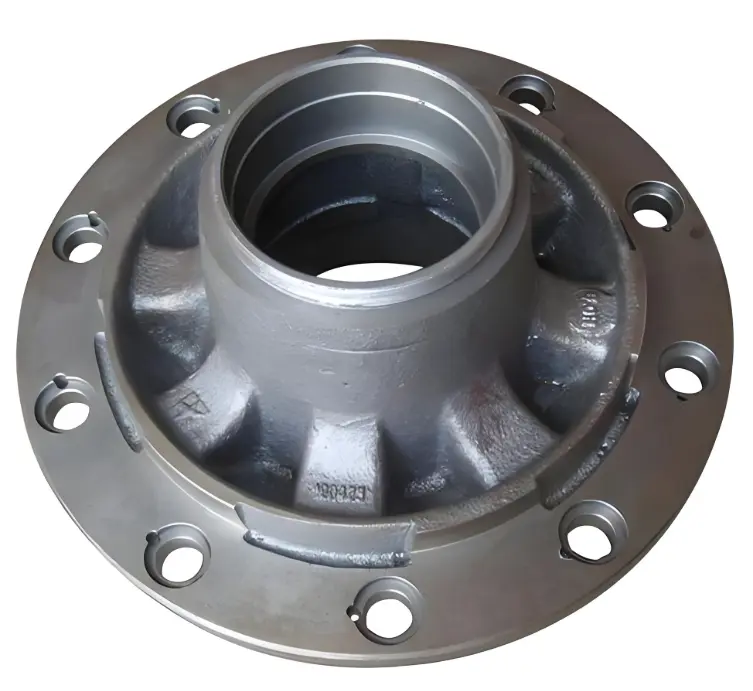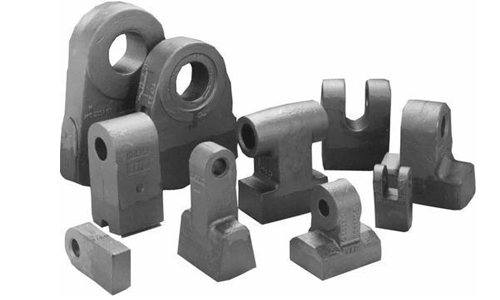
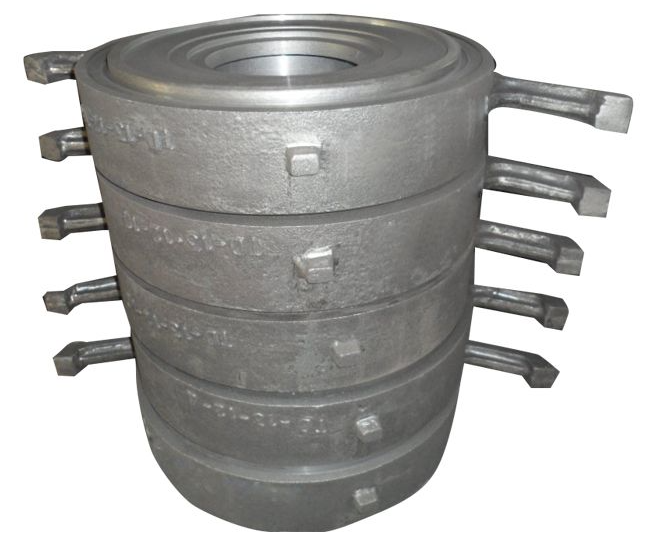
ZGMn13 is an austenitic high-manganese steel, a wear-resistant material suitable for intense impact and pressure conditions. Its most important characteristic is “the more impact, the more wear-resistant”—under severe impact, the surface hardness jumps from an initial HB180-220 to HB500-800, while the core maintains high toughness, thus resisting wear. Engineers and designers choose this material to manufacture critical wear-resistant parts in mining, building materials, and thermal power equipment, such as crusher tooth plates, ball mill liners, and excavator bucket teeth.
The core of the production process for ZGMn13 (high manganese steel) lies in “casting” + “heat treatment.” During casting, the issue of its high shrinkage rate needs to be addressed, while the key to its final performance lies in water toughening treatment.
Step 1: Melting (Steelmaking) The goal of this stage is to obtain pure, compositionally sound molten steel. Electric arc furnace oxidation is typically used for smelting:
Melting and Oxidation: After the furnace charge is fully melted, the oxidation period begins with oxygen blowing for decarburization and dephosphorization. This is a crucial step in removing harmful impurities from the molten steel, requiring phosphorus (P) content to be controlled at an extremely low level of ≤0.015%.
Reduction and Alloying: After removing the oxide slag, pre-deoxidation is performed, and large amounts of ferromanganese are added in batches for alloying, adjusting the composition to the target range. Final deoxidation is performed before tapping, with the tapping temperature generally controlled at 1470-1490℃.
Step 2: Casting (Forming) This is a crucial step in controlling the quality of the castings. High-manganese steel has a significant characteristic: high shrinkage rate (approximately 6.3%, 1.5 times that of ordinary carbon steel) and poor thermal conductivity.
Therefore, the casting process design needs to take targeted measures:
Process Design: Sufficiently large risers and chills must be used, employing the “sequential solidification” principle to effectively compensate for shrinkage and prevent shrinkage cavities and porosity.
Molding Materials: To prevent chemical reactions between high-manganese steel and silica sand leading to “chemical adhesion,” alkaline materials such as magnesium olivine sand or chromite sand should be preferred for the mold. If silica sand must be used, a special manganese steel coating must be applied.
Pouring: Careful control of pouring temperature and speed is necessary to ensure the complete formation of complex shapes (such as tooth tips).
Step 3: Heat Treatment (Water Toughening)
This is the core process determining whether ZGMn13 can achieve its wear resistance performance. High-manganese steel in the as-cast state is brittle and cannot be used directly.
Core Principle: The casting is heated to 1050-1100℃ and held for a period of time, allowing all the brittle carbides at the grain boundaries to dissolve into the austenite. Then, it is rapidly immersed in water for quenching, resulting in a single, uniform austenitic structure at room temperature.
Key Operations:
The heating rate must be controlled to prevent the casting from cracking due to poor thermal conductivity.
Immersion in water must be rapid and decisive to interrupt any possibility of carbide re-precipitation.
The water temperature is generally required to be below 30℃, and the water volume must be sufficient.
Special Note: After water toughening treatment, the initial hardness of ZGMn13 is not high (approximately HB 190-230). Its remarkable feature lies in “work hardening”—when subjected to strong impact or compression, the surface instantly hardens to over HB 500, while the interior retains high toughness.
Step Four: Cleaning and Finishing After water toughening treatment, the casting undergoes finishing work such as cutting the risers and gating off burrs. Because the material is extremely tough at this stage, cutting and polishing are more difficult than in the cast state.
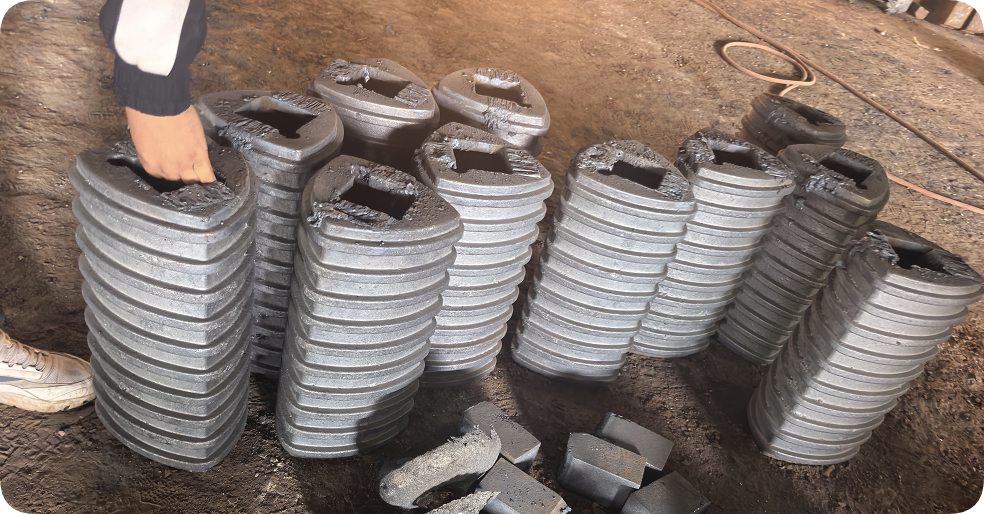
According to the national standard GB/T 5680-1998, ZGMn13 is divided into several sub-grades based on carbon content and performance focus to suit different working conditions.
Chemical composition range:
Carbon (C): 0.95% – 1.35%
Silicon (Si): 0.30% – 0.80%
Manganese (Mn): 11.00% – 14.00%
Sulfur (S): ≤0.035%, Phosphorus (P): ≤0.070%
| Grade | Carbon (C) Content | Characteristics and Applications |
| ZGMn13-1 | 1.10% – 1.50% | Suitable for wear-resistant parts subjected to low impact |
| ZGMn13-2 | 1.00% – 1.40% | Suitable for general castings |
| ZGMn13-3 | 0.90% – 1.30% | Suitable for castings with complex shapes and high toughness requirements |
| ZGMn13-4 | 0.90% – 1.20% | Suitable for wear-resistant parts subjected to high impact |
The international grade codes are as follows:
International/EU (EN): X120Mn12
Germany (DIN): 1.3404 (corresponding to X120Mn12)
USA (ASTM): A128 Grade A
Mechanical performance indicators
Initial Hardness HB 180 – 230 Initially soft, easy to process and install.
Post-Impact Hardness HB 500 – 800 Rapid surface hardening after strong impact; this is the core source of its wear resistance.
Tensile Strength 615 – 735 MPa Strength varies depending on carbon content and impact rating requirements; higher carbon grades have higher strength.
Elongation 15% – 35% Excellent plasticity; brittle fracture will not occur.
Impact Toughness ≥ 147 J Extremely high toughness; effectively absorbs impact energy.
Our company’s quality control system
Chemical Composition Control
Chemical composition is fundamental to performance and requires strict control over the content range of each element.
Main Controlled Elements: The carbon content of ZGMn13 is between 0.90% and 1.50%, and the manganese content is between 11.0% and 14.0%. Silicon is typically between 0.30% and 1.00%. It’s important to note that, depending on the impact conditions, domestic standards subdivide it into four grades with more specific requirements for carbon content: ZGMn13-4 (high-impact components) requires an even lower carbon content (0.90%-1.20%) to ensure better toughness.
Harmful Elements: Phosphorus (P) and sulfur (S) are harmful elements that cause cracking and require strict control. Typically, P ≤ 0.07% – 0.09% and S ≤ 0.04% – 0.05%.
Alloying and Modification Treatment: To further improve performance, a combination of modification treatment, inoculation treatment, and microalloying processes is often used. For example, adding ferrotitanium and rare-earth ferrosilicon alloys for modification treatment before tapping can refine the grains and improve carbide morphology; while adding elements such as Cr (2.0%-2.5%) and Mo (0.4%-0.6%) for microalloying can improve the initial hardness and work hardening ability of the material.
Smelting and Casting Control
Proper smelting and casting processes are prerequisites for obtaining pure and dense castings.
Smelting Equipment: ZGMn13 contains a large amount of reactive Mn, which easily reacts with acidic furnace linings. Therefore, alkaline or neutral furnace linings are recommended. Acidic furnace linings can lead to severe chemical sand adhesion and uncontrollable compositional loss.
Pouring Temperature: Excessively high pouring temperatures increase the risk of cracking, sand adhesion, and shrinkage porosity. In actual production, a pouring temperature of 1400℃-1470℃ is more suitable.
Steel Treatment and Casting: Before tapping, thorough deoxidation (such as final aluminum deoxidation) and removal of slag are necessary. The gating system design should avoid turbulence and prevent inclusion entrapment. It should also utilize exothermic risers to ensure sequential solidification and effective feeding.
Heat Treatment Process Control (Core)
Heat treatment is crucial to the final properties of ZGMn13. Failure to do this step properly can render all previous work futile.
Core Process: Water Cooling: Simply put, the casting is heated to a high temperature, dissolving all carbides into the austenite, and then rapidly immersed in water for “quenching,” effectively “freezing” this single, soft, and highly tough austenitic structure to room temperature.
Key Parameters:
Heating Temperature: 1050℃ – 1100℃. For thick castings, the upper limit temperature is recommended.
Holding Time: Ensure the casting is thoroughly heated. Typically calculated based on the casting wall thickness, approximately 1 hour for every 25mm of thickness.
Water Transfer: This is the most critical step! From opening the furnace door to the complete immersion of the casting in water, the transfer time must be strictly controlled within 2 minutes to prevent the precipitation of carbides from austenite during cooling.
Cooling medium: Use a large quantity of flowing cold water, ideally kept below 30℃ to ensure cooling speed.
Quality inspection and control: Inspection verifies the effectiveness of the preceding controls.
Mechanical properties: After water toughening, the tensile strength σb ≥ 615MPa and impact toughness ak ≥ 96 J/cm² are required.
Metallographic structure: According to standard inspection, a qualified microstructure should be a single austenite. The presence of continuous or discontinuous network carbides at grain boundaries indicates a failure.
Common defect prevention: Cracks, porosity, and sand adhesion are common defects. This requires optimizing the casting process (e.g., controlling the heat field and reducing molding sand moisture) and strictly controlling the melting and pouring temperatures. For example, chemical composition sand adhesion is caused by excessively high pouring temperatures, leading to the reaction of MnO in the molten steel with silica sand to form low-melting-point substances.
Application Areas of ZGMn13 material
Mining and Metallurgy: Ball mill liners, crusher jaw plates, excavator bucket teeth, shovel teeth
Construction Machinery: Track plates, tank track plates, drive wheels, support rollers
Building Materials and Power: Hammers, hammer plates, roller sleeves, crushing walls, grinding bowls
Transportation: Railway turnouts (frogs)
Other Areas: Shot blasting machine liners, rock drilling robot components, maglev train components, etc.