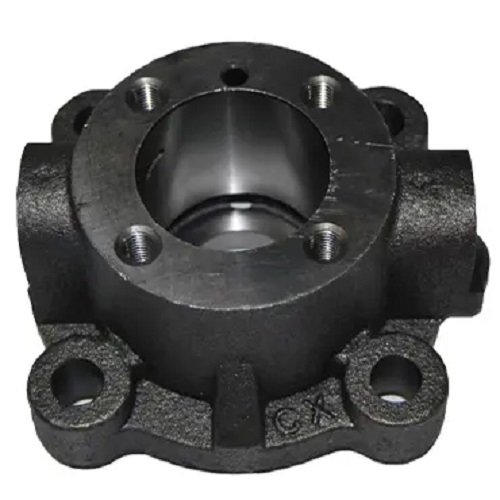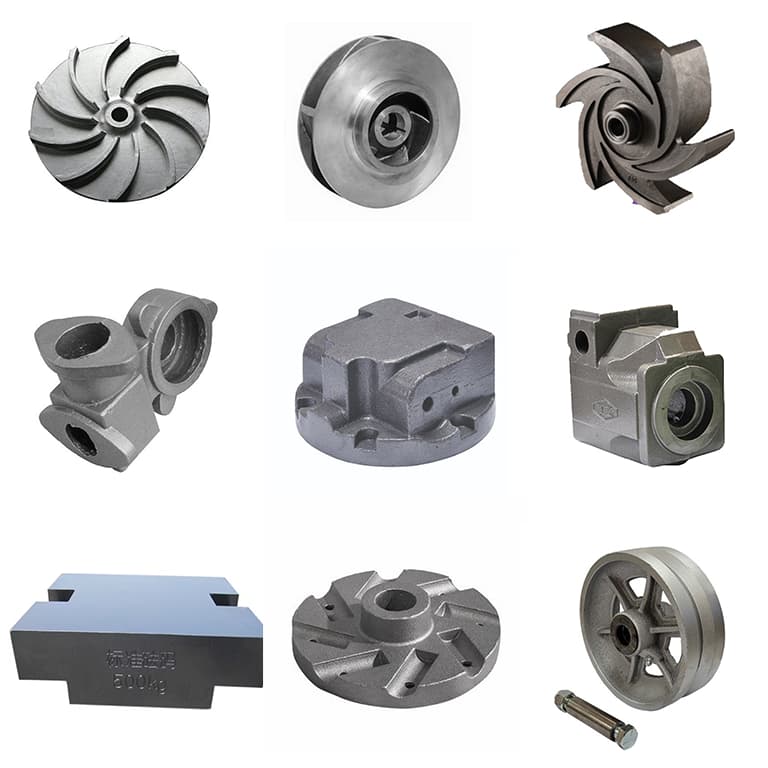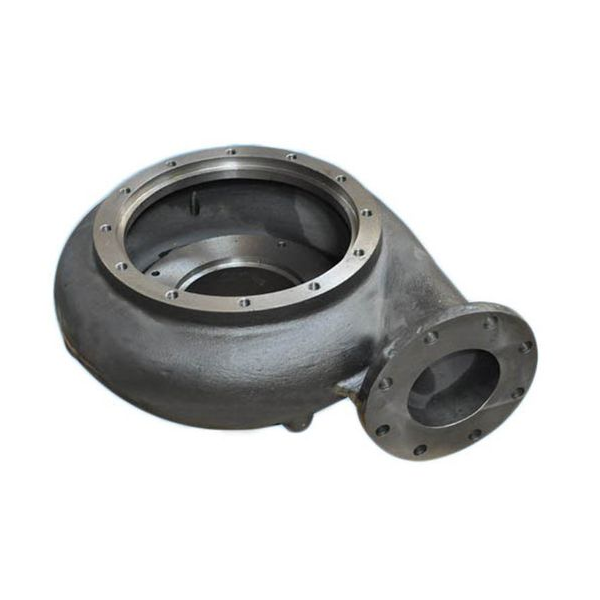
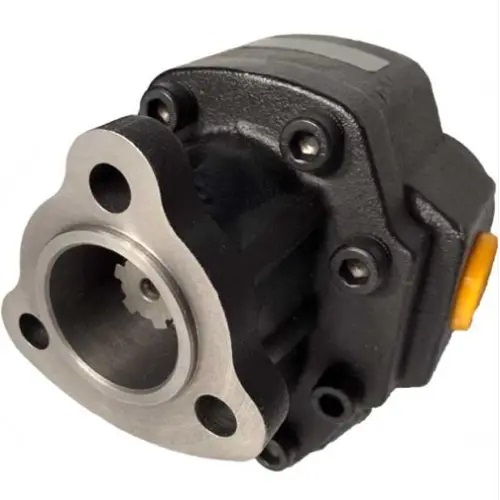
EN-GJS-450-10 represents a high-performance ductile iron material that combines excellent tensile strength with superior ductility for demanding engineering applications. Understanding EN-GJS-450-10 chemical composition, EN-GJS-450-10 material equivalent grades, and EN-GJS-450-10 mechanical properties enables engineers to optimize component design and manufacturing processes. This comprehensive guide explores the EN-GJS-450-10 material specification, composition details, and practical applications that make it a reliable choice for automotive components, agricultural equipment, and industrial machinery.
Industry professionals value EN-GJS-450-10 material for several compelling reasons:
- Minimum tensile strength of 450 MPa provides robust load-bearing capacity for high-stress applications
- Excellent elongation of 10% enables impact resistance and energy absorption capabilities
- Superior toughness compared to gray cast iron reduces crack propagation risk
- Good machinability reduces manufacturing costs despite higher strength levels
- Proven reliability across diverse industries including automotive, agriculture, and hydraulic systems
- Cost-effective alternative to steel forgings for complex geometries
Engineers who understand the EN-GJS-450-10 composition, material properties, and EN-GJS-450-10 material equivalent grades can select appropriate specifications and achieve optimal manufacturing economy.
Key Takeaways
- EN-GJS-450-10 delivers minimum 450 MPa tensile strength with 10% elongation for demanding applications
- The EN-GJS-450-10 chemical composition includes 3.50-4.00% carbon with controlled magnesium for nodularization
- International EN-GJS-450-10 material equivalent grades include QT450-10 (China), FCD400 (Japan), and ASTM A536 65-45-12 (USA)
- EN-GJS-450-10 mechanical properties include 160-210 HB hardness with excellent impact resistance
- The spheroidal graphite structure provides ductility superior to gray cast iron while maintaining castability
- Applications include agricultural implements, valve bodies, suspension components, hydraulic cylinders, and transmission housings
- Professional ductile iron casting foundries with ISO certification ensure consistent EN-GJS-450-10 material properties
- The EN-GJS-450-10 material specification follows EN 1563 standard requirements for production and testing
What Is EN-GJS-450-10 Material?
Material Classification
EN-GJS-450-10 follows the European standard designation system established by EN 1563 for ductile iron materials. The nomenclature breaks down into specific technical indicators defining material characteristics. “EN” signifies European Norm standardization, ensuring consistent EN-GJS-450-10 material specification across manufacturing regions. “GJS” identifies the material as ductile iron with spheroidal (nodular) graphite structure, distinguishing it from gray iron which uses “GJL” designation. The number “450” indicates minimum tensile strength of 450 megapascals measured on standard test bars, while “10” represents minimum elongation percentage.
This standardized designation system helps engineers and procurement specialists quickly identify EN-GJS-450-10 material properties without consulting detailed specification documents. The naming convention eliminates confusion when sourcing materials internationally. Manufacturers reference the same EN-GJS-450-10 composition and performance characteristics regardless of geographic location or supplier.
The material also carries alternative designations in various documentation systems. These alternative designations appear on material certificates and technical documentation. Understanding multiple designation formats facilitates material verification during procurement and quality control processes.
Note: The spheroidal graphite structure distinguishes EN-GJS-450-10 from gray iron (EN-GJL series) where graphite appears in flake form. This microstructural difference fundamentally impacts mechanical properties and application suitability, particularly regarding ductility and impact resistance.
Microstructure Characteristics
The distinctive performance characteristics of EN-GJS-450-10 material stem from its carefully developed microstructure during solidification and magnesium treatment. Molten iron containing the appropriate EN-GJS-450-10 chemical composition receives magnesium treatment that causes graphite to precipitate in spheroidal (nodular) form throughout the metallic matrix. These graphite nodules distribute uniformly, creating the ductile behavior that gives the material its name.
The metallic matrix surrounding graphite nodules consists predominantly of ferrite or ferritic-pearlitic structure in EN-GJS-450-10 material. Ferrite provides excellent ductility and toughness, contributing to the material’s 10% minimum elongation requirement. The balance between ferrite and pearlite determines the final strength-ductility combination within the EN-GJS-450-10 mechanical properties range.
| Microstructure Component | Typical Content | Contribution to Properties |
|---|---|---|
| Spheroidal Graphite | 10-15% by volume | Ductility, toughness, machinability |
| Ferrite | 50-100% | Ductility, elongation, impact resistance |
| Pearlite | 0-50% | Strength, hardness, wear resistance |
| Nodule Count | 100-300/mm² | Property uniformity, mechanical performance |
The graphite nodules act as less severe stress concentrators compared to flakes in gray iron, which explains the material’s superior ductility and toughness. The rounded nodule geometry allows plastic deformation around graphite particles without immediate crack initiation. This characteristic provides significant advantages in impact-loaded applications.
The predominantly ferritic matrix delivers excellent elongation and impact resistance while maintaining good tensile strength. This combination makes EN-GJS-450-10 material properties particularly valuable for applications requiring both strength and ductility, such as agricultural tillage tools, automotive suspension components, and pressure-containing vessels.
Key Performance Attributes
EN-GJS-450-10 excels in applications where its unique combination of strength and ductility provides optimal performance. The material demonstrates excellent impact resistance due to its spheroidal graphite structure and ductile matrix. Components manufactured from EN-GJS-450-10 material withstand dynamic loads and resist crack propagation better than gray cast iron.
Ductility represents the most distinctive advantage of EN-GJS-450-10 compared to gray iron materials. The EN-GJS-450-10 mechanical properties include 10% minimum elongation, approximately 15-20 times superior to gray cast iron. This ductility enables energy absorption during impact loading, protecting components from catastrophic failure in shock conditions.
Machinability of EN-GJS-450-10 material surpasses steel while providing higher strength than gray iron. The spheroidal graphite structure creates favorable chip formation during cutting operations, though not quite as free-cutting as gray iron’s flake graphite. Manufacturing operations achieve good productivity when machining ductile iron components with appropriate tooling.
Tip: When designing components requiring both high strength and impact resistance, consider EN-GJS-450-10 to reduce weight and cost compared to steel while exceeding gray iron’s mechanical capabilities through superior ductility characteristics.
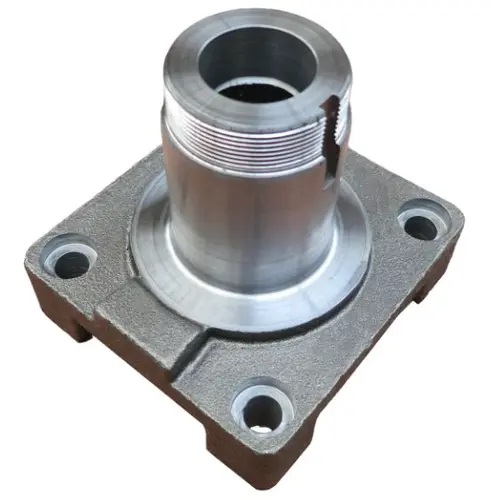
EN-GJS-450-10 Chemical Composition
Understanding EN-GJS-450-10 chemical composition provides critical insight into material behavior during casting and service performance. The EN-GJS-450-10 composition includes carefully balanced elements that control graphite nodularization, matrix structure, and mechanical properties. Each element in the EN-GJS-450-10 chemical composition serves specific purposes in achieving desired casting characteristics and performance outcomes.
Primary Alloying Elements
Carbon (C): 3.50% to 4.00%
Carbon content directly determines graphite quantity in the EN-GJS-450-10 material. The carbon concentration enables excellent casting fluidity, allowing complex geometries to fill completely during pouring. During solidification, carbon precipitates as spheroidal graphite nodules when magnesium treatment and proper inoculation promote nodular formation.
The EN-GJS-450-10 chemical composition specifies carbon content that balances casting fluidity with optimal nodule formation. Excessive carbon creates very soft material with coarse microstructure. Insufficient carbon results in reduced graphite content affecting ductility and mechanical properties.
Foundries monitor carbon content closely during melting operations. Spectrographic analysis verifies carbon levels before magnesium treatment. The carbon equivalent (CE = %C + %Si/3 + %P/3) typically ranges from 4.3 to 4.6 for optimal EN-GJS-450-10 material properties.
Silicon (Si): 2.20% to 2.90%
Silicon acts as a primary graphitizing element promoting spheroidal graphite formation in ductile iron production. The silicon range in EN-GJS-450-10 chemical composition balances ferrite promotion with adequate strength. Higher silicon content within specification promotes ferritic matrix structure, improving ductility and elongation.
Silicon also improves casting fluidity and reduces shrinkage tendencies, enhancing casting soundness. The silicon level influences the ferrite-to-pearlite ratio in the final microstructure, directly affecting EN-GJS-450-10 mechanical properties. Modern foundries optimize silicon content based on component section thickness and desired matrix balance.
Silicon measurement requires accurate spectroscopic analysis during production. The combined effect of carbon and silicon determines nodule formation tendency and final mechanical properties. Foundries use carbon equivalent calculations to predict material behavior and control production consistency.
Manganese (Mn): 0.30% to 0.60%
Manganese in EN-GJS-450-10 composition contributes to pearlite formation and strength enhancement. However, the manganese content remains relatively moderate compared to gray iron to avoid excessive pearlite that would reduce ductility below the 10% elongation requirement. Controlled manganese addition strengthens the matrix without impairing the ductility characteristic of EN-GJS-450-10 material.
Manganese also stabilizes carbides and influences hardenability. The manganese range maintains strength while preserving the predominantly ferritic or ferritic-pearlitic structure required for adequate elongation. Excessive manganese promotes pearlite formation reducing the ductility that distinguishes EN-GJS-450-10 from higher-strength ductile iron grades.
Magnesium (Mg): 0.020% to 0.060% (residual)
Magnesium represents the critical element that transforms gray iron into ductile iron. Magnesium treatment modifies graphite morphology from flakes to spheroids, fundamentally changing mechanical properties. The EN-GJS-450-10 chemical composition requires residual magnesium (after treatment) to maintain nodular graphite structure.
Foundries add magnesium through various treatment methods including ladle treatment, tundish methods, or sandwich processes. Treatment additions typically use 0.5-1.0% magnesium-containing alloys (commonly ferrosilicon-magnesium), with residual content measuring 0.035-0.050% after violent reaction and vapor loss.
Insufficient residual magnesium results in flake or vermicular graphite reducing ductility. Excessive magnesium creates processing difficulties including violent reactions, excessive dross formation, and potential carbide promotion. Precise magnesium control remains critical for consistent EN-GJS-450-10 material properties.
Impurity Elements
Sulfur (S): 0.020% to 0.040% (maximum)
Sulfur content in EN-GJS-450-10 chemical composition requires strict control during production. Sulfur interferes with nodularization by reacting with magnesium, consuming magnesium needed for graphite spheroidization. Each 0.01% sulfur consumes approximately 0.015% magnesium during treatment.
The EN-GJS-450-10 composition allows very low sulfur content compared to gray iron specifications. Foundries select raw materials including pig iron, steel scrap, and returns based on sulfur content. Desulfurization treatments before magnesium addition reduce sulfur to acceptable levels, though this adds processing cost.
Maintaining low sulfur improves magnesium treatment efficiency and nodule quality. Lower sulfur enables more consistent EN-GJS-450-10 mechanical properties with reduced magnesium consumption. Modern ductile iron foundries target sulfur content below 0.015% for optimal results.
Phosphorus (P): 0.03% to 0.06% (maximum)
Phosphorus creates brittleness in ductile iron by forming iron-iron phosphide eutectic (steadite) at cell boundaries. The phosphorus limit in EN-GJS-450-10 composition prevents excessive steadite formation that would reduce impact resistance and elongation. However, some phosphorus improves casting fluidity for thin sections.
The specified range balances improved castability against potential brittleness. Components requiring maximum impact resistance should minimize phosphorus content. Thin-walled castings may benefit from phosphorus toward the higher specification limit improving mold filling.
Raw material selection controls phosphorus input. Pig iron typically contains higher phosphorus than steel scrap. Foundries blend charge materials achieving target phosphorus levels within EN-GJS-450-10 chemical composition specifications.
EN-GJS-450-10 Composition Comparison
Comparing EN-GJS-450-10 chemical composition with adjacent ductile iron grades clarifies the material’s position within the ductile iron family:
| Element | EN-GJS-400-18 | EN-GJS-450-10 | EN-GJS-500-7 |
|---|---|---|---|
| Carbon (C) | 3.60-4.00% | 3.50-4.00% | 3.50-3.90% |
| Silicon (Si) | 2.40-3.00% | 2.20-2.90% | 2.00-2.80% |
| Manganese (Mn) | 0.2-0.4% | 0.3-0.6% | 0.3-0.7% |
| Magnesium (Mg) | 0.020-0.060% | 0.020-0.060% | 0.020-0.060% |
| Phosphorus (P) | ≤0.08% | ≤0.06% | ≤0.05% |
| Sulfur (S) | ≤0.03% | ≤0.040% | ≤0.020% |
Higher-strength grades show progressively more controlled composition ranges, particularly for silicon, phosphorus, and sulfur. The EN-GJS-450-10 composition represents a balance between ductility and strength suitable for impact-resistant applications.
Note: EN 1563 standard specifies that EN-GJS-450-10 chemical composition serves as production guidance rather than acceptance criteria. Final acceptance depends on meeting mechanical property requirements regardless of precise composition values within the general ranges.
EN-GJS-450-10 Mechanical Properties
The performance characteristics defined by EN-GJS-450-10 mechanical properties determine material suitability for specific engineering applications. Comprehensive understanding of EN-GJS-450-10 material properties enables accurate stress analysis and appropriate safety factors during component design. The EN-GJS-450-10 material specification establishes minimum values ensuring reliable performance across diverse applications.
Tensile Properties
Tensile Strength (Rm): 450-550 MPa (minimum 450 MPa)
Tensile strength represents the primary acceptance criterion for EN-GJS-450-10 material specification. The minimum value of 450 MPa must be achieved when testing separately cast test bars. Typical production material often exceeds the minimum value, with 460-500 MPa common for well-controlled foundry processes.
The tensile strength of ductile iron depends primarily on matrix microstructure and nodule characteristics. Ferritic matrices provide good strength with excellent ductility. Addition of pearlite increases strength toward the upper specification range. The EN-GJS-450-10 chemical composition and cooling rate during solidification control these microstructural features.
Testing procedures follow EN 1563 or ISO 1083 standards. Test specimens are machined from separately cast test bars to ensure consistent testing conditions. The test bar diameter and cooling rate approximate typical casting sections, providing representative EN-GJS-450-10 mechanical properties.
Yield Strength (Rp0.2): 310-380 MPa (minimum 310 MPa)
Yield strength indicates the stress level where permanent deformation begins. EN-GJS-450-10 material exhibits defined yield behavior at minimum 310 MPa, providing predictable performance in structural calculations. Typical yield strength measures 320-350 MPa for predominantly ferritic grades.
The yield-to-tensile ratio typically ranges from 0.65 to 0.75, indicating good ductility reserves after yielding. This characteristic enables energy absorption during overload conditions without immediate fracture. Engineering calculations utilize yield strength with appropriate safety factors for component design.
Elongation (A): ≥10% (minimum)
The elongation of EN-GJS-450-10 material reaches minimum 10%, representing substantial ductility compared to gray cast iron (typically <1%). Elongation values typically range from 10% to 15%, depending on matrix ferrite content and nodule quality. Higher ferrite content produces elongation toward the upper range.
The ductility reflects spheroidal graphite’s fundamental advantage over flake graphite. Rounded nodules allow matrix deformation without immediate crack initiation. Engineers should specify EN-GJS-450-10 for applications requiring impact resistance, energy absorption, or plastic deformation capability.
| Property | EN-GJS-450-10 Value | Test Method |
|---|---|---|
| Tensile Strength (Rm) | ≥450 MPa (typical 460-500 MPa) | EN 1563, ISO 1083 |
| Yield Strength (Rp0.2) | ≥310 MPa (typical 320-350 MPa) | EN 1563 |
| Elongation (A) | ≥10% (typical 10-15%) | EN 1563 |
| Brinell Hardness (HB) | 160-210 HB | EN 1563 |
Hardness Characteristics
Brinell Hardness: 160-210 HB
Hardness measurements provide rapid, non-destructive verification of EN-GJS-450-10 material properties. The Brinell hardness range correlates with predominantly ferritic or ferritic-pearlitic matrix microstructure. Lower hardness values (160-180 HB) indicate highly ferritic material with maximum ductility, while higher values (190-210 HB) suggest increased pearlite content with enhanced strength.
Foundries use hardness testing for production quality control. Measurements on production castings or test pieces verify that material meets expected values for the microstructure and EN-GJS-450-10 mechanical properties. Hardness testing requires less time and specimen preparation than tensile testing.
The hardness range provides adequate wear resistance while maintaining good machinability. Components operating in moderate wear environments benefit from this balance. Surface hardening treatments can enhance wear resistance when required without affecting core ductility.
Physical Properties
Density: 7.05-7.15 g/cm³
The density of EN-GJS-450-10 material remains relatively constant regardless of composition variations within specification limits. This consistent density simplifies weight calculations during component design. The density closely approximates carbon steel (7.85 g/cm³), making EN-GJS-450-10 approximately 10% lighter for equivalent volumes.
Weight predictions use the standard density value multiplied by component volume. Accurate density enables precise calculation of component mass for shipping, handling, and dynamic load analysis. The graphite content reduces density compared to steel by replacing denser iron with lighter carbon.
Modulus of Elasticity: 165-175 GPa
The elastic modulus of EN-GJS-450-10 material properties remains consistent at 165-175 GPa, approaching steel’s modulus (200-210 GPa). This relatively high stiffness distinguishes ductile iron from gray iron (90-100 GPa), making EN-GJS-450-10 suitable for applications requiring rigidity.
Engineers must account for the slightly lower modulus versus steel when calculating deflection under load. Ductile iron components deflect somewhat more than equivalent steel parts carrying identical loads. However, the difference remains far less significant than with gray cast iron.
Poisson’s Ratio: 0.27-0.29
Poisson’s ratio for EN-GJS-450-10 material closely matches steel values (0.27-0.30). This property affects stress calculations in multiaxial loading conditions and influences lateral strain during tensile loading. The similarity to steel enables standard calculation methods without special modifications.
Thermal Properties
Thermal Conductivity: 30-35 W/(m·K)
EN-GJS-450-10 material conducts heat less effectively than gray iron (46-50 W/(m·K)) but better than most steels. The spheroidal graphite structure provides less thermal conductivity than flake graphite. This characteristic suits applications where moderate heat dissipation suffices without requiring gray iron’s superior conductivity.
Adequate heat conduction reduces thermal gradients and associated thermal stresses. Components subjected to thermal cycling benefit from reasonable conductivity distributing heat more uniformly than low-conductivity materials.
Coefficient of Thermal Expansion: 10.5-11.0 × 10⁻⁶/K
The thermal expansion coefficient of EN-GJS-450-10 mechanical properties matches carbon steel values closely. This compatibility minimizes thermal stress when assembling ductile iron components with steel parts. Similar expansion rates prevent loosening or binding across temperature variations.
The spheroidal graphite provides some dimensional stability by constraining matrix expansion. Ductile iron generally exhibits good dimensional stability under thermal cycling. Components requiring accuracy across temperature ranges benefit from this characteristic.
Impact and Fracture Properties
Impact Resistance
EN-GJS-450-10 demonstrates excellent impact resistance compared to gray iron and higher-strength ductile iron grades. The combination of 450 MPa tensile strength with 10% elongation enables energy absorption during dynamic loading. Impact testing typically shows values of 10-17 Joules at room temperature for standard Charpy specimens.
The material maintains reasonable impact resistance at reduced temperatures, though values decline at sub-zero conditions. Applications involving potential impact loads or shock conditions benefit from EN-GJS-450-10’s ductile behavior preventing catastrophic brittle fracture.
Fracture Toughness
Fracture toughness values for EN-GJS-450-10 material typically measure 23-30 MPa·m^1/2, indicating good crack resistance. This toughness exceeds gray iron by factors of 5-10 times, providing safety margins against flaw propagation. The spheroidal graphite microstructure inhibits crack growth through the ductile matrix.
Components subjected to potential cracking from fatigue, thermal shock, or manufacturing flaws benefit from this toughness. The material tolerates minor defects without immediate failure, improving reliability in service.
Tip: When selecting materials for impact-loaded components or applications with potential shock conditions, prioritize EN-GJS-450-10 over higher-strength ductile irons (EN-GJS-500-7 or higher) to leverage superior elongation providing energy absorption capability.
EN-GJS-450-10 Material Specification Standards
Multiple international standards govern production and testing of this ductile iron, ensuring consistency across manufacturing regions. Understanding applicable EN-GJS-450-10 material specification standards facilitates international sourcing and quality verification.
European Standards
EN 1563:2012 (Current Standard)
The European standard EN 1563 titled “Founding – Spheroidal Graphite Cast Irons” provides comprehensive specifications for ductile iron production and testing. This standard replaced earlier national standards including DIN 1693 (Germany), BS 2789 (United Kingdom), and NF A32-201 (France). The EN-GJS-450-10 material specification follows requirements established in EN 1563.
EN 1563 covers:
- Material designation system and grade classifications
- EN-GJS-450-10 chemical composition guidance ranges
- Mechanical property requirements including test methods
- Test bar casting procedures and dimensions
- Inspection and certification requirements
- Acceptance criteria and dispute resolution
The standard specifies minimum tensile strength, yield strength, and elongation values for various ductile iron grades determined from separately cast test bars. The EN-GJS-450-10 material properties must meet minimum 450 MPa tensile strength, 310 MPa yield strength, and 10% elongation. Hardness ranges provide additional verification of microstructure and properties.
International Standards
ISO 1083:2018 – Spheroidal Graphite Cast Iron Classification
The International Organization for Standardization publishes ISO 1083 covering ductile iron classification and properties. This global standard harmonizes with regional standards including EN 1563. The ISO designation uses similar nomenclature for equivalent material indicating minimum tensile strength and elongation.
ISO 1083 establishes:
- Material property requirements aligned with EN specifications
- Test methods and specimen preparation procedures
- Designation system conventions
- International grade equivalencies
Manufacturing facilities producing for international markets typically reference both EN 1563 and ISO 1083 specifications. The standards align closely, with minor differences in documentation formats. Material produced to EN 1563 specifications generally satisfies ISO 1083 requirements.
Specification Requirements
Mechanical Property Testing
The EN-GJS-450-10 material specification requires tensile testing of separately cast test bars to verify mechanical properties. Standard test bars measure specified diameters with testing frequency depending on production volume and customer requirements. Specimens are machined to gauge dimensions before testing to provide consistent results.
Hardness testing provides supplementary verification without destructive testing requirements. Brinell hardness measurements on production castings or test pieces confirm expected microstructure correlating with tensile properties.
Metallographic Examination
Microstructure evaluation verifies spheroidal graphite morphology and matrix structure meet EN-GJS-450-10 material specification. Polished and etched samples examined under microscope confirm:
- Spheroidal graphite nodule distribution and nodularity (typically ≥80%)
- Ferritic or ferritic-pearlitic matrix appropriate for grade
- Absence of excessive carbides, inclusions, or degenerate graphite
- Appropriate nodule count (typically 100-300 nodules/mm²)
Metallographic examination typically occurs during process qualification and periodic verification. Critical applications may require per-lot microstructure confirmation ensuring consistent quality.
Documentation and Certification
Foundries supply material certificates documenting compliance with EN-GJS-450-10 material specification requirements. Typical certificates include:
- Chemical composition analysis results
- Mechanical property test data (tensile strength, yield strength, elongation)
- Hardness measurements
- Heat identification and traceability
- Compliance statement with applicable standards
Inspection certificates following EN 10204 Type 3.1 or 3.2 formats provide comprehensive quality documentation. These certificates enable customer verification of material properties and compliance.
Tip: When procuring EN-GJS-450-10 material, specify the required certification level (EN 10204 3.1, 3.2, etc.) and any special testing requirements during initial quotation to avoid delivery delays or misunderstandings regarding documentation expectations.
EN-GJS-450-10 Material Equivalent Grades
Engineers frequently need to identify EN-GJS-450-10 material equivalent grades across international standards for global sourcing and material substitution. Understanding equivalent designations ensures material compatibility when specifications reference different standards. The EN-GJS-450-10 material equivalent system facilitates international trade and technical communication.
Chinese Standard Equivalent
QT450-10 (GB/T 1348)
The Chinese national standard GB/T 1348 designates equivalent ductile iron as QT450-10. The “QT” abbreviation represents “Qiu Tie” (ductile iron in Chinese), while “450” directly indicates minimum tensile strength in MPa and “10” represents minimum elongation percentage. Chinese foundries produce QT450-10 extensively for automotive components, machinery castings, and agricultural equipment applications.
The QT450-10 chemical composition and mechanical properties align closely with EN-GJS-450-10 material specification:
- Tensile strength minimum: 450 MPa
- Yield strength minimum: 310 MPa
- Elongation minimum: 10%
- Brinell hardness: 160-210 HB
Chinese automotive manufacturers, agricultural equipment producers, and machinery companies commonly specify QT450-10. The widespread availability and established production processes make this EN-GJS-450-10 material equivalent readily available from Chinese foundries. Material certificates reference both GB/T 1348 and international equivalent designations.
Japanese Standard Equivalent
FCD400 (JIS G 5501)
Japanese Industrial Standard JIS G 5501 classifies equivalent ductile iron as FCD400. The “FCD” designation abbreviates “Ferrous Casting Ductile” while “400” indicates minimum tensile strength (slightly lower at 400 MPa versus 450 MPa). However, FCD450 provides closer strength equivalence to EN-GJS-450-10 material.
FCD400 specifications include:
- Tensile strength minimum: 400 MPa (FCD450: 450 MPa)
- Elongation minimum: 15% (FCD450: 10%)
- Predominantly ferritic matrix microstructure
Japanese automotive industry and machinery manufacturers utilize FCD400 and FCD450 for suspension components, transmission housings, and agricultural equipment. Japanese foundries maintain rigorous quality control systems supporting automotive precision requirements.
American Standard Equivalent
ASTM A536 Grade 65-45-12
The American Society for Testing and Materials specifies ductile iron in ASTM A536 standard. Grade 65-45-12 designation indicates minimum tensile strength of 65 ksi (448 MPa), yield strength of 45 ksi (310 MPa), and elongation of 12%, closely matching EN-GJS-450-10 material specification. This EN-GJS-450-10 material equivalent serves diverse American industrial applications.
ASTM A536 Grade 65-45-12 characteristics:
- Tensile strength minimum: 65 ksi (448 MPa)
- Yield strength minimum: 45 ksi (310 MPa)
- Elongation minimum: 12%
- Hardness typically 160-210 HB
The ASTM designation uses imperial units and specifies slightly higher elongation (12% versus 10%). The mechanical properties remain functionally equivalent for most engineering applications. American foundries optimize composition to achieve required properties following ASTM testing procedures.
Other International Equivalents
Italy: GS400-12 (UNI Standards)
Italian standard UNI designates similar material as GS400-12, following comparable nomenclature conventions. Italian foundries supply GS400-12 castings for machinery and automotive applications with properties equivalent to EN-GJS-450-10 material.
France: FGS400 (NF Standards)
French standards historically designated this material as FGS400 before adopting European harmonized standards. French foundries now primarily reference EN 1563 but may include FGS400 designation on legacy documentation.
Germany: GGG45 (Former DIN 1693)
German standard DIN 1693 (now superseded by EN 1563) classified this material as GGG45 where “GGG” represents spheroidal graphite cast iron and “45” indicates strength classification. German foundries now use EN-GJS-450-10 designation with GGG45 occasionally referenced for legacy compatibility.
Belgium: FNG42-12
Belgian standards designate equivalent material as FNG42-12. The properties align with EN-GJS-450-10 material equivalent specifications suitable for machinery and industrial applications.
Japan (Alternative): FGS400
Japanese standards also reference FGS400 as an alternative designation for ductile iron with properties similar to EN-GJS-450-10 material.
Equivalent Grade Comparison Table
| Standard | Designation | Tensile Strength | Yield Strength | Elongation | Primary Region |
|---|---|---|---|---|---|
| European (EN 1563) | EN-GJS-450-10 | ≥450 MPa | ≥310 MPa | ≥10% | Europe |
| ISO 1083 | ISO 450-10 | ≥450 MPa | ≥310 MPa | ≥10% | International |
| China (GB/T 1348) | QT450-10 | ≥450 MPa | ≥310 MPa | ≥10% | China |
| Japan (JIS G 5501) | FCD450 | ≥450 MPa | ≥310 MPa | ≥10% | Japan |
| USA (ASTM A536) | 65-45-12 | ≥448 MPa | ≥310 MPa | ≥12% | North America |
| Germany (Former DIN) | GGG45 | ≥450 MPa | ≥310 MPa | ≥10% | Germany (legacy) |
| Italy (UNI) | GS400-12 | ≥400 MPa | – | ≥12% | Italy |
| Belgium | FNG42-12 | ≥420 MPa | – | ≥12% | Belgium |
Material Substitution Considerations
When substituting between EN-GJS-450-10 material equivalent grades from different standards, engineers should verify several critical factors:
Mechanical Property Alignment
Compare minimum tensile strength, yield strength, and elongation requirements across standards. Most EN-GJS-450-10 material equivalent grades specify 450 MPa minimum tensile strength with 10-12% elongation, providing similar load-bearing and ductility characteristics. Verify that all critical properties meet application needs.
Testing methods may differ slightly between standards. EN/ISO use metric test specimens while ASTM uses inch-based dimensions. These testing variations typically produce comparable results within normal material scatter.
Section Size Effects
All ductile iron standards recognize that mechanical properties vary with casting section thickness. Thicker sections cool more slowly, potentially producing more pearlite with reduced elongation. EN-GJS-450-10 material specification bases properties on standard test bars representing typical medium-section castings.
When substituting materials, verify that section thickness considerations align across standards. Component design should account for actual section thickness effects on EN-GJS-450-10 mechanical properties to ensure adequate performance.
Note: When substituting between standards for critical applications, engineers should review detailed specifications including test methods, acceptance criteria, and section thickness effects. Material testing or qualification may be advisable for safety-critical components or demanding applications.
Tip: For international projects, specify both the primary standard designation and recognized EN-GJS-450-10 material equivalent grades to facilitate global sourcing while maintaining quality consistency across different supplier regions.
Primary Applications of EN-GJS-450-10
The balanced combination of high strength, excellent ductility, and impact resistance makes EN-GJS-450-10 material suitable for demanding industrial applications. Understanding typical applications helps engineers evaluate material appropriateness for specific component requirements.
Agricultural Equipment
Plough Components and Tillage Tools
Agricultural tillage equipment utilizes EN-GJS-450-10 material for plough blades, plough piles, cultivator points, and ground-engaging components. The material withstands impact loads from rocks and obstacles while resisting abrasive soil wear. The 10% elongation enables energy absorption during shock loading without brittle fracture.
The casting process creates complex blade geometries economically compared to fabricated steel alternatives. EN-GJS-450-10 mechanical properties provide adequate strength for soil forces while the ductility prevents catastrophic failure from hidden obstacles. Manufacturing costs remain competitive for agricultural equipment producers.
Field conditions subject equipment to unpredictable impact loads. The material’s toughness reduces downtime from component failure during critical planting or harvesting seasons. Farmers value reliability that EN-GJS-450-10 material properties deliver in demanding agricultural applications.
Differential Housings and Transmission Components
Agricultural tractors and equipment employ EN-GJS-450-10 for differential housings, transmission cases, and drivetrain components. The casting process creates complex internal geometries for gear mounting and lubrication passages. The material provides structural rigidity while absorbing shock loads from field operations.
The adequate strength supports heavy loads while ductility prevents cracking from overload conditions. Agricultural equipment often experiences severe service conditions including high torque, vibration, and temperature variations. EN-GJS-450-10 composition enables reliable performance across diverse operating conditions.
Automotive Components
Suspension and Steering Parts
Automotive suspension systems utilize EN-GJS-450-10 material for control arms, steering knuckles, and suspension brackets. The combination of strength and impact resistance suits components subjected to road shock and dynamic loads. The material absorbs energy from potholes and rough road surfaces without failure.
The casting versatility enables complex geometries integrating multiple mounting points and attachment features. EN-GJS-450-10 mechanical properties provide weight savings compared to steel fabrications while exceeding gray iron’s ductility requirements. Automotive manufacturers value cost-effectiveness combined with reliable crash performance.
Suspension components require fatigue resistance under cyclic loading. The material demonstrates good fatigue strength suitable for vehicle service life expectations. Surface treatments including painting and corrosion protection adhere well to ductile iron castings.
Brake System Components
Heavy-duty brake calipers and certain brake system housings employ EN-GJS-450-10 material for structural integrity and thermal management. The material withstands clamping forces while providing adequate thermal conductivity for heat dissipation. The ductility prevents cracking from thermal shock during severe braking.
Commercial vehicles and heavy equipment brake systems benefit from EN-GJS-450-10’s balance of strength and toughness. The material tolerates the stresses of repeated heating and cooling cycles better than gray iron in demanding applications.
Hydraulic and Pneumatic Systems
Valve Bodies and Manifolds
Hydraulic valve bodies, directional control valves, and manifold blocks utilize EN-GJS-450-10 material for pressure containment and structural integrity. The casting process creates complex internal porting and external mounting features economically. The material provides pressure ratings suitable for industrial hydraulic systems operating at moderate pressures.
Machinability enables precision finishing of sealing surfaces and threaded ports. The EN-GJS-450-10 composition resists many hydraulic fluids and industrial process fluids. Municipal water systems, hydraulic power units, and industrial machinery commonly specify ductile iron valve components.
The material’s toughness prevents brittle failure from pressure surges or water hammer conditions. Service life in hydraulic applications often exceeds 20-30 years with proper design and maintenance. Cost-effectiveness makes EN-GJS-450-10 standard for medium-pressure valve applications.
Cylinder Bodies and Pump Housings
Hydraulic cylinders and pump housings cast from EN-GJS-450-10 material provide structural containment for pressurized fluids. The casting includes integral mounting features, port connections, and reinforcement ribs. The material withstands internal pressure and external mounting loads simultaneously.
Industrial equipment including construction machinery, material handling systems, and manufacturing equipment employ ductile iron hydraulic components. The EN-GJS-450-10 mechanical properties balance pressure capability with manufacturing economy for medium-duty applications.
Industrial Machinery
Gearbox and Transmission Housings
Industrial gearbox housings cast from EN-GJS-450-10 material provide rigid mounting for gear trains while incorporating bearing supports and sealing surfaces. The adequate strength supports gear separation forces and external mounting loads. The material’s stiffness maintains bearing alignment critical for quiet operation and long life.
Manufacturing equipment, conveyor drives, and industrial machinery utilize ductile iron gearboxes extensively. The casting process creates complex geometries integrating multiple features economically. Precision machining of bearing bores and mounting surfaces achieves tight tolerances required for proper gear operation.
Counterweights and Structural Components
Construction equipment, material handling machinery, and industrial equipment employ EN-GJS-450-10 for counterweights, mounting brackets, and structural components. The material provides adequate strength with reasonable cost for applications requiring mass and structural integrity.
The density of EN-GJS-450-10 material creates effective counterweights for cranes, excavators, and lifting equipment. Casting enables complex mounting features and attachment points integrated into single components. The ductility prevents cracking from shock loads during equipment operation.
Construction and Mining Equipment
Wear Plates and Ground-Engaging Tools
Mining equipment and earthmoving machinery use EN-GJS-450-10 for wear plates, cutting edges, and impact-resistant components. The material withstands abrasive wear while maintaining toughness preventing brittle fracture. Applications include crusher components, grinder parts, and material handling equipment.
The combination of hardness and ductility provides good wear life in abrasive conditions. Surface hardening treatments can enhance wear resistance when extreme abrasion occurs. The EN-GJS-450-10 composition delivers reliability in demanding mining and construction environments.
Note: Application selection should consider specific operating conditions including pressure levels, impact loading, temperature ranges, and required service life. Consultation with experienced ductile iron casting foundries helps optimize material selection and component design.
Manufacturing Ductile Iron Components
Successful production of EN-GJS-450-10 components requires sophisticated metallurgical control and comprehensive quality assurance. Professional foundries implement systematic procedures ensuring consistent EN-GJS-450-10 material properties across production.
Melting and Magnesium Treatment
Base Iron Preparation
Modern foundries carefully select raw materials including pig iron, steel scrap, and foundry returns to achieve target base iron chemistry before magnesium treatment. The base iron composition must provide appropriate carbon and silicon levels supporting nodularization after treatment.
Electric induction furnaces provide precise temperature and composition control for EN-GJS-450-10 production. Melting temperatures typically reach 1480-1520°C ensuring complete dissolution and homogenization. Spectrographic analysis verifies base iron composition before proceeding to magnesium treatment.
Magnesium Treatment Process
Magnesium treatment represents the critical step transforming gray iron into ductile iron. Foundries employ various treatment methods including ladle treatment, tundish methods, or sandwich processes. The violent reaction between magnesium and molten iron requires careful process control ensuring operator safety and consistent results.
Treatment typically uses ferrosilicon-magnesium alloys containing 5-10% magnesium. Addition quantities calculate based on sulfur content and desired residual magnesium (typically 0.040-0.050%). The EN-GJS-450-10 chemical composition requires precise residual magnesium maintaining spheroidal graphite formation.
Temperature control during treatment ensures proper reaction kinetics. Excessive temperature causes violent reactions with magnesium loss. Insufficient temperature results in incomplete reactions with inadequate nodularization. Foundries maintain treatment temperatures around 1450-1480°C for optimal results.
Inoculation
Inoculation follows magnesium treatment, introducing nucleating agents promoting uniform nodule distribution during solidification. Ferrosilicon-based inoculants added to ladles or during pouring ensure fine, evenly distributed graphite nodules. Proper inoculation prevents carbide formation and optimizes EN-GJS-450-10 mechanical properties.
Multiple inoculation stages (ladle and mold inoculation) provide most effective results. Late inoculation just before pouring maximizes effectiveness as inoculation effects fade over time. Foundries must pour within 10-15 minutes after treatment for consistent nodularization.
Quality Control Testing
Chemical Analysis
Spectroscopic analysis verifies EN-GJS-450-10 composition after treatment before pouring each production heat. Modern optical emission spectrometers provide rapid analysis of all major and minor elements including residual magnesium content. Results must confirm proper treatment effectiveness before metal receives approval for casting.
Metallographic Examination
Microscopic examination of polished and unetched samples verifies nodule characteristics. Trained metallographers evaluate nodularity percentage (typically ≥80% required), nodule count (100-300/mm² typical), and nodule size distribution. Etched samples reveal matrix structure confirming predominantly ferritic or ferritic-pearlitic microstructure appropriate for EN-GJS-450-10 material properties.
Image analysis systems provide objective quantification of microstructural features. Consistent nodule characteristics across production heats indicate proper process control. Variations signal need for treatment parameter adjustments or raw material changes.
Mechanical Testing
Tensile testing of separately cast test bars verifies EN-GJS-450-10 material properties meet specification requirements. Test bars cast under controlled conditions provide representative mechanical properties. Universal testing machines determine tensile strength, yield strength, and elongation confirming compliance with minimum values.
Hardness testing provides supplementary verification using Brinell methods. Hardness measurements on test pieces or production castings confirm expected values. The 160-210 HB range indicates proper heat treatment and microstructure development.
Heat Treatment Options
Stress Relief Annealing
Components may receive stress relief annealing at 500-600°C to remove residual stresses from casting without significantly altering microstructure or mechanical properties. This treatment improves dimensional stability and reduces distortion risk during subsequent machining operations.
Ferritic Annealing
Ferritic annealing at 860-920°C followed by slow cooling produces fully ferritic matrix with maximum ductility. This treatment benefits applications requiring enhanced impact resistance or improved machinability. However, it may reduce strength slightly below typical as-cast EN-GJS-450-10 mechanical properties.
Surface Hardening
Induction or flame hardening of selected surfaces increases wear resistance without affecting core ductility. Surface hardening creates hard outer layers (typically 400-500 HV) while maintaining tough cores. This treatment benefits wear surfaces on agricultural tillage tools and ground-engaging equipment.
Selecting a Ductile Iron Casting Foundry
Component quality depends significantly on foundry expertise and manufacturing capabilities. Engineers should evaluate multiple factors when selecting partners for EN-GJS-450-10 production.
Technical Capability Assessment
Ductile Iron Expertise
Foundries specializing in ductile iron demonstrate deep understanding of EN-GJS-450-10 composition control, magnesium treatment processes, and microstructure development. They maintain laboratory facilities equipped for chemical analysis, metallographic examination, and mechanical testing. Experienced metallurgists oversee treatment operations and troubleshoot quality issues.
The foundry should provide detailed material certifications including chemical composition, mechanical test results, and microstructure verification. Metallurgical support during design optimization helps engineers select appropriate materials and optimize component geometry for manufacturing.
Process Capabilities
Evaluate the foundry’s casting processes including molding methods, core production, and pouring systems. Sand casting remains most common for EN-GJS-450-10 components, with green sand, resin-bonded sand, or shell molding available. Different processes suit specific size ranges, production volumes, and quality requirements.
Heat treatment facilities including stress relief and surface hardening equipment provide complete manufacturing solutions. Integrated machining capabilities allow delivery of finished components rather than rough castings. This integration reduces supplier management complexity and improves delivery coordination.
Quality System Verification
ISO Certification
Professional foundries maintain ISO 9001:2015 quality management certification at minimum. Advanced foundries pursue additional certifications including IATF 16949 for automotive supply. Certification demonstrates systematic quality management supporting consistent EN-GJS-450-10 material properties.
Production Sample Evaluation
Request sample castings demonstrating capability to produce components meeting EN-GJS-450-10 material specification. Examine samples for surface quality, dimensional accuracy, and absence of visible casting defects. Review accompanying material certificates confirming mechanical properties and chemical composition.
For engineers seeking a reliable ductile iron casting foundry partner with proven expertise in EN-GJS-450-10 production, SHENGRONG delivers specialized capabilities in ductile iron manufacturing with comprehensive quality assurance. The foundry maintains ISO certification and operates advanced metallurgical laboratories ensuring consistent material properties and reliable component quality.
Conclusion
EN-GJS-450-10 represents a versatile ductile iron grade offering excellent balance of 450 MPa tensile strength with 10% elongation for demanding applications. The spheroidal graphite microstructure created through magnesium treatment provides superior impact resistance compared to gray iron while maintaining good castability and machinability. Understanding EN-GJS-450-10 chemical composition, mechanical properties, and equivalent grades enables engineers to optimize component design across international projects. Success depends on partnering with experienced ductile iron casting foundries maintaining ISO certification and rigorous metallurgical control for consistent material quality.
Frequently Asked Questions (FAQ)
What is EN-GJS-450-10 material used for?
EN-GJS-450-10 material is primarily used for impact-resistant components including agricultural tillage tools (plough blades, cultivator points), automotive suspension parts (control arms, steering knuckles), hydraulic valve bodies, transmission housings, and industrial machinery components. The combination of 450 MPa tensile strength with 10% elongation makes it ideal for applications requiring both high strength and energy absorption capability during shock loading conditions.
What is the chemical composition of EN-GJS-450-10?
The EN-GJS-450-10 chemical composition includes carbon 3.50-4.00%, silicon 2.20-2.90%, manganese 0.30-0.60%, with residual magnesium 0.020-0.060% after treatment. Phosphorus content remains below 0.06% maximum and sulfur below 0.040% maximum. The magnesium treatment is critical for creating spheroidal graphite structure that distinguishes ductile iron from gray iron. According to EN 1563 standard, the exact composition is left to manufacturer discretion provided mechanical properties meet specifications.
What are EN-GJS-450-10 equivalent grades internationally?
EN-GJS-450-10 material equivalent grades include QT450-10 in China (GB/T 1348), FCD450 in Japan (JIS G 5501), ASTM A536 Grade 65-45-12 in USA, GGG45 in Germany (former DIN 1693), and ISO 1083 Grade 450-10 internationally. These equivalent materials provide similar mechanical properties with minimum 450 MPa tensile strength, 310 MPa yield strength, and 10-12% elongation suitable for global sourcing and material substitution.
What are the mechanical properties of EN-GJS-450-10?
EN-GJS-450-10 mechanical properties include minimum tensile strength 450 MPa (typical 460-500 MPa), minimum yield strength 310 MPa (typical 320-350 MPa), minimum elongation 10% (typical 10-15%), and Brinell hardness 160-210 HB. The material exhibits elastic modulus 165-175 GPa, density 7.05-7.15 g/cm³, and thermal conductivity 30-35 W/(m·K). Impact resistance typically measures 10-17 Joules at room temperature with fracture toughness around 23-30 MPa·m^1/2.
How does EN-GJS-450-10 compare to gray cast iron?
EN-GJS-450-10 material provides significantly superior ductility and impact resistance compared to gray cast iron. While gray iron like EN-GJL-200 offers only 0.3-0.8% elongation, EN-GJS-450-10 delivers minimum 10% elongation—approximately 15-20 times more ductile. The spheroidal graphite structure in EN-GJS-450-10 prevents crack propagation better than flake graphite in gray iron. However, gray iron provides superior vibration damping and machinability. Choose EN-GJS-450-10 for applications requiring impact resistance; select gray iron for maximum damping and easy machining.
Can EN-GJS-450-10 be heat treated?
Yes, EN-GJS-450-10 material responds to various heat treatments. Stress relief annealing at 500-600°C removes residual stresses without changing mechanical properties. Ferritic annealing at 860-920°C followed by slow cooling produces fully ferritic matrix maximizing ductility to 12-18% elongation. Surface hardening through induction or flame hardening increases wear resistance to 400-500 HV while maintaining tough cores. Heat treatment selection depends on application requirements for ductility, wear resistance, or dimensional stability.
What is the difference between EN-GJS-450-10 and EN-GJS-500-7?
EN-GJS-450-10 provides 450 MPa tensile strength with 10% minimum elongation, emphasizing ductility and impact resistance. EN-GJS-500-7 offers higher 500 MPa tensile strength but reduced 7% minimum elongation. The EN-GJS-450-10 composition contains more ferrite in the matrix promoting ductility, while EN-GJS-500-7 includes more pearlite increasing strength. Applications requiring maximum impact absorption and energy absorption should specify EN-GJS-450-10. Components prioritizing higher strength with moderate ductility suit EN-GJS-500-7.
How is EN-GJS-450-10 manufactured?
EN-GJS-450-10 material production involves melting base iron in induction furnaces at 1480-1520°C, followed by critical magnesium treatment using ferrosilicon-magnesium alloys to create spheroidal graphite structure. The treatment requires precise control maintaining residual magnesium at 0.040-0.050%. After treatment, inoculation with ferrosilicon-based materials promotes uniform nodule distribution. The metal is poured into sand molds where controlled cooling develops the ferritic-pearlitic matrix. Quality control includes spectroscopic analysis, metallographic examination verifying nodularity ≥80%, and mechanical testing per EN 1563 specifications.