
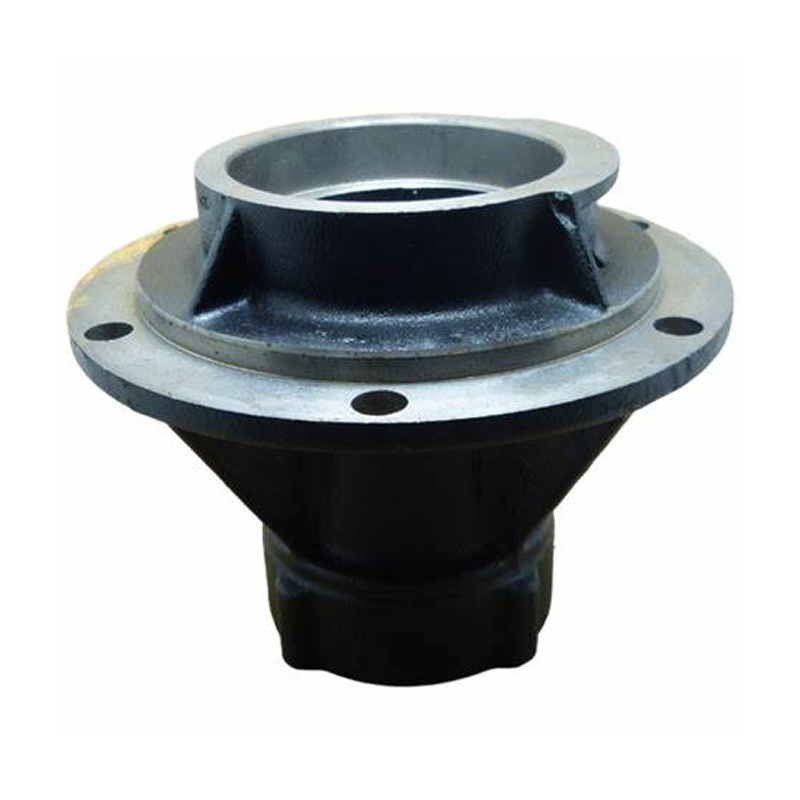
Engineers seeking maximum ductile iron strength frequently specify GGG70 for heavy-duty industrial components. This comprehensive guide examines the GGG70 chemical composition, GGG70 material equivalent grades, and GGG70 material properties that make it the premium choice for demanding applications requiring exceptional load-bearing capacity and wear resistance.
Industry professionals value GGG70 material for several compelling technical advantages:
- Minimum 700 MPa tensile strength provides superior load-bearing capacity exceeding all standard ductile iron grades
- Excellent wear resistance from predominantly pearlitic microstructure extends service life in abrasive environments
- Superior hardness (230-300 HB) reduces maintenance requirements in high-stress applications
- Good machinability despite high hardness when using appropriate tooling and cutting parameters
- Proven reliability in mining equipment, heavy machinery, and high-performance automotive components
- Cost-effective alternative to steel forgings for complex geometries requiring maximum strength
Engineers who understand GGG70 chemical composition, GGG70 material properties, and GGG70 material equivalent standards can optimize component design and achieve reliable performance in the most demanding applications.
Key Takeaways
- GGG70 delivers minimum 700 MPa tensile strength with 2% elongation for maximum strength applications
- The GGG70 chemical composition includes 3.6-3.8% carbon with controlled silicon and magnesium for nodularization
- International GGG70 material equivalent grades include QT700-2 (China), FCD700 (Japan), and ASTM A536 100-70-03 (USA)
- GGG70 material properties include 420-440 MPa yield strength with hardness 230-300 HB
- The predominantly pearlitic matrix provides strength superior to all lower-grade ductile irons
- Applications include heavy-duty crankshafts, mining equipment, high-strength gears, and hydraulic components
- Selecting experienced ductile iron casting foundries ensures consistent GGG70 material quality
What Is GGG70 Material?
GGG70 material is a premium high-strength ductile iron grade with minimum 700 MPa tensile strength, featuring predominantly pearlitic matrix structure that delivers exceptional mechanical properties for maximum-load applications.
Material Classification
GGG70 follows the German designation system established by DIN 1693, now harmonized with European standard EN 1563 as EN-GJS-700-2. The nomenclature provides immediate technical identification: “GGG” represents “Gusseisen mit Kugelgraphit” (spheroidal graphite cast iron in German), distinguishing it from gray iron. The number “70” indicates minimum tensile strength of 700 megapascals, making it the highest-strength standard ductile iron grade.
This standardized designation eliminates confusion during international procurement. Engineers reference GGG70 material properties consistently regardless of geographic location or supplier, facilitating global component sourcing and quality verification.
Microstructure Characteristics
The exceptional performance characteristics of GGG70 material stem from its carefully controlled microstructure. Molten iron containing the precise GGG70 chemical composition receives magnesium treatment, causing graphite to precipitate in spheroidal form throughout the metallic matrix rather than flakes as in gray iron. These graphite nodules distribute uniformly at 100-200 nodules/mm², creating the ductile behavior distinguishing this material.
The metallic matrix surrounding graphite nodules consists of predominantly pearlitic structure in GGG70 material. This pearlite provides the exceptional 700 MPa tensile strength and superior wear resistance. The nearly fully pearlitic matrix (typically 90-100% pearlite) differentiates GGG70 from lower-strength grades containing more ferrite.
| Microstructure Component | Typical Content | Contribution to GGG70 Properties |
|---|---|---|
| Spheroidal Graphite | 10-11% by volume | Machinability, controlled ductility |
| Pearlite | 90-100% | Maximum strength, hardness, wear resistance |
| Nodule Count | 100-200/mm² | Property uniformity, strength |
The spheroidal graphite acts as less severe stress concentrators compared to flakes, explaining the material’s superior strength. The predominantly pearlitic matrix delivers the exceptional tensile strength while the spheroidal graphite maintains reasonable toughness preventing brittle failure.
GGG70 Chemical Composition
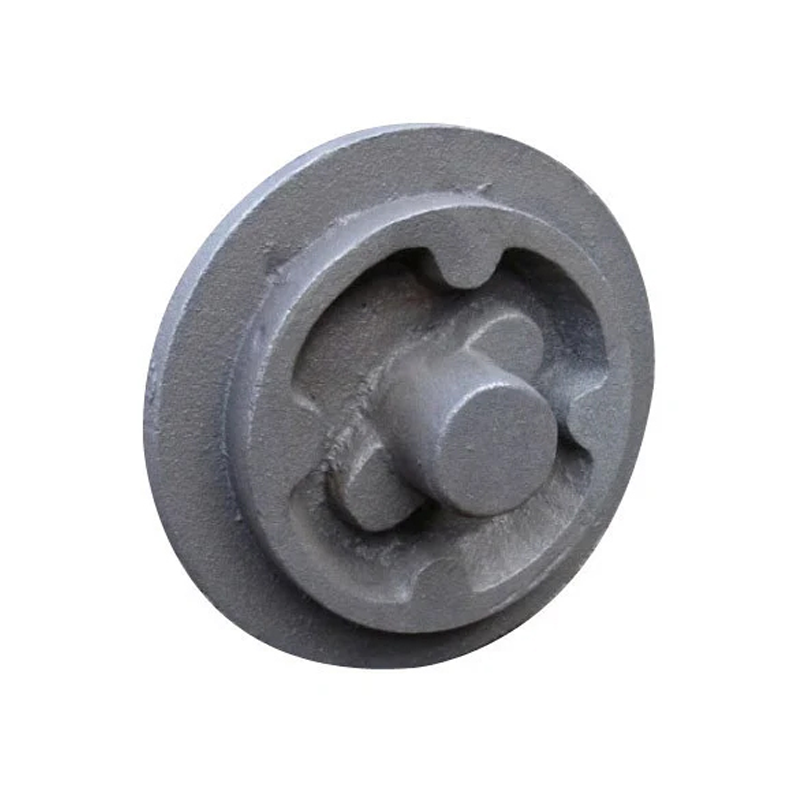
The GGG70 chemical composition includes 3.6-3.8% carbon, 2.4-2.8% silicon, 0.3-0.5% manganese, and critical residual magnesium 0.045-0.05% ensuring spheroidal graphite formation for 700 MPa strength.
Understanding GGG70 chemical composition provides critical insight into material behavior and performance. Each element serves specific purposes achieving the predominantly pearlitic microstructure required for maximum strength.
Primary Alloying Elements
Carbon (C): 3.6-3.8%
Carbon content directly determines graphite quantity in GGG70 material. This controlled range enables good casting fluidity while limiting graphite volume to promote maximum pearlite content. The GGG70 composition specifies lower carbon than softer grades (GGG40: 3.5-4.0%, GGG50: 3.4-3.9%), optimizing for strength rather than maximum graphitization.
The reduced carbon creates less graphite volume, allowing higher pearlite content achieving 700 MPa tensile strength. Foundries monitor carbon content precisely during melting. The carbon equivalent (CE = %C + %Si/3) typically ranges from 4.0 to 4.2 for optimal GGG70 material properties.
Silicon (Si): 2.4-2.8%
Silicon acts as a graphitizing element promoting spheroidal graphite formation in ductile iron production. The silicon range in GGG70 chemical composition balances graphitization with pearlite formation. The controlled silicon content maintains predominantly pearlitic matrix structure, improving strength and hardness to levels exceeding lower grades.
Silicon also improves casting fluidity and reduces shrinkage tendencies. The silicon level influences ferrite-to-pearlite ratio in final microstructure, directly affecting GGG70 material properties. The elevated silicon content in the specified range promotes uniform nodule distribution while maintaining pearlite dominance.
Manganese (Mn): 0.3-0.5%
Manganese contributes significantly to pearlite formation and strength enhancement in GGG70 composition. Manganese acts as a pearlite stabilizer, increasing strength and hardness while reducing elongation. The controlled manganese addition strengthens the matrix, supporting the high tensile strength characteristic of GGG70 material.
Higher manganese content compared to softer grades promotes predominantly pearlitic structure enhancing strength and wear resistance. Manganese also stabilizes carbides and influences hardenability, enabling surface hardening treatments when required for extreme wear applications.
Magnesium (Mg): 0.045-0.05% (residual)
Magnesium represents the critical element transforming gray iron into ductile iron. Magnesium treatment modifies graphite morphology from flakes to spheroids, fundamentally changing mechanical behavior. The GGG70 chemical composition requires precise residual magnesium content maintaining nodular graphite structure.
Foundries add magnesium through ladle or tundish treatment methods. Treatment additions typically use ferrosilicon-magnesium alloys, with residual content measuring 0.045-0.05% after reaction. Insufficient residual magnesium results in degraded graphite reducing strength. Excessive magnesium creates processing difficulties and potential carbide formation. Precise magnesium control remains critical for consistent GGG70 material properties.
Impurity Control
Phosphorus (P): <0.1%
Phosphorus creates brittleness by forming iron phosphide eutectic at grain boundaries. The phosphorus limit prevents excessive steadite formation that would reduce impact resistance. Raw material selection controls phosphorus input, with foundries blending charge materials achieving specification compliance.
Sulfur (S): 0.03-0.035%
Sulfur content requires strict control during GGG70 production. Sulfur interferes with nodularization by consuming magnesium needed for graphite spheroidization. The low sulfur specification ensures efficient magnesium utilization and consistent nodule quality. Foundries select low-sulfur raw materials and may employ desulfurization treatments before magnesium addition.
Composition Comparison
| Element | GGG50 | GGG60 | GGG70 | Contribution to GGG70 |
|---|---|---|---|---|
| Carbon (C) | 3.4-3.9 | 2.5-3.6 | 3.6-3.8 | Controls graphite content, pearlite volume |
| Silicon (Si) | 2.0-2.8 | 1.8-2.8 | 2.4-2.8 | Promotes nodules, maintains pearlite |
| Manganese (Mn) | 0.3-0.6 | 0.3-0.7 | 0.3-0.5 | Stabilizes pearlite for strength |
| Magnesium (Mg) | 0.03-0.05 | 0.02-0.05 | 0.045-0.05 | Creates spheroidal graphite |
Higher-strength GGG70 shows carefully controlled composition promoting maximum pearlite content. The balanced chemistry achieves predominantly pearlitic microstructure delivering 700 MPa tensile strength.
GGG70 Material Properties
GGG70 material properties include minimum 700 MPa tensile strength, 420-440 MPa yield strength, 2% elongation minimum, and hardness 230-300 HB, delivering exceptional load-bearing capacity for demanding applications.
The mechanical properties defined by GGG70 material specification determine suitability for maximum-strength applications. Comprehensive understanding enables accurate stress analysis and appropriate component design.
Tensile Properties
Tensile Strength (Rm): ≥700 MPa (typical 710-760 MPa)
Tensile strength represents the primary defining characteristic of GGG70 material. The minimum value of 700 MPa makes GGG70 the highest-strength standard ductile iron grade. Typical production material often achieves 720-750 MPa when foundries maintain rigorous process control and optimize composition for predominantly pearlitic microstructure.
The tensile strength depends primarily on pearlite content and nodule characteristics. The predominantly pearlitic matrix (90-100% pearlite) provides exceptional strength approaching medium-carbon steel levels while maintaining casting advantages. Testing procedures follow EN 1563 or ISO 1083 standards using separately cast test bars ensuring consistent conditions.
Yield Strength (Rp0.2): 420-440 MPa (minimum 420 MPa)
Yield strength indicates stress level where permanent deformation begins. GGG70 material exhibits yield behavior at minimum 420 MPa, providing substantial design safety margin. Typical yield strength measures 430-460 MPa for well-controlled production.
The yield-to-tensile ratio typically ranges from 0.60 to 0.65, indicating controlled ductility reserves. This characteristic enables limited energy absorption during overload without immediate fracture. Engineering calculations utilize yield strength with appropriate safety factors for high-stress component design.
Elongation (A): ≥2% (typical 2-3%)
The elongation of GGG70 material reaches minimum 2%, representing limited ductility compared to lower-strength grades (GGG40: 15%, GGG50: 7%, GGG60: 3%). Elongation values typically range from 2% to 3%, depending on pearlite content and section thickness. The fully pearlitic matrix provides maximum strength at expense of elongation.
The limited ductility reflects GGG70’s optimization for strength rather than toughness. Engineers specify GGG70 for applications requiring maximum strength and wear resistance where high loading predominates over impact requirements.
| Property | GGG70 Value | Test Standard |
|---|---|---|
| Tensile Strength (Rm) | ≥700 MPa (typical 710-760 MPa) | EN 1563, ISO 1083 |
| Yield Strength (Rp0.2) | ≥420 MPa (typical 430-460 MPa) | EN 1563 |
| Elongation (A) | ≥2% (typical 2-3%) | EN 1563 |
| Brinell Hardness (HB) | 230-300 HB | EN 1563 |
Hardness Characteristics
Brinell Hardness: 230-300 HB
Hardness measurements provide rapid verification of GGG70 material properties. The Brinell hardness range reflects the predominantly pearlitic microstructure distinguishing GGG70 from lower grades. Values of 250-280 HB indicate optimally controlled fully pearlitic material with maximum strength.
The hardness range provides exceptional wear resistance exceeding all lower ductile iron grades. Components operating in severe abrasive conditions benefit significantly from this characteristic. Surface hardening treatments can further enhance wear resistance to 500-600 HV when extreme conditions require maximum surface durability.
Physical Properties
Density: 7.1-7.3 g/cm³
The density of GGG70 material remains consistent across composition variations. This enables accurate weight calculations during design. GGG70 density closely approximates steel (7.85 g/cm³), providing approximately 10-12% weight savings for equivalent volumes while delivering comparable strength.
Modulus of Elasticity: 165-175 GPa
The elastic modulus of GGG70 material properties approaches steel’s modulus (200-210 GPa). This relatively high stiffness makes GGG70 suitable for applications requiring structural rigidity. Engineers must account for the slightly lower modulus versus steel when calculating deflection under load, though differences remain far less significant than gray cast iron (90-100 GPa).
Thermal Properties
Thermal Conductivity: 28-33 W/(m·K)
GGG70 material conducts heat moderately, less than gray iron but adequately for most applications. The spheroidal graphite structure provides lower conductivity than flake graphite. Adequate thermal conduction reduces thermal gradients and associated stresses in components subjected to temperature variations.
Coefficient of Thermal Expansion: 10.5-11.0 × 10⁻⁶/K
The thermal expansion coefficient matches carbon steel values closely. This compatibility minimizes thermal stress when assembling GGG70 components with steel parts, preventing loosening or binding across temperature ranges encountered in service.
Wear and Performance Characteristics
GGG70 demonstrates exceptional wear resistance superior to all lower ductile iron grades due to maximum pearlite content and elevated hardness. The predominantly pearlitic matrix resists abrasive wear in demanding mining, construction, and heavy equipment applications. Wear testing shows superior performance compared to GGG50 or GGG60 under equivalent abrasive conditions.
Impact resistance remains moderate due to limited 2% elongation. The fully pearlitic structure prioritizes strength over toughness. Impact testing typically shows values of 3-8 Joules at room temperature for standard specimens. Applications involving severe impact loads should evaluate whether GGG70’s limited ductility suffices for specific operating conditions.
GGG70 Material Equivalent Grades
The GGG70 material equivalent includes EN-GJS-700-2 (European), ASTM A536 100-70-03 (American), QT700-2 (Chinese), and FCD700 (Japanese) standards, representing the same premium high-strength grade across international specifications.
Understanding international equivalent grades enables global sourcing and ensures design compatibility across markets. The GGG70 material equivalent system facilitates international procurement and technical communication.
European Standard
EN-GJS-700-2 (EN 1563)
The modern European designation for GGG70 is EN-GJS-700-2, where “GJS” indicates spheroidal graphite iron, “700” represents minimum tensile strength in MPa, and “2” denotes minimum elongation percentage. This standard harmonized earlier national standards including DIN 1693 (Germany), providing unified European specifications.
EN-GJS-700-2 specifications:
- Tensile strength minimum: 700 MPa
- Yield strength minimum: 420 MPa
- Elongation minimum: 2%
- Brinell hardness: 230-300 HB
American Standard
ASTM A536 Grade 100-70-03
American standard ASTM A536 designates equivalent ductile iron as Grade 100-70-03. The notation indicates 100,000 psi (690 MPa) minimum tensile strength, 70,000 psi (483 MPa) minimum yield strength, and 3% minimum elongation. This represents close equivalence to GGG70 material with slightly higher specified yield strength and elongation.
ASTM A536 100-70-03 characteristics:
- Tensile strength minimum: 100 ksi (690 MPa)
- Yield strength minimum: 70 ksi (483 MPa)
- Elongation minimum: 3%
- Hardness typically 241-302 HB
American foundries optimize composition achieving GGG70 equivalent properties while meeting ASTM testing requirements. The slightly higher elongation specification (3% versus 2%) reflects ASTM testing method differences.
Chinese Standard
QT700-2 (GB/T 1348)
Chinese national standard GB/T 1348 designates equivalent material as QT700-2. The “QT” represents ductile iron, “700” indicates minimum tensile strength in MPa, and “2” represents minimum elongation percentage. Chinese foundries produce QT700-2 extensively for heavy machinery, mining equipment, and high-performance automotive components.
QT700-2 specifications directly match GGG70:
- Tensile strength minimum: 700 MPa
- Yield strength minimum: 420 MPa
- Elongation minimum: 2%
- Brinell hardness: 230-300 HB
Japanese Standard
FCD700 (JIS G 5502)
Japanese Industrial Standard JIS G 5502 classifies equivalent material as FCD700. The “FCD” designation abbreviates “Ferrous Casting Ductile” while “700” indicates minimum tensile strength. Japanese automotive and heavy equipment manufacturers utilize FCD700 for premium strength applications requiring maximum load capacity.
FCD700 specifications:
- Tensile strength minimum: 700 MPa
- Elongation minimum: 2%
- Predominantly pearlitic matrix
International Equivalent Comparison
| Standard | Designation | Tensile Strength (Min) | Yield Strength (Min) | Elongation (Min) | Primary Region |
|---|---|---|---|---|---|
| European (EN 1563) | EN-GJS-700-2 | 700 MPa | 420 MPa | 2% | Europe |
| American (ASTM A536) | 100-70-03 | 690 MPa (100 ksi) | 483 MPa (70 ksi) | 3% | USA, Americas |
| Chinese (GB/T 1348) | QT700-2 | 700 MPa | 420 MPa | 2% | China, Asia |
| Japanese (JIS G 5502) | FCD700 | 700 MPa | – | 2% | Japan, Asia |
| International (ISO 1083) | JS/700-2 | 700 MPa | 420 MPa | 2% | Global |
When specifying GGG70 material equivalent grades internationally, engineers should verify mechanical property alignment. Most standards specify 700 MPa minimum tensile strength with 2% elongation, providing equivalent load-bearing characteristics. ASTM specification shows slightly lower tensile minimum (690 MPa) but requires higher elongation (3%), with production material typically exceeding minimums achieving GGG70 equivalent performance.
Primary Applications of GGG70 Material
GGG70 material applications include heavy-duty crankshafts, mining equipment components, high-performance gears, hydraulic pump housings, construction machinery parts, and maximum-strength structural components requiring exceptional load-bearing capacity and wear resistance.
The unique combination of maximum strength, superior wear resistance, and reasonable castability makes GGG70 suitable for the most demanding industrial applications where lower grades prove insufficient.
Heavy-Duty Automotive Components
Crankshafts and Engine Components
Heavy-duty diesel engine manufacturers utilize GGG70 material for crankshafts requiring maximum strength and fatigue resistance. The 700 MPa tensile strength withstands extreme combustion forces and bearing loads while the superior hardness resists journal wear. The casting process creates complex crankshaft geometries economically compared to forged steel alternatives.
Industrial power units, marine engines, and heavy-duty truck applications benefit from GGG70’s exceptional strength-to-weight ratio. The material enables reliable operation under maximum mechanical stress throughout extended service intervals exceeding 20,000 operating hours.
High-Performance Gears
Heavy-duty gearboxes and transmission systems employ GGG70 for gear wheels requiring maximum tooth strength and wear resistance. The superior hardness (230-300 HB) provides exceptional wear resistance under high contact stresses. Surface hardening treatments can further enhance tooth surface durability to 500-600 HV when extreme loading conditions demand maximum performance.
Mining and Heavy Equipment
Crusher and Heavy-Duty Components
Mining equipment manufacturers specify GGG70 material for crusher jaws, impact plates, and wear-resistant components subjected to extreme abrasive conditions and mechanical stresses. The combination of maximum strength and superior hardness provides extended service life in the most demanding mining applications.
The material maintains structural integrity under repeated impact loading while resisting abrasive wear from processed materials. Surface hardening enhances performance when extreme abrasion conditions exceed base material capability.
Excavator and Construction Equipment
Heavy construction equipment utilizes GGG70 for structural brackets, pivot housings, and maximum-stress mounting components. The exceptional strength enables optimized designs reducing component weight while maintaining structural safety factors. Equipment manufacturers value reliability in demanding construction and mining environments.
High-Pressure Hydraulic Systems
Heavy-Duty Pump Housings
High-pressure hydraulic pump manufacturers employ GGG70 material for pump housings requiring maximum pressure containment capability. The 700 MPa tensile strength enables pressure ratings exceeding 350 bar with appropriate safety factors. Industrial hydraulic systems benefit from GGG70’s combination of pressure capability and manufacturing economy.
The material withstands pressure surges and hydraulic shock without failure. Service life in demanding hydraulic applications commonly exceeds 15-20 years with proper system design and maintenance protocols.
Selecting a Ductile Iron Casting Foundry
Selecting a ductile iron casting foundry for GGG70 production requires evaluating metallurgical expertise in high-strength pearlitic ductile iron, comprehensive quality control capabilities, and demonstrated experience manufacturing premium-grade components.
Component quality depends critically on foundry expertise and process control capabilities. Engineers should assess technical competence when selecting manufacturing partners for GGG70 applications.
Technical Capability Requirements
High-Strength Ductile Iron Expertise
Foundries specializing in high-strength ductile iron grades demonstrate deep understanding of GGG70 composition control, magnesium treatment optimization, and pearlitic microstructure development. They maintain metallurgical laboratories equipped for chemical analysis, metallographic examination, and mechanical testing. Experienced metallurgists oversee production and troubleshoot quality issues specific to premium grades.
The foundry should provide detailed certifications including chemical composition, tensile test results, hardness measurements, and metallographic verification of nodule characteristics and matrix structure. Metallurgical support during design optimization helps engineers select appropriate specifications.
Quality System Certification
Professional foundries maintain ISO 9001:2015 quality management certification demonstrating systematic process control. Advanced foundries pursue additional certifications including IATF 16949 for automotive supply. Certification provides independent verification of quality management supporting consistent GGG70 material properties.
Production Capability Assessment
Request sample castings demonstrating capability producing components meeting GGG70 material specification. Examine samples for surface quality, dimensional accuracy, and absence of casting defects. Review material certificates confirming mechanical properties and chemical composition meet requirements.
Metallographic examination verifies nodule quality exceeding 80% spheroidization with 100-200 nodules/mm² and predominantly pearlitic matrix structure (90-100% pearlite). Hardness testing confirms appropriate values within 230-300 HB range. Dimensional inspection validates manufacturing capability.
For engineers seeking a reliable ductile iron casting foundry with proven expertise in high-strength pearlitic ductile iron production, SHENRGONG delivers specialized capabilities in GGG70 manufacturing with comprehensive metallurgical control and quality assurance systems ensuring consistent material properties for demanding industrial applications.
Conclusion
GGG70 represents the premium choice among standard ductile iron grades, offering exceptional 700 MPa tensile strength with controlled 2% elongation for maximum-load applications. The predominantly pearlitic microstructure created through precise composition control and magnesium treatment provides superior strength and wear resistance exceeding all lower-grade alternatives while maintaining reasonable castability and machinability. Understanding GGG70 chemical composition, GGG70 material properties, and GGG70 material equivalent grades enables engineers to optimize component design for the most demanding industrial applications. Success depends on partnering with experienced ductile iron casting foundries maintaining rigorous metallurgical control and comprehensive quality systems for consistent GGG70 material quality.
Frequently Asked Questions (FAQ)
What is GGG70 material used for?
GGG70 is used for maximum-strength components including heavy-duty crankshafts, mining crusher jaws, high-performance gears, and high-pressure hydraulic housings requiring 700 MPa tensile strength and superior wear resistance.
What is the chemical composition of GGG70?
GGG70 composition includes 3.6-3.8% carbon, 2.4-2.8% silicon, 0.3-0.5% manganese, and 0.045-0.05% residual magnesium. Phosphorus stays below 0.1% and sulfur below 0.035% for optimal nodularization.
What are GGG70 equivalent grades internationally?
GGG70 equivalents include EN-GJS-700-2 (Europe), ASTM A536 100-70-03 (USA), QT700-2 (China), and FCD700 (Japan), all providing 700 MPa minimum tensile strength with 2-3% elongation.
What are the mechanical properties of GGG70?
GGG70 provides minimum 700 MPa tensile strength, 420 MPa yield strength, 2% elongation, and 230-300 HB hardness with predominantly pearlitic matrix for maximum strength and wear resistance.
How does GGG70 compare to GGG60?
GGG70 offers 17% higher tensile strength (700 MPa vs 600 MPa) than GGG60 but with reduced elongation (2% vs 3%). GGG70 provides superior hardness and wear resistance for maximum-load applications.