
Step 1: Clarify Your Requirements
Before contacting manufacturers, define your needs to help quickly filter for factories that are a genuine match.
Material selection: Gray cast iron, ductile iron, cast steel, or aluminum alloy? This directly determines the range of manufacturers capable of handling the order.
Production volume: Small-batch prototyping or mass production? The types of manufacturers suited for these differ significantly.
Precision and standards: Are there specific dimensional tolerances (e.g., CT10 grade), mechanical property requirements (e.g., tensile strength), or special testing requirements (e.g., X-ray inspection)?
Step 2: Assess Core Capabilities
On-site visits are highly recommended. While a certain level of dust and noise is normal in foundries, the key is to observe whether operations are well-managed.
Check certifications: ISO 9001 is the “standard” for legitimate manufacturers, but industry-specific certifications like IATF 16949 (automotive) or AS9100 (aerospace) carry more weight. Check if the manufacturer is listed in the China Foundry Association’s “Standard Conditions for Foundry Enterprises”—this serves as a significant industry “credential.”
Evaluate testing capabilities: This is the most critical aspect of a factory audit.
Key areas to inspect:
Pre-furnace testing: Do they have a spectrometer for rapid analysis of molten iron/steel composition? This is the foundation for material consistency.
Mechanical properties: Do they have universal tensile testing machines and hardness testers to verify casting strength and hardness?
Internal defect detection: For critical castings, are X-ray or ultrasonic flaw detectors available to identify internal shrinkage cavities or cracks?
Dimensional inspection: Do they have a Coordinate Measuring Machine (CMM) for precise measurement of complex casting dimensions?
Observe the production floor—details determine quality:
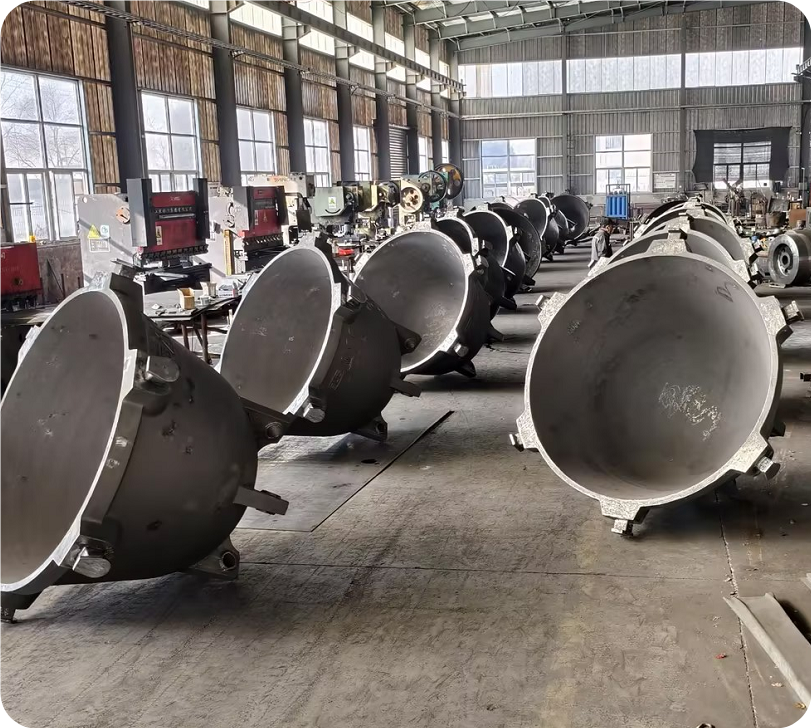
Melting workshop: Check the condition (age/maintenance) of equipment like medium-frequency furnaces; verify complete records of molten metal composition from recent heats; and ensure raw materials (e.g., pig iron, scrap steel) are sorted, stored properly, and clearly labeled.
Molding and pouring areas: Is molding done manually or via automated lines? Automated lines offer better consistency. Check for pouring temperature records and verify that workers follow standard operating procedures.
Warehouse and non-conforming product areas: Are finished goods clearly categorized and labeled? Is there a designated isolation area for defective products? At factories lacking a designated quarantine area, defective parts risk being mixed with (conforming products) during shipment.
Step 3: Soft Skills in Communication—Technical Dialogue Trumps Price Haggling
Discuss technology, not just price: Asking “How much per kilogram?” right off the bat is a major faux pas. The right approach is to present your blueprints and have their engineers analyze manufacturing challenges, potential defects (such as shrinkage cavity locations), and design optimization opportunities. Truly capable manufacturers offer valuable insights rather than simply saying “no problem.”
Request case studies: Ask for examples of successful projects similar to yours—ideally with physical samples to inspect. This is far more convincing than any verbal promise.
Inquire about details to gauge management quality:
What is their monthly capacity? What is their current load rate? (A load rate exceeding 90% suggests potential delivery delays.)
What level of dimensional accuracy (CT grade) can they consistently achieve?
What is their typical defect rate? (The industry standard is 3–5%; claims of under 1% warrant verification.)
Do they accept third-party factory audits (e.g., by SGS)? Those willing to undergo such audits usually have greater confidence in their capabilities.
Step 4: Don’t Skip the Prototyping Phase
After shortlisting 2–3 candidates, request prototypes rather than placing a large order immediately. The prototyping stage is the real test. Focus on three aspects:
Punctuality: If they miss deadlines for prototypes, mass production is unlikely to go smoothly.
Completeness of reports: Reputable manufacturers provide a comprehensive First Article Inspection (FAI) report with the samples, covering dimensions, material composition, and performance data.
Attitude toward problems: When issues arise with samples, do they earnestly analyze the root cause and propose improvements, or do they shift blame? This reveals the prospects for future collaboration.
Finally, quantifying and comparing results using a scoring matrix is an effective strategy. You can score various areas—such as the melting shop, molding workshop, quality control lab, and finished goods warehouse—and prioritize partnering with the manufacturer that achieves the highest total score.
How to Choose a High-Quality Foundry
Related News
Applied’s expertise in modifying materials at atomic levels and on an ihdustrial scaleenables our customers to transform possibilities into reality.