ASTM A48 Class 40 is a gray cast iron grade defined by the American Society for Testing and Materials standard ASTM A48/A48M. The designation “Class 40” indicates a minimum tensile strength of 40,000 psi (276 MPa). This ASTM A48 Class 40 cast iron combines excellent castability with superior damping characteristics and cost-effectiveness for general engineering applications.
Key Performance Advantages
- Minimum tensile strength of 40,000 psi (276 MPa) for moderate-load applications
- Excellent vibration damping capacity 10-20 times superior to steel
- Superior machinability reducing production time and tooling costs
- High thermal conductivity for heat dissipation applications
- Cost-effective manufacturing through simplified casting processes
- Good wear resistance for sliding and friction applications
ASTM A48 Class 40 Material Specification: Chemical Composition
ASTM A48 does not mandate specific chemical composition, but typical ASTM A48 Class 40 cast iron follows industry-established composition ranges for consistent performance:
| Element | Content (%) | Function |
|---|---|---|
| Carbon (C) | 3.10-3.60 | Forms graphite flakes, provides fluidity |
| Silicon (Si) | 1.20-2.40 | Influences graphite formation and matrix |
| Manganese (Mn) | 0.50-0.90 | Strengthens pearlitic matrix |
| Phosphorus (P) | ≤0.15 | Improves fluidity but reduces ductility |
| Sulfur (S) | ≤0.15 | Must be controlled for quality castings |
In conclusion,usually ASTM A48 Class 40 material requires 3.10-3.60% carbon, 1.20-2.40% silicon, and strict sulfur control below 0.15% for optimal nodulization.
Critical Control Parameters:
- Carbon equivalent (CE = %C + %Si/3 + %P/3) maintained at 4.0-4.4
- Higher silicon content promotes Type A graphite flakes
- Phosphorus controlled to balance fluidity versus mechanical properties
ASTM A48 Class 40 Mechanical Properties
ASTM A48 Class 40 mechanical properties include minimum tensile strength of 40,000 psi (276 MPa) with typical hardness range of 180-240 HB.
Standard Mechanical Properties (ASTM A48/A48M)
| Property | Class 40 Requirement | Typical Values |
|---|---|---|
| Tensile Strength | ≥40,000 psi (276 MPa) | 40,000-45,000 psi (276-310 MPa) |
| Compressive Strength | – | 140,000-180,000 psi (965-1240 MPa) |
| Brinell Hardness (HB) | 200-250 HB | 210-235 HB |
| Modulus of Elasticity | – | 100-130 GPa (typical 124 GPa) |
| Transverse Strength | – | 60,000-80,000 psi (414-552 MPa) |
Physical Properties of ASTM A48 Class 40
| Property | Value |
|---|---|
| Density | 7.15-7.25 g/cm³ |
| Modulus of Elasticity | 100-130 GPa (typical 124 GPa) |
| Poisson’s Ratio | 0.26-0.29 |
| Thermal Conductivity | 46-53 W/(m·K) |
| Coefficient of Thermal Expansion | 10.0-11.5 × 10⁻⁶/K |
| Damping Capacity | 25-30 times greater than steel |
Microstructure Characteristics
- Graphite Form: Type A flakes (preferred) with uniform distribution
- Flake Size: ASTM size 3-5 for optimal property balance
- Matrix Structure: Predominantly pearlitic with minor ferrite
- Typical Pearlite Content: 70-90%
ASTM A48 Class 40 Equivalent: International Standards
ASTM A48 Class 40 equivalent grades provide comparable tensile strength in different international standards for gray cast iron applications.
Comprehensive ASTM A48 Class 40 Equivalent Grades Comparison
| Country/Region | Standard | Equivalent Grade | Tensile Strength | Hardness |
|---|---|---|---|---|
| USA | ASTM A48 | Class 40 | ≥276 MPa (40 ksi) | 180-240 HB |
| Europe | EN 1561 | EN-GJL-250 | ≥250 MPa | 170-230 HB |
| China | GB/T 9439 | HT250 | ≥250 MPa | 170-241 HB |
| Germany | DIN 1691 | GG-25 | ≥250 MPa | 170-240 HB |
| Japan | JIS G5501 | FC250 | ≥250 MPa | 163-229 HB |
| UK | BS 1452 | Grade 260 | ≥260 MPa | – |
| International | ISO 185 | GJL-250 | ≥250 MPa | – |
| France | AFNOR | FGL250 | ≥250 MPa | – |
| Italy | UNI | G25 | ≥250 MPa | – |
| Australia | AS 1830 | Grade 260 | ≥260 MPa | – |
| Russia | GOST | SCh25 | ≥250 MPa | 170-229 HB |
| India | IS 210 | Grade 30 | ≥294 MPa (30 ksi) | 187-241 HB |
Understanding ASTM A48 Class 40 Equivalent Standards
The primary ASTM A48 Class 40 equivalent in international markets is EN-GJL-250 in Europe and HT250 in China:
- EN-GJL-250: 250 MPa minimum tensile strength, closely approximates Class 40 performance
- HT250: Chinese standard with identical 250 MPa requirement
- FC250: Japanese equivalent for Asian market applications
Important Note on Equivalency: ASTM A48 Class 40 (276 MPa minimum) technically falls between EN-GJL-250 (250 MPa) and EN-GJL-300 (300 MPa). EN-GJL-250 is commonly accepted as the closest equivalent, though Class 40 has slightly higher strength requirements.
Key Differences Between Standards:
- ASTM A48 specifies strength in ksi while ISO/EN use MPa
- Section thickness affects properties – ASTM uses 1.2-inch (30mm) test bars
- European standards may include additional wall thickness corrections
- Testing methods generally align across major standards
ASTM A48 Class 40 Cast Iron Applications
Automotive Industry
- Engine Components: Cylinder blocks, cylinder heads, exhaust manifolds
- Brake Systems: Brake drums, brake discs, caliper housings
- Transmission Parts: Clutch plates, transmission housings
Industrial Machinery
- Machine Tool Bases: Lathe beds, milling machine frames, press bases
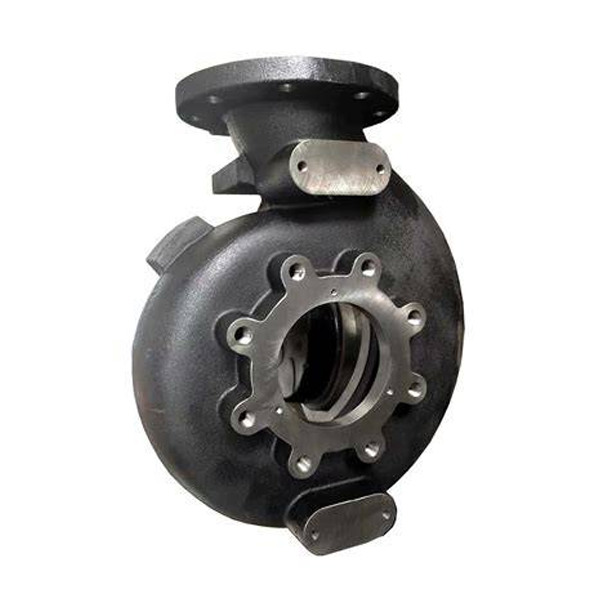
- Pump Components: Pump housings, impeller bodies, volute casings
- Compressor Parts: Compressor bodies, cylinder blocks
- Gearbox Housings: Speed reducer housings, gear covers
Piping and Valves
- Pipe Fittings: Flanges, elbows, tees, reducers
- Valve Bodies: Gate valves, globe valves, check valves
- Hydrant Components: Fire hydrant bodies and bonnets
Electrical Equipment
- Motor Housings: Electric motor frames and end caps
- Generator Components: Generator housings and brackets
- Switchgear Components: Electrical enclosures and mounting bases
Agricultural Equipment
- Tractor Components: Transmission housings, differential cases
- Implement Parts: Plow shares, cultivator frames
- Irrigation Equipment: Pump bodies and valve housings
Design Guidelines for ASTM A48 Class 40
Wall Thickness Design Principles
- Thin Sections: 6-12mm for light-duty components
- Medium Sections: 12-30mm for standard applications
- Heavy Sections: 30-75mm for heavy-duty service
- Maximum Recommended: 100mm (properties decline in heavier sections)
Section Thickness and Property Relationship
As casting wall thickness increases, tensile strength decreases:
- Up to 30mm: Full Class 40 properties achieved
- 30-50mm: Slight strength reduction (5-10%)
- 50-75mm: Moderate reduction (10-15%)
- Above 75mm: Consider upgrading to Class 45 or 50
Machining Allowances
- Rough machined surfaces: 3-6mm per side
- Finish machined surfaces: 1.5-3mm per side
- Recommended cutting speed: 120-200 m/min (carbide tools)
- Feed rate: 0.2-0.4 mm/rev for general machining
Design Features for Optimal Casting
- Uniform Wall Thickness: Minimize variations to reduce internal stress
- Generous Fillets: Radius should be 0.3-0.5 times wall thickness
- Draft Angles: Minimum 1-3 degrees for pattern removal
- Core Design: Avoid thin cores that may break or shift
- Gating System: Ensure proper feeding to prevent shrinkage defects
ASTM A48 Class 40 Equivalent Substitution Guidelines
When substituting between ASTM A48 Class 40 equivalent grades, engineers should consider:
Performance Verification
- Confirm minimum tensile strength meets application requirements
- Verify hardness range aligns with machining and service needs
- Check thermal conductivity for heat dissipation applications
- Evaluate damping capacity for vibration-critical components
Section Thickness Considerations
- Heavy sections require property correction factors
- European standards provide detailed thickness correction tables
- Critical components may require actual testing of production castings
Testing Method Alignment
- Different standards specify varying test bar dimensions
- Some standards use cast-on test bars versus separately cast
- Ensure testing laboratory follows appropriate standard procedures
Documentation Requirements
- General applications: Type 2.2 certificates acceptable
- Critical components: Require Type 3.1 certificates with full traceability
- Pressure vessels: ASME or PED compliance documentation required
Advantages and Limitations of ASTM A48 Class 40
Key Advantages
- Cost-Effective: Lower material and production costs versus steel
- Excellent Castability: Complex geometries achievable in single piece
- Superior Damping: Ideal for machine tool applications
- Good Machinability: Graphite flakes act as chip breakers
- Wear Resistance: Self-lubricating properties in sliding applications
- Thermal Properties: Excellent heat dissipation capabilities
Important Limitations
- Low Ductility: Essentially zero elongation, brittle failure mode
- Weak in Tension: Compressive strength 3-4 times tensile strength
- Notch Sensitive: Stress concentrations significantly reduce strength
- Limited Weldability: Difficult to weld without preheating and special procedures
- Section Size Effect: Properties decline in heavy sections
- Impact Resistance: Poor impact strength versus ductile materials
Summary: ASTM A48 Class 40 Selection Criteria
ASTM A48 Class 40 cast iron delivers optimal performance for applications requiring moderate strength, excellent damping, and cost-effective manufacturing. Understanding ASTM A48 Class 40 mechanical properties and ASTM A48 Class 40 equivalent standards enables engineers to achieve:
- Reliable 276 MPa (40 ksi) tensile strength for general engineering
- Global sourcing flexibility through equivalent grade recognition
- Cost advantages versus steel castings for suitable applications
- Proven performance across automotive, industrial, and machinery sectors
Critical Success Factors
- Proper chemical composition control for consistent microstructure
- Section thickness design within recommended limits
- Appropriate ASTM A48 Class 40 equivalent selection for regional markets
- Qualified foundry partners with gray iron expertise and quality systems
Working with SHENRGONG
For ASTM A48 Class 40 cast iron components, SHENRGONG provides:
- Technical Expertise: Deep understanding of gray iron metallurgy
- Quality Standards: Compliance with ASTM, EN, and ISO requirements
- Production Flexibility: From prototype to mass production quantities
- Global Service: Export experience with international quality expectations
- Competitive Pricing: Cost-effective manufacturing with reliable quality
By following these ASTM A48 Class 40 guidelines, engineers ensure cast components meet design requirements for strength, machinability, and cost-effectiveness. For casting parts produced by a Chinese foundry with proven gray cast iron capabilities, choose SHENRGONG.