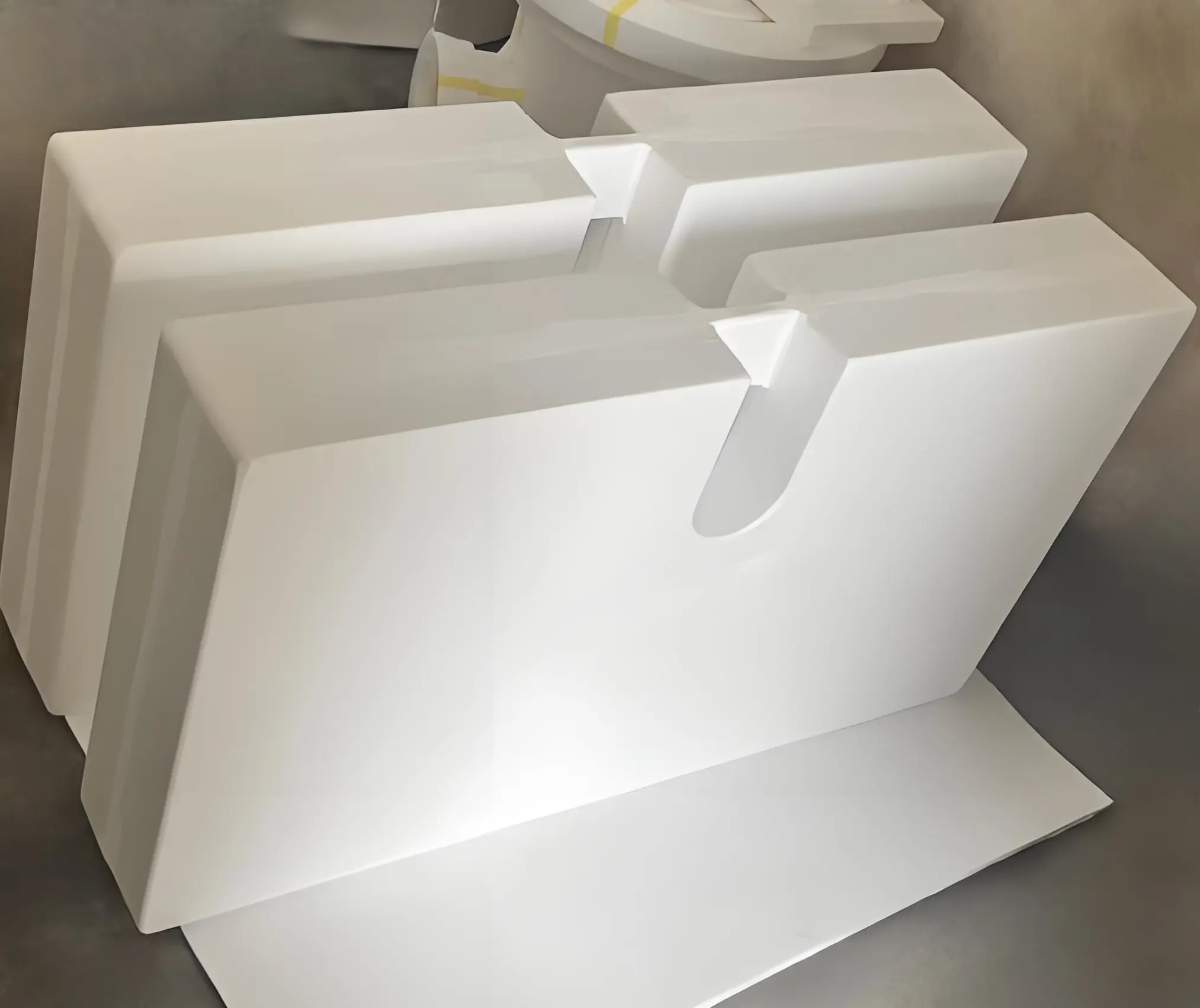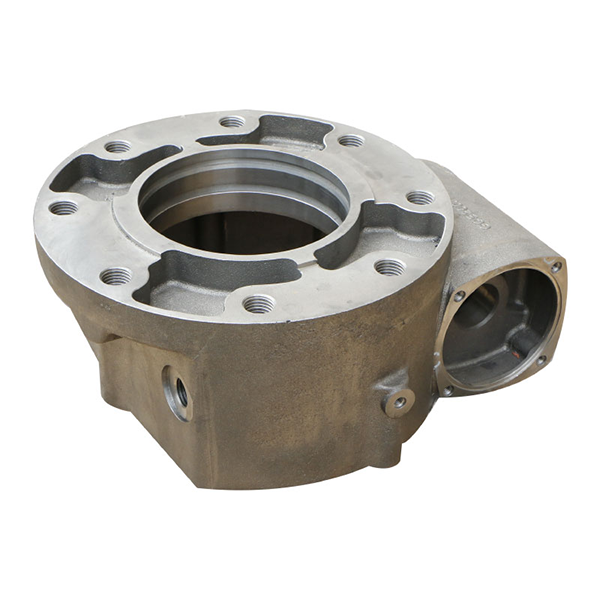
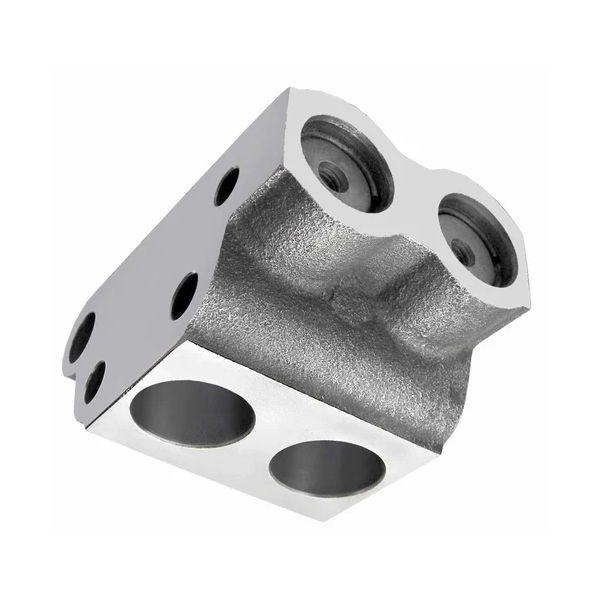
GGG50 represents a balanced ductile iron material that combines reliable tensile strength with enhanced ductility for versatile engineering applications. Understanding GGG50 chemical composition, GGG50 material equivalent grades, and GGG50 mechanical properties enables engineers to optimize component design and manufacturing processes. This comprehensive guide explores the GGG50 material specification, composition details, and practical applications that make it a trusted choice for automotive components, industrial machinery, and general engineering equipment.
Industry professionals value GGG50 material for several compelling reasons:
- Minimum tensile strength of 500 MPa provides excellent load-bearing capacity for moderate to high-stress applications
- Optimal strength-to-ductility ratio balances structural performance with impact resistance
- Superior machinability reduces manufacturing costs and improves production efficiency
- Cost-effective solution for diverse applications requiring reliable mechanical properties
- Proven performance across industries including automotive, agriculture, hydraulic systems, and general machinery
- Wide availability and established production processes ensure consistent supply
- Excellent castability enables complex geometries with integrated features
Engineers who understand the GGG50 composition, GGG50 material properties, and GGG50 material equivalent grades can select appropriate specifications and achieve optimal design solutions.
Key Takeaways
- GGG50 delivers minimum 500 MPa tensile strength with 7% elongation for balanced strength and ductility
- The GGG50 chemical composition includes 3.4-3.9% carbon with controlled magnesium for spheroidal graphite formation
- International GGG50 material equivalent grades include QT500-7 (China), FCD500 (Japan), and ASTM A536 70-50-05 (USA)
- GGG50 mechanical properties include 160-220 HB hardness with good wear resistance and machinability
- The spheroidal graphite structure provides excellent castability while maintaining reliable mechanical performance
- Applications include brake calipers, suspension components, pump housings, valve bodies, agricultural equipment, and general machinery parts
- Professional ductile iron casting foundries with quality certification ensure consistent GGG50 material properties
- The GGG50 material specification follows EN 1563 standard requirements for production and testing
What Is GGG50 Material?
GGG50 material is a medium-strength ductile iron grade with minimum 500 MPa tensile strength, characterized by spheroidal graphite structure that delivers balanced mechanical properties for versatile engineering applications.
Material Classification
GGG50 follows the German designation system established by DIN 1693 for ductile iron materials, now harmonized with European standard EN 1563 as EN-GJS-500-7. The nomenclature breaks down into specific technical indicators defining material characteristics. “GGG” represents “Gusseisen mit Kugelgraphit” (German for spheroidal graphite cast iron), distinguishing it from gray iron which uses “GG” designation. The number “50” indicates minimum tensile strength classification of 500 megapascals measured on standard test bars.
This standardized designation system helps engineers and procurement specialists quickly identify GGG50 material properties without consulting detailed specification documents. The naming convention eliminates confusion when sourcing materials internationally. Manufacturers reference the same GGG50 composition and performance characteristics regardless of geographic location or supplier.
The cast iron GGG50 material also carries alternative designations in various documentation systems. These alternative designations appear on material certificates and technical documentation. Understanding multiple designation formats facilitates material verification during procurement and quality control processes.
Microstructure Characteristics
The distinctive performance characteristics of GGG50 material stem from its carefully developed microstructure during solidification and magnesium treatment. Molten iron containing the appropriate GGG50 chemical composition receives magnesium treatment that causes graphite to precipitate in spheroidal (nodular) form throughout the metallic matrix. These graphite nodules distribute uniformly, creating the ductile behavior that distinguishes this material from gray cast iron.
The metallic matrix surrounding graphite nodules consists of a balanced mixture of pearlite and ferrite in GGG50 material. This mixed matrix provides the optimal combination of strength and ductility, contributing to the material’s 500 MPa minimum tensile strength requirement with enhanced elongation. The balanced pearlite-ferrite matrix determines the final strength-ductility combination within the GGG50 mechanical properties range.
| Microstructure Component | Typical Content | Contribution to Properties |
|---|---|---|
| Spheroidal Graphite | 10-14% by volume | Ductility, machinability, castability |
| Pearlite | 50-70% | Strength, wear resistance |
| Ferrite | 30-50% | Ductility, toughness, machinability |
| Nodule Count | 150-300/mm² | Property uniformity, mechanical performance |
The graphite nodules act as less severe stress concentrators compared to flakes in gray iron, which explains the material’s superior strength and toughness. The rounded nodule geometry allows controlled stress distribution around graphite particles without immediate crack initiation. This characteristic provides significant advantages in applications requiring both strength and impact resistance.
The balanced pearlite-ferrite matrix delivers reliable tensile strength and good ductility while maintaining excellent machinability. This combination makes GGG50 material properties particularly valuable for applications requiring moderate strength with enhanced toughness, such as automotive suspension components, hydraulic equipment, agricultural machinery, and general industrial components.
Key Performance Attributes
GGG50 excels in applications where its balanced combination of strength, ductility, and machinability provides optimal performance. The ductile iron GGG50 material demonstrates reliable mechanical properties suitable for diverse engineering applications. Components manufactured from GGG50 material withstand moderate to heavy loads while providing superior impact resistance compared to higher-strength grades.
Ductility represents a distinctive advantage of GGG50 compared to GGG60 or GGG70 materials. The GGG50 mechanical properties include 7% minimum elongation, significantly higher than GGG60 (3%) or GGG70 (2%). This enhanced ductility enables better energy absorption during impact or shock loading while maintaining adequate strength for structural applications.
Machinability of GGG50 material exceeds higher-strength ductile irons due to balanced hardness and favorable matrix structure. The mixed pearlite-ferrite structure creates excellent chip formation during cutting operations, enabling efficient machining with standard tooling. Manufacturing operations achieve superior productivity when machining GGG50 components compared to higher-strength grades.
Cost-effectiveness of GGG50 makes it the preferred choice for applications where maximum strength is unnecessary. The material provides optimal balance between performance and manufacturing economy. Engineers specify GGG50 when component requirements allow, reserving higher-strength grades for applications with exceptional stress demands.
GGG50 Chemical Composition
The GGG50 chemical composition includes 3.5-3.9% carbon, 2.0-2.8% silicon, and 0.3-0.6% manganese, with critical residual magnesium 0.03-0.05% ensuring spheroidal graphite formation for balanced mechanical properties.
Understanding GGG50 chemical composition provides critical insight into material behavior during casting and service performance. The GGG50 composition includes carefully balanced elements that control graphite nodularization, matrix structure, and mechanical properties. Each element in the GGG50 chemical composition serves specific purposes in achieving desired casting characteristics and performance outcomes.
Primary Alloying Elements
Carbon (C): 3.5% to 3.9%
Carbon content directly determines graphite quantity in the GGG50 material. The carbon concentration enables excellent casting fluidity, allowing complex geometries to fill completely during pouring. During solidification, carbon precipitates as spheroidal graphite nodules when magnesium treatment and proper inoculation promote nodular formation.
The GGG50 chemical composition specifies moderate carbon content, optimizing for balanced castability and mechanical properties. The carbon level creates appropriate graphite volume, allowing balanced pearlite-ferrite matrix development. This balance supports the 500 MPa tensile strength requirement with enhanced elongation.
Foundries monitor carbon content closely during melting operations. Spectrographic analysis verifies carbon levels before magnesium treatment. The carbon equivalent (CE = %C + %Si/3 + %P/3) typically ranges from 4.1 to 4.5 for optimal GGG50 material properties, ensuring good castability while maintaining adequate strength.
Silicon (Si): 2.0% to 2.8%
Silicon acts as a powerful graphitizing element promoting spheroidal graphite formation in ductile iron production. The silicon range in GGG50 chemical composition balances graphitization with appropriate matrix structure, maintaining optimal strength-ductility combination. Moderate silicon content within specification promotes balanced pearlite-ferrite matrix structure, improving both strength and machinability.
Silicon also improves casting fluidity and reduces shrinkage tendencies, enhancing casting soundness. The silicon level influences the ferrite-to-pearlite ratio in the final microstructure, directly affecting GGG50 mechanical properties. Modern foundries optimize silicon content based on component section thickness and desired matrix balance.
Silicon measurement requires accurate spectroscopic analysis during production. The combined effect of carbon and silicon determines nodule formation tendency and final mechanical properties. Foundries use carbon equivalent calculations to predict material behavior and control production consistency.
Manganese (Mn): 0.3% to 0.6%
Manganese in GGG50 composition contributes to pearlite formation and moderate strength enhancement. The manganese content promotes pearlite stabilization in the matrix, increasing strength while maintaining ductility. Controlled manganese addition strengthens the matrix appropriately, supporting the balanced strength-ductility characteristic of GGG50 material.
Manganese also influences hardenability and matrix stability. The manganese range maintains adequate strength while providing the balanced pearlite-ferrite structure required for 500 MPa tensile strength with 7% elongation. Moderate manganese content in GGG50 creates optimal matrix balance enhancing both strength and toughness.
Magnesium (Mg): 0.03% to 0.05% (residual)
Magnesium represents the critical element that transforms gray iron into ductile iron. Magnesium treatment modifies graphite morphology from flakes to spheroids, fundamentally changing mechanical properties. The GGG50 chemical composition requires residual magnesium (after treatment) to maintain nodular graphite structure throughout the casting.
Foundries add magnesium through various treatment methods including ladle treatment, tundish methods, or sandwich processes. Treatment additions typically use 0.5-0.8% magnesium-containing alloys (commonly ferrosilicon-magnesium), with residual content measuring 0.035-0.050% after violent reaction and vapor loss.
Insufficient residual magnesium results in flake or vermicular graphite reducing strength and ductility. Excessive magnesium creates processing difficulties including violent reactions and potential carbide promotion. Precise magnesium control remains critical for consistent GGG50 material properties.
Impurity Elements
Sulfur (S): 0.025% (maximum)
Sulfur content in GGG50 chemical composition requires strict control during production. Sulfur interferes with nodularization by reacting with magnesium, consuming magnesium needed for graphite spheroidization. Each 0.01% sulfur consumes approximately 0.015% magnesium during treatment.
The GGG50 composition allows very low sulfur content ensuring efficient magnesium utilization. Foundries select raw materials including pig iron, steel scrap, and returns based on sulfur content. Desulfurization treatments before magnesium addition reduce sulfur to acceptable levels, improving treatment efficiency.
Maintaining low sulfur improves magnesium treatment efficiency and nodule quality. Lower sulfur enables more consistent GGG50 mechanical properties with reduced magnesium consumption. Modern ductile iron foundries target sulfur content below 0.020% for optimal results.
Phosphorus (P): 0.08% (maximum)
Phosphorus creates some brittleness in ductile iron by forming iron-iron phosphide eutectic (steadite) at cell boundaries. The phosphorus limit in GGG50 composition prevents excessive steadite formation that would reduce impact resistance. However, moderate phosphorus improves casting fluidity for thin sections.
The specified maximum balances improved castability against potential brittleness concerns. Components requiring maximum toughness should minimize phosphorus content. The GGG50 specification allows reasonable phosphorus levels suitable for general engineering applications.
Raw material selection controls phosphorus input. Pig iron typically contains higher phosphorus than steel scrap. Foundries blend charge materials achieving target phosphorus levels within GGG50 chemical composition specifications.
GGG50 Composition Comparison
Comparing GGG50 chemical composition with adjacent ductile iron grades clarifies the material’s position within the ductile iron family:
| Element | GGG40 | GGG50 | GGG60 | GGG70 |
|---|---|---|---|---|
| Carbon (C) | 3.5-4.0 | 3.4-3.9 | 2.5-3.6 | 2.3-3.4 |
| Silicon (Si) | 2.2-2.9 | 2.0-2.8 | 1.8-2.8 | 1.8-2.7 |
| Manganese (Mn) | 0.2-0.5 | 0.3-0.6 | 0.3-0.7 | 0.4-0.8 |
| Phosphorus (P) | ≤0.06 | ≤0.08 | ≤0.08 | ≤0.08 |
| Sulfur (S) | ≤0.03 | ≤0.025 | ≤0.025 | ≤0.02 |
The GGG50 composition represents optimal balance between castability, strength, and ductility suitable for versatile engineering applications. Higher-strength grades show progressively lower carbon and higher manganese promoting increased pearlite content at the expense of elongation.
GGG50 Mechanical Properties
GGG50 mechanical properties include minimum 500 MPa tensile strength, 320 MPa yield strength, 7% elongation, and 160-220 HB hardness, delivering reliable performance for diverse engineering applications requiring balanced strength and ductility.
The performance characteristics defined by GGG50 mechanical properties determine material suitability for specific engineering applications. Comprehensive understanding of GGG50 material properties enables accurate stress analysis and appropriate safety factors during component design. The GGG50 material specification establishes minimum values ensuring reliable performance across diverse applications.
Tensile Properties
Tensile Strength (Rm): 500-630 MPa (minimum 500 MPa)
Tensile strength represents the primary acceptance criterion for GGG50 material specification. The minimum value of 500 MPa must be achieved when testing separately cast test bars. Typical production material often exceeds the minimum value, with 520-600 MPa common for well-controlled foundry processes.
The tensile strength of ductile iron depends primarily on matrix microstructure and nodule characteristics. Balanced pearlite-ferrite matrices provide good strength with enhanced ductility. The mixed matrix structure in GGG50 achieves reliable strength levels suitable for general engineering applications. The GGG50 chemical composition and cooling rate during solidification control these microstructural features.
Testing procedures follow EN 1563 or ISO 1083 standards. Test specimens are machined from separately cast test bars to ensure consistent testing conditions. The test bar diameter and cooling rate approximate typical casting sections, providing representative GGG50 mechanical properties.
Yield Strength (Rp0.2): 320-380 MPa (minimum 320 MPa)
Yield strength indicates the stress level where permanent deformation begins. GGG50 material exhibits defined yield behavior at minimum 320 MPa, providing predictable performance in structural calculations. Typical yield strength measures 330-370 MPa for balanced pearlite-ferrite grades.
The yield-to-tensile ratio typically ranges from 0.60 to 0.68, indicating good ductility reserves after yielding. This characteristic enables energy absorption during overload conditions without immediate fracture. Engineering calculations utilize yield strength with appropriate safety factors for component design.
Elongation (A): ≥7% (minimum)
The elongation of GGG50 material reaches minimum 7%, representing enhanced ductility compared to higher-strength ductile irons (GGG60: 3%, GGG70: 2%). Elongation values typically range from 7% to 12%, depending on pearlite-ferrite balance and nodule quality. Higher ferrite content produces elongation toward the upper range.
The enhanced ductility reflects the balanced strength-ductility orientation of GGG50 material. The mixed pearlite-ferrite matrix provides adequate strength with superior toughness compared to higher-strength grades. Engineers specify GGG50 for applications requiring moderate strength with enhanced impact resistance and energy absorption capability.
| Property | GGG50 Value | Test Method |
|---|---|---|
| Tensile Strength (Rm) | ≥500 MPa (typical 520-600 MPa) | EN 1563, ISO 1083 |
| Yield Strength (Rp0.2) | ≥320 MPa (typical 330-370 MPa) | EN 1563 |
| Elongation (A) | ≥7% (typical 7-12%) | EN 1563 |
| Brinell Hardness (HB) | 160-220 HB | EN 1563 |
Hardness Characteristics
Brinell Hardness: 160-220 HB
Hardness measurements provide rapid, non-destructive verification of GGG50 material properties. The Brinell hardness range correlates with balanced pearlite-ferrite matrix microstructure. Lower hardness values (160-180 HB) indicate higher ferrite content with enhanced ductility and machinability, while higher values (200-220 HB) suggest increased pearlite content with improved strength.
Foundries use hardness testing for production quality control. Measurements on production castings or test pieces verify that material meets expected values for the microstructure and GGG50 mechanical properties. Hardness testing requires less time and specimen preparation than tensile testing.
The hardness range provides good wear resistance suitable for moderate-duty applications. Components operating in normal wear conditions benefit from this characteristic. The moderate hardness also contributes to excellent machinability, reducing manufacturing costs compared to higher-strength grades.
Physical Properties
Density: 7.05-7.15 g/cm³
The density of GGG50 material remains relatively constant regardless of composition variations within specification limits. This consistent density simplifies weight calculations during component design. The density closely approximates carbon steel (7.85 g/cm³), making GGG50 approximately 10% lighter for equivalent volumes.
Weight predictions use the standard density value multiplied by component volume. Accurate density enables precise calculation of component mass for shipping, handling, and dynamic load analysis. The graphite content reduces density compared to steel by replacing denser iron with lighter carbon.
Modulus of Elasticity: 168-175 GPa
The elastic modulus of GGG50 material properties remains consistent at 168-175 GPa, approaching steel’s modulus (200-210 GPa). This relatively high stiffness distinguishes ductile iron from gray iron (90-100 GPa), making GGG50 suitable for applications requiring good rigidity.
Engineers must account for the slightly lower modulus versus steel when calculating deflection under load. Ductile iron components deflect somewhat more than equivalent steel parts carrying identical loads. However, the difference remains manageable for most engineering applications.
Poisson’s Ratio: 0.27-0.29
Poisson’s ratio for GGG50 material closely matches steel values (0.27-0.30). This property affects stress calculations in multiaxial loading conditions and influences lateral strain during tensile loading. The similarity to steel enables standard calculation methods without special modifications.
Thermal Properties
Thermal Conductivity: 30-35 W/(m·K)
GGG50 material conducts heat less effectively than gray iron (46-50 W/(m·K)) but similarly to other ductile irons. The spheroidal graphite structure provides less thermal conductivity than flake graphite. This characteristic suits applications where moderate heat dissipation suffices without requiring gray iron’s superior conductivity.
Adequate heat conduction reduces thermal gradients and associated thermal stresses. Components subjected to thermal cycling benefit from reasonable conductivity distributing heat uniformly. The thermal properties remain suitable for automotive brake components, hydraulic systems, and industrial machinery operating across normal temperature ranges.
Coefficient of Thermal Expansion: 10.5-11.0 × 10⁻⁶/K
The thermal expansion coefficient of GGG50 mechanical properties matches carbon steel values closely. This compatibility minimizes thermal stress when assembling ductile iron components with steel parts. Similar expansion rates prevent loosening or binding across temperature variations.
The spheroidal graphite provides dimensional stability by constraining matrix expansion. Ductile iron generally exhibits good dimensional stability under thermal cycling. Components requiring accuracy across temperature ranges benefit from this characteristic.
Impact and Wear Properties
Impact Resistance
Impact resistance of GGG50 material remains good due to enhanced elongation (7% minimum). The combination of 500 MPa tensile strength with 7% elongation provides substantial energy absorption during dynamic loading. Impact testing typically shows values of 12-20 Joules at room temperature for standard Charpy specimens.
The material maintains reliable impact resistance across temperature ranges suitable for most applications. The balanced matrix structure enables controlled energy absorption preventing brittle failure. Applications involving moderate impact loads benefit from GGG50’s superior toughness compared to higher-strength grades.
Wear Resistance
GGG50 demonstrates good wear resistance suitable for moderate-duty applications due to balanced matrix structure and moderate hardness. The mixed pearlite-ferrite matrix resists wear in normal operating conditions. Wear performance proves adequate for automotive components, agricultural equipment, and industrial machinery under standard service conditions.
Surface hardening treatments can enhance wear resistance when required for specific applications. The material responds well to induction or flame hardening, enabling localized surface hardness improvements while maintaining core toughness.
GGG50 Material Equivalent Grades
GGG50 material equivalent grades include QT500-7 (China GB/T 1348), FCD500 (Japan JIS G5502), ASTM A536 70-50-05 (USA), and ISO 1083 500-7 for international material substitution and global sourcing.
Engineers frequently need to identify GGG50 material equivalent grades across international standards for global sourcing and material substitution. Understanding equivalent designations ensures material compatibility when specifications reference different standards. The GGG50 material equivalent system facilitates international trade and technical communication.
Chinese Standard Equivalent
QT500-7 (GB/T 1348)
The Chinese national standard GB/T 1348 designates equivalent ductile iron as QT500-7. The “QT” abbreviation represents “Qiu Tie” (ductile iron in Chinese), while “500” directly indicates minimum tensile strength in MPa and “7” represents minimum elongation percentage. Chinese foundries produce QT500-7 extensively for automotive components, agricultural equipment, and general machinery.
The QT500-7 chemical composition and mechanical properties align closely with GGG50 material specification:
- Tensile strength minimum: 500 MPa
- Yield strength minimum: 320 MPa
- Elongation minimum: 7%
- Brinell hardness: 150-210 HB
Chinese automotive manufacturers, agricultural equipment producers, and machinery companies commonly specify QT500-7. The widespread availability and established production processes make this GGG50 material equivalent readily available from Chinese foundries. Material certificates reference both GB/T 1348 and international equivalent designations.
Japanese Standard Equivalent
FCD500 (JIS G 5502)
Japanese Industrial Standard JIS G 5502 classifies equivalent ductile iron as FCD500. The “FCD” designation abbreviates “Ferrous Casting Ductile” while “500” indicates minimum tensile strength (500 MPa). This standard provides direct equivalence to GGG50 material with similar mechanical property requirements.
FCD500 specifications include:
- Tensile strength minimum: 500 MPa
- Elongation minimum: 7%
- Balanced pearlite-ferrite matrix microstructure
Japanese automotive industry and machinery manufacturers utilize FCD500 for suspension components, brake parts, hydraulic equipment, and general industrial applications. Japanese foundries maintain rigorous quality control systems supporting precision manufacturing requirements.
American Standard Equivalent
ASTM A536 Grade 70-50-05
The American Society for Testing and Materials specifies ductile iron in ASTM A536 standard. Grade 70-50-05 designation indicates minimum tensile strength of 70 ksi (483 MPa), yield strength of 50 ksi (345 MPa), and elongation of 5%, providing comparable performance to GGG50 material specification. This GGG50 material equivalent serves diverse American industrial applications.
ASTM A536 Grade 70-50-05 characteristics:
- Tensile strength minimum: 70 ksi (483 MPa)
- Yield strength minimum: 50 ksi (345 MPa)
- Elongation minimum: 5%
- Hardness typically 170-229 HB
The ASTM designation uses imperial units and specifies slightly lower tensile strength (483 MPa versus 500 MPa) and reduced elongation (5% versus 7%). However, many American foundries produce material exceeding minimum requirements, achieving properties comparable to GGG50. American foundries optimize composition to achieve required properties following ASTM testing procedures.
European Standard Equivalent
EN-GJS-500-7 (EN 1563)
The European standard EN 1563 designates this material as EN-GJS-500-7, representing the harmonized European designation. “EN” indicates European standard, “GJS” represents “Gusseisen mit Sphäroguss” (German for spheroidal graphite cast iron), “500” indicates minimum tensile strength in MPa, and “7” represents minimum elongation percentage.
European foundries across Germany, Italy, France, and other EU countries produce EN-GJS-500-7 to harmonized specifications ensuring consistent quality. The designation replaces earlier national standards including DIN 1693 (Germany), BS 2789 (UK), and NF A32-201 (France).
Other International Equivalents
Italy: GS500-7 (UNI 4544)
Italian standard UNI 4544 designates similar material as GS500-7, following comparable nomenclature conventions. Italian foundries supply GS500-7 castings for automotive, agricultural, and industrial applications with properties equivalent to GGG50 material.
United Kingdom: 500/7 (BS 2789)
British standard BS 2789 (now superseded by EN 1563) classified this material as 500/7 where “500” represents minimum tensile strength and “7” indicates elongation. UK foundries now use EN-GJS-500-7 designation with BS 2789 occasionally referenced for legacy compatibility.
India: SG500/7 (IS 1865)
Indian standards designate equivalent material as SG500/7 where “SG” represents spheroidal graphite. The properties align with GGG50 material equivalent specifications suitable for automotive, agricultural, and general machinery applications.
Australia: 500-7 (AS 1831)
Australian standards reference 500-7 as equivalent designation for ductile iron with properties similar to GGG50 material suitable for diverse engineering applications.
Equivalent Grade Comparison Table
| Standard | Designation | Tensile Strength | Yield Strength | Elongation | Primary Region |
|---|---|---|---|---|---|
| European (EN 1563) | EN-GJS-500-7 | ≥500 MPa | ≥320 MPa | ≥7% | Europe |
| International (ISO) | ISO 1083/500-7 | ≥500 MPa | ≥320 MPa | ≥7% | Global |
| German (DIN 1693) | GGG50 | ≥500 MPa | ≥320 MPa | ≥7% | Germany |
| Chinese (GB/T 1348) | QT500-7 | ≥500 MPa | ≥320 MPa | ≥7% | China |
| Japanese (JIS G 5502) | FCD500 | ≥500 MPa | – | ≥7% | Japan |
| American (ASTM A536) | Grade 70-50-05 | ≥483 MPa (70 ksi) | ≥345 MPa (50 ksi) | ≥5% | USA |
| Indian (IS 1865) | SG500/7 | ≥500 MPa | ≥320 MPa | ≥7% | India |
Material Substitution Considerations
When substituting between GGG50 material equivalent grades from different standards, engineers should verify several critical factors:
Mechanical Property Alignment
Compare minimum tensile strength, yield strength, and elongation requirements across standards. Most GGG50 material equivalent grades specify 500 MPa minimum tensile strength with 7% elongation, providing similar performance characteristics. Verify that all critical properties meet application needs.
Testing methods may differ slightly between standards. EN/ISO use metric test specimens while ASTM uses inch-based dimensions. These testing variations typically produce comparable results within normal material scatter.
Section Size Effects
All ductile iron standards recognize that mechanical properties vary with casting section thickness. Thicker sections cool more slowly, potentially producing different microstructures affecting final properties. GGG50 material specification bases properties on standard test bars representing typical medium-section castings.
When substituting materials, verify that section thickness considerations align across standards. Component design should account for actual section thickness effects on GGG50 mechanical properties to ensure adequate performance margins.
Application Requirements
Evaluate specific application requirements including load conditions, impact resistance needs, temperature ranges, and service environment. While equivalent grades provide similar mechanical properties, slight variations in elongation or hardness ranges may influence component performance in demanding applications.
Primary Applications of Cast Iron GGG50
GGG50 cast iron applications include automotive brake calipers, suspension components, pump housings, valve bodies, agricultural equipment, hydraulic systems, and general machinery parts requiring balanced strength and ductility.
The optimal combination of moderate strength, enhanced ductility, and excellent machinability makes GGG50 material suitable for diverse engineering applications. Understanding typical applications helps engineers evaluate material appropriateness for specific component requirements.
Automotive Components
Brake Calipers and Brake System Parts
Automotive manufacturers utilize GGG50 material for brake calipers, caliper brackets, and brake system components requiring reliable strength with enhanced toughness. The material withstands hydraulic pressures and braking forces while resisting thermal cycling from repeated heating and cooling. The 500 MPa tensile strength provides adequate safety margins for passenger vehicles and light commercial applications.
The casting process creates complex caliper geometries with integral mounting features and fluid passages economically. GGG50 mechanical properties provide reliable performance for moderate-duty braking systems while maintaining cost-effectiveness. The material’s thermal stability supports consistent braking performance across temperature ranges.
Enhanced ductility compared to higher-strength grades reduces risk of brittle failure from impact or overload conditions. Brake components benefit from GGG50’s ability to absorb energy during sudden stress events. The balanced properties ensure long service life with minimal maintenance requirements.
Suspension Components and Steering Parts
Heavy-duty suspension knuckles, control arms, and steering components employ GGG50 for structural integrity and impact resistance. The combination of moderate strength and enhanced ductility suits components subjected to variable loads and road shock. The material absorbs operating stresses while maintaining dimensional stability.
The casting versatility enables complex geometries integrating multiple mounting points and attachment features. GGG50 material properties provide weight efficiency compared to steel fabrications while exceeding aluminum strength requirements. Automotive manufacturers value reliability across diverse driving conditions.
Suspension components require fatigue resistance under cyclic loading. The material demonstrates good fatigue strength suitable for automotive service life expectations. Enhanced elongation enables energy absorption during impact events without sudden fracture.
Hydraulic and Pneumatic Systems
Pump Housings and Impellers
Industrial pump manufacturers utilize GGG50 for centrifugal pump housings, gear pump bodies, and hydraulic pump components. The material provides pressure containment capability while maintaining cost-effectiveness for moderate-pressure applications. Casting creates integral mounting flanges, port connections, and fluid passages economically.
The good corrosion resistance in hydraulic fluids and water applications extends component service life. GGG50 composition enables reliable performance across temperature ranges typical in pump applications. The balanced strength-ductility combination prevents brittle failure from pressure surges.
Machinability enables efficient production of precise sealing surfaces, bearing bores, and threaded ports. Manufacturing costs remain competitive while achieving tight tolerances required for hydraulic equipment. The material suits pump applications operating at moderate pressures and flow rates.
Valve Bodies and Control Valves
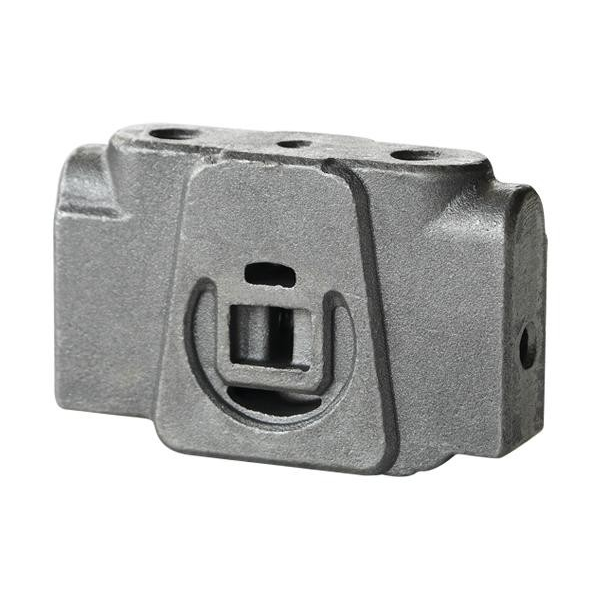
Hydraulic valve bodies, pneumatic control valves, and flow control components employ GGG50 for pressure containment and structural integrity. The casting process creates complex internal porting and external mounting features economically. The material provides pressure ratings suitable for industrial hydraulic and pneumatic systems.
The balanced properties ensure dimensional stability under pressure cycling. Enhanced ductility reduces risk of cracking from assembly stresses or over-tightening. The material resists hydraulic fluids and maintains performance across industrial operating conditions.
Valve components benefit from GGG50’s machinability enabling precision finishing of valve seats and sealing surfaces. Production efficiency supports cost-effective manufacturing for diverse valve applications.
Agricultural Equipment
Implement Components and Tillage Equipment
Agricultural equipment manufacturers use GGG50 for plough frames, cultivator components, and tillage equipment requiring reliable strength with impact resistance. The material withstands soil forces and obstacle impacts while maintaining structural integrity. The enhanced ductility prevents brittle failure when encountering rocks or hard soil conditions.
The casting process creates complex frame geometries economically compared to welded steel fabrications. GGG50 mechanical properties provide adequate strength for field operations while the good toughness prevents catastrophic failure from overload. Manufacturing costs remain competitive for agricultural equipment producers.
Field conditions subject equipment to unpredictable stress concentrations from roots, rocks, and soil variations. The material’s combination of strength and ductility reduces downtime from component failure during critical operating seasons. Farmers value reliability that GGG50 material properties deliver in demanding agricultural applications.
Tractor Components and Power Transmission
Tractor rear axle housings, transmission cases, and power transmission components employ GGG50 for structural support and load-bearing capacity. The material provides adequate strength while maintaining reasonable weight for agricultural vehicles. Casting enables integrated mounting features and fluid passages supporting complex drivetrain assemblies.
The balanced properties ensure reliable performance across diverse agricultural operations. Components withstand variable loads from implements, terrain variations, and seasonal temperature changes. GGG50 composition delivers long service life with minimal maintenance requirements.
Industrial Machinery
General Machinery Frames and Supports
Machine tool bases, equipment mounting frames, and structural supports utilize GGG50 for rigidity and vibration damping. The material provides structural stability while maintaining reasonable cost for general machinery applications. The high modulus of elasticity maintains alignment critical for equipment operation.
Casting creates integrated mounting surfaces, reinforcement ribs, and bolt patterns economically. Precision machining of mounting surfaces achieves tolerances required for equipment assembly. The material’s thermal stability maintains dimensional accuracy across temperature variations during operation.
Industrial equipment manufacturers value GGG50’s balance of performance and cost-effectiveness. The material suits applications where moderate strength suffices, reserving higher-strength grades for exceptional stress demands.
Compressor Components and Air Systems
Industrial air compressors utilize GGG50 for cylinder bodies, crankcase housings, and structural components. The material provides pressure containment for moderate-pressure compressed air systems while maintaining manufacturing economy. Casting creates complex internal passages and external mounting features efficiently.
The material withstands cyclic pressure loading and thermal variations during compressor operation. Enhanced ductility reduces risk of cracking from thermal stress or vibration. GGG50 mechanical properties deliver reliable performance for industrial compressed air applications.
Material Handling Equipment
Conveyor Components and Support Structures
Material handling systems employ GGG50 for conveyor drive housings, bearing supports, and structural brackets. The material provides adequate strength for moderate loads while maintaining cost-effectiveness. Casting enables complex geometries with integrated mounting points and reinforcement features.
The balanced properties withstand dynamic loads from conveyor operation and material movement. Enhanced ductility absorbs shock loads from material surges or equipment jamming. Industrial facilities value reliability that GGG50 delivers in continuous operation applications.
Hoist and Lifting Equipment Parts
Crane components, hoist housings, and lifting equipment parts utilize GGG50 where moderate strength and good toughness meet application requirements. The material provides reliable structural support while maintaining reasonable safety factors. Enhanced elongation enables controlled yielding rather than brittle failure under overload conditions.
Manufacturing GGG50 Components
Manufacturing GGG50 components requires precise metallurgical control including optimized base iron chemistry, controlled magnesium treatment, proper inoculation, and systematic quality verification ensuring consistent mechanical properties.
Successful production of GGG50 components requires sophisticated metallurgical control and comprehensive quality assurance. Professional foundries implement systematic procedures ensuring consistent GGG50 material properties across production batches.
Melting and Magnesium Treatment
Base Iron Preparation
Modern foundries carefully select raw materials including pig iron, steel scrap, and foundry returns to achieve target base iron chemistry before magnesium treatment. The base iron composition must provide appropriate carbon and silicon levels supporting balanced pearlite-ferrite matrix development after treatment.
Electric induction furnaces provide precise temperature and composition control for GGG50 production. Melting temperatures typically reach 1470-1510°C ensuring complete dissolution and homogenization. Spectrographic analysis verifies base iron composition before proceeding to magnesium treatment.
Moderate carbon content requires careful charge calculation balancing graphitizing elements with matrix-forming elements. Foundries balance carbon and silicon levels achieving target microstructure. Base iron chemistry directly influences final GGG50 mechanical properties including strength-ductility balance.
Magnesium Treatment Process
Magnesium treatment represents the critical step transforming gray iron into ductile iron. Foundries employ various treatment methods including ladle treatment, tundish methods, or sandwich processes. The violent reaction between magnesium and molten iron requires careful process control ensuring operator safety and consistent results.
Treatment typically uses ferrosilicon-magnesium alloys containing 5-10% magnesium. Addition quantities calculate based on sulfur content and desired residual magnesium (typically 0.035-0.050%). The GGG50 chemical composition requires precise residual magnesium maintaining spheroidal graphite formation throughout the casting.
Temperature control during treatment ensures proper reaction kinetics. Excessive temperature causes violent reactions with magnesium loss and excessive dross formation. Insufficient temperature results in incomplete reactions with inadequate nodularization. Foundries maintain treatment temperatures around 1440-1480°C for optimal results.
Inoculation
Inoculation follows magnesium treatment, introducing nucleating agents promoting uniform nodule distribution during solidification. Ferrosilicon-based inoculants added to ladles or during pouring ensure fine, evenly distributed graphite nodules. Proper inoculation prevents carbide formation and optimizes GGG50 mechanical properties.
Multiple inoculation stages (ladle and mold inoculation) provide most effective results. Late inoculation just before pouring maximizes effectiveness as inoculation effects fade over time. Foundries must pour within 10-15 minutes after treatment for consistent nodularization and balanced matrix development.
Inoculant selection influences nodule count and microstructure development. Appropriate nodule counts (150-300/mm²) promote optimal balance between strength and ductility. GGG50 production requires careful inoculation optimization achieving target mechanical properties consistently.
Casting and Solidification
Mold Design Considerations
Mold design significantly influences GGG50 material properties through cooling rate control. Section thickness affects cooling rates and resulting microstructure. Thinner sections cool faster promoting increased pearlite, while thicker sections cool slower favoring ferrite formation. Design engineers account for section thickness effects through appropriate component geometry.
Gating system design ensures turbulent-free filling preventing oxidation and inclusions. Properly designed gates maintain metal cleanliness critical for quality castings. Feeders provide adequate molten metal compensating for solidification shrinkage. Proper feeding prevents shrinkage porosity compromising mechanical properties.
Sand mold materials influence surface quality and dimensional accuracy. Green sand molding provides economy for medium to high-volume production. Resin-bonded sand systems deliver superior surface finish and dimensional accuracy for precision components requiring minimal machining.
Cooling Rate Management
Cooling rate directly affects matrix microstructure development in GGG50 material. Moderate cooling rates promote balanced pearlite-ferrite structure achieving 500 MPa tensile strength with 7% elongation. Controlled cooling ensures appropriate matrix balance delivering target mechanical properties.
Foundries optimize cooling through mold design, pouring temperature control, and section thickness management. Component geometry influences local cooling rates requiring design consideration. Uniform cooling produces consistent mechanical properties throughout castings minimizing property variations.
Heat Treatment Options
Stress Relief Annealing
Components may receive stress relief annealing at 500-600°C to remove residual stresses from casting without significantly altering microstructure or mechanical properties. This treatment improves dimensional stability and reduces distortion risk during subsequent machining operations.
Stress relief particularly benefits complex geometries or components requiring tight dimensional tolerances. The treatment cycle typically involves heating to temperature, holding 1-2 hours, and slow cooling. GGG50 mechanical properties remain essentially unchanged after proper stress relief.
Ferritizing Annealing
Ferritizing annealing at 680-720°C followed by slow cooling increases ferrite content, enhancing ductility and machinability at the expense of some strength. This treatment benefits applications requiring maximum machinability or enhanced toughness where moderate strength reduction is acceptable.
The treatment converts pearlite to ferrite creating predominantly ferritic matrix. Tensile strength reduces to 380-450 MPa while elongation increases to 12-18%. Components requiring exceptional machinability or maximum ductility benefit from this treatment.
Normalizing
Normalizing at 860-920°C followed by air cooling refines microstructure and homogenizes properties. This treatment benefits thick-section castings where cooling rate variations occur. Normalizing produces more uniform matrix structure with consistent strength throughout the component.
The treatment can increase tensile strength slightly (520-600 MPa) while maintaining reasonable elongation. Normalized GGG50 material typically achieves properties toward the upper specification range with improved consistency across sections.
Quality Control Testing
Chemical Analysis
Spectroscopic analysis verifies GGG50 composition after treatment before pouring each production heat. Modern optical emission spectrometers provide rapid analysis of all major and minor elements including residual magnesium content. Results must confirm proper treatment effectiveness before metal receives approval for casting.
Analysis confirms carbon, silicon, manganese, phosphorus, sulfur, and residual magnesium fall within specification ranges. Out-of-specification chemistry receives correction through additions or dilution before casting. Systematic analysis ensures consistent GGG50 chemical composition across production.
Metallographic Examination
Microscopic examination of polished and unetched samples verifies nodule characteristics. Trained metallographers evaluate nodularity percentage (typically ≥80% required), nodule count (150-300/mm² typical), and nodule size distribution. Etched samples reveal matrix structure confirming balanced pearlite-ferrite microstructure appropriate for GGG50 material properties.
Image analysis systems provide objective quantification of microstructural features. Consistent nodule characteristics across production heats indicate proper process control. Variations signal need for treatment parameter adjustments or raw material changes.
Matrix structure verification confirms appropriate pearlite-ferrite balance. GGG50 requires balanced matrix (typically 50-70% pearlite, 30-50% ferrite) achieving 500 MPa tensile strength with 7% elongation. Excessive pearlite increases strength but reduces ductility, while excessive ferrite reduces strength below specification.
Mechanical Testing
Tensile testing of separately cast test bars verifies GGG50 material properties meet specification requirements. Test bars cast under controlled conditions provide representative mechanical properties. Universal testing machines determine tensile strength, yield strength, and elongation confirming compliance with minimum values.
Test bar dimensions and casting procedures follow standard specifications. Typical test bar diameters range from 25-30mm representing medium-section castings. Testing frequency depends on production volume and customer requirements, typically each heat or production lot.
Hardness testing provides supplementary verification using Brinell methods. Hardness measurements on test pieces or production castings confirm expected values. The 160-220 HB range indicates proper microstructure development. Correlation between hardness and tensile properties enables rapid quality verification.
Non-Destructive Testing
Visual inspection identifies surface defects, porosity, or casting imperfections requiring correction. Trained inspectors evaluate surface finish, dimensional accuracy, and overall casting quality.
Ultrasonic testing detects internal discontinuities in critical components. Sound wave transmission identifies shrinkage porosity, inclusions, or other internal defects. Critical applications may require 100% ultrasonic inspection ensuring structural integrity.
Magnetic particle inspection reveals surface or near-surface cracks in machined components. Fluorescent or visible particles highlight crack indications requiring evaluation. Pressure testing verifies leak-tight integrity for hydraulic or pneumatic components.
Selecting a Ductile Iron Casting Foundry
Selecting a ductile iron casting foundry requires evaluating technical expertise in GGG50 production, metallurgical capabilities, quality system certification, and demonstrated experience manufacturing balanced-grade ductile iron components.
Component quality depends significantly on foundry expertise and manufacturing capabilities. Engineers should evaluate multiple factors when selecting partners for GGG50 production.
Technical Capability Assessment
Ductile Iron Expertise
Foundries specializing in ductile iron demonstrate deep understanding of GGG50 composition control, magnesium treatment processes, and microstructure development. They maintain laboratory facilities equipped for chemical analysis, metallographic examination, and mechanical testing. Experienced metallurgists oversee treatment operations and troubleshoot quality issues.
The foundry should provide detailed material certifications including chemical composition, mechanical test results, and microstructure verification. Metallurgical support during design optimization helps engineers select appropriate materials and optimize component geometry for manufacturing economy and performance.
Balanced-grade materials like GGG50 require precise process control achieving optimal pearlite-ferrite balance. Verify that foundry personnel understand matrix development, cooling rate management, and quality verification specific to medium-strength ductile irons.
Process Capabilities
Evaluate the foundry’s casting processes including molding methods, core production, and pouring systems. Sand casting remains most common for GGG50 components, with green sand, resin-bonded sand, or shell molding available. Different processes suit specific size ranges, production volumes, and quality requirements.
Heat treatment facilities including stress relief, annealing, and normalizing equipment provide complete manufacturing solutions. Integrated machining capabilities allow delivery of finished components rather than rough castings. This integration reduces supplier management complexity and improves delivery coordination.
Production capacity should align with project volume requirements while maintaining consistent quality. Verify foundry equipment capacity matches component size and weight requirements for your applications.
Quality System Verification
ISO Certification
Professional foundries maintain ISO 9001:2015 quality management certification at minimum. Advanced foundries pursue additional certifications including IATF 16949 for automotive supply or ISO 14001 for environmental management. Certification demonstrates systematic quality management supporting consistent GGG50 material properties.
Audit reports and certification status verification confirm active quality system operation. Third-party certification provides independent verification of quality management effectiveness. Foundries supplying critical applications should maintain current certification without lapses.
Production Sample Evaluation
Request sample castings demonstrating capability to produce components meeting GGG50 material specification. Examine samples for surface quality, dimensional accuracy, and absence of visible casting defects. Review accompanying material certificates confirming mechanical properties and chemical composition meet requirements.
Metallographic examination of samples verifies nodule quality and matrix structure. Hardness testing confirms appropriate microstructure development. Dimensional inspection validates manufacturing capability meeting tolerance requirements.
Initial sample approval establishes baseline quality expectations. Production part approval process (PPAP) documentation for automotive applications provides comprehensive quality verification including dimensional inspection, material testing, and process capability studies.
Experience and References
Industry-Specific Experience
Evaluate foundry experience in relevant industry applications. Foundries supplying automotive, agricultural, hydraulic equipment, or general machinery industries demonstrate capability meeting diverse quality requirements. Request reference customers and application examples demonstrating successful GGG50 component production.
Technical publications, case studies, or application examples indicate foundry expertise and commitment to customer success. Foundries actively developing application knowledge provide superior technical support during design and manufacturing phases.
Engineering Support
Technical support during design development optimizes component manufacturability and performance. Foundries providing simulation capabilities (casting simulation, finite element analysis) help identify potential manufacturing issues before tooling investment. Engineering collaboration reduces development time and improves first-article success rates.
Design for manufacturing guidance optimizes section thickness, gating location, and core design. Foundry engineers familiar with GGG50 material properties provide valuable input during component development ensuring successful production launch.
For engineers seeking a reliable ductile iron casting foundry partner with proven expertise in GGG50 production, SHENRGONG delivers specialized capabilities in balanced-grade ductile iron manufacturing with comprehensive quality assurance. The foundry maintains ISO certification and operates advanced metallurgical laboratories ensuring consistent GGG50 material properties and reliable component quality for automotive, agricultural, hydraulic, and industrial machinery applications.
Conclusion
GGG50 represents a balanced ductile iron grade offering reliable 500 MPa tensile strength with enhanced 7% elongation for versatile applications requiring optimal strength-ductility combination. The mixed pearlite-ferrite microstructure created through controlled magnesium treatment and optimized cooling provides adequate strength with superior toughness compared to higher-strength ductile irons while maintaining excellent machinability and cost-effectiveness. Understanding GGG50 chemical composition, GGG50 mechanical properties, and GGG50 material equivalent grades enables engineers to optimize component design across international projects. Success depends on partnering with experienced ductile iron casting foundries maintaining ISO certification and rigorous metallurgical control for consistent GGG50 material quality.
Frequently Asked Questions (FAQ)
What is GGG50 material used for?
GGG50 material is primarily used for automotive brake calipers, suspension components, pump housings, valve bodies, agricultural equipment, hydraulic cylinders, and general machinery parts. The combination of 500 MPa tensile strength with 7% elongation makes it ideal for applications requiring balanced strength and ductility with excellent machinability in moderate-duty industrial environments where extreme strength is unnecessary.
What is the chemical composition of GGG50?
The GGG50 chemical composition includes carbon 3.4-3.9%, silicon 2.0-2.8%, manganese 0.3-0.6%, with residual magnesium 0.03-0.05% after treatment. Phosphorus content remains below 0.08% maximum and sulfur below 0.025% maximum. The magnesium treatment is critical for creating spheroidal graphite structure. The composition promotes balanced pearlite-ferrite matrix achieving 500 MPa tensile strength with enhanced ductility.
What are GGG50 equivalent grades internationally?
GGG50 material equivalent grades include QT500-7 in China (GB/T 1348), FCD500 in Japan (JIS G 5502), ASTM A536 Grade 70-50-05 in USA, EN-GJS-500-7 in Europe (EN 1563), and ISO 1083 Grade 500-7 internationally. These equivalent materials provide similar mechanical properties with minimum 500 MPa tensile strength, 320 MPa yield strength, and 7% elongation suitable for global sourcing and material substitution in moderate-strength applications.
What are the mechanical properties of GGG50?
GGG50 mechanical properties include minimum tensile strength 500 MPa (typical 520-600 MPa), minimum yield strength 320 MPa (typical 330-370 MPa), minimum elongation 7% (typical 7-12%), and Brinell hardness 160-220 HB. The material exhibits elastic modulus 168-175 GPa, density 7.05-7.15 g/cm³, and thermal conductivity 30-35 W/(m·K). The balanced pearlite-ferrite matrix provides good wear resistance, excellent machinability, and superior toughness.
How does GGG50 compare to GGG40 or GGG60?
GGG50 material provides superior tensile strength (500 MPa) compared to GGG40 (400 MPa) but lower than GGG60 (600 MPa), positioning it as a balanced-grade material. GGG50 offers enhanced elongation (7% minimum) versus GGG60 (3% minimum) but reduced compared to GGG40 (15% minimum). The mixed pearlite-ferrite matrix in GGG50 provides optimal balance of strength, ductility, and machinability. Choose GGG50 for applications requiring moderate strength with good toughness and cost-effectiveness.
Can GGG50 be heat treated?
Yes, GGG50 material responds to various heat treatments. Stress relief annealing at 500-600°C removes residual stresses without changing mechanical properties. Ferritizing annealing at 680-720°C increases ductility and machinability by creating predominantly ferritic structure. Normalizing at 860-920°C followed by air cooling refines microstructure and may slightly increase strength to 520-600 MPa. Heat treatment selection depends on application requirements for machinability, ductility, or strength optimization.
What is the difference between GGG50 and gray cast iron?
GGG50 material contains spheroidal graphite nodules creating ductile behavior with 500 MPa tensile strength and 7% elongation, while gray cast iron contains flake graphite producing brittle behavior with 150-300 MPa tensile strength and negligible elongation. The ductile iron GGG50 provides superior impact resistance, toughness, and reliability under dynamic loading. Gray iron offers better machinability and vibration damping but lacks structural reliability for load-bearing applications.
How is GGG50 manufactured?
GGG50 material production involves melting base iron in induction furnaces at 1470-1510°C, followed by critical magnesium treatment using ferrosilicon-magnesium alloys to create spheroidal graphite structure. The treatment requires precise control maintaining residual magnesium at 0.035-0.050%. After treatment, inoculation with ferrosilicon-based materials promotes uniform nodule distribution. The metal is poured into sand molds where controlled cooling develops the balanced pearlite-ferrite matrix. Quality control includes spectroscopic analysis, metallographic examination verifying nodularity ≥80% and appropriate matrix balance, and mechanical testing per EN 1563 specifications.